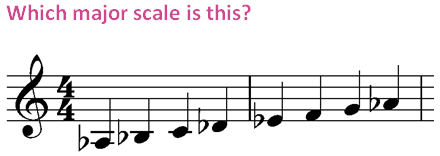
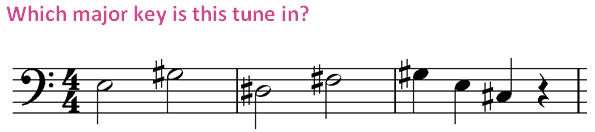
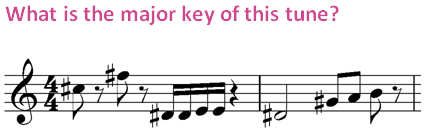
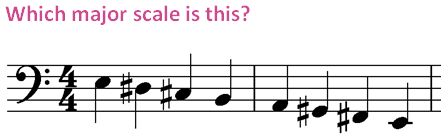
Music Theory Quiz - Grade 3 - Major Scales (Part 1) (Questions)
Master Grade 3 major scales. Learn the tone and semitone pattern, spot tricky notes, and build scales with correct key signatures and accidentals.
Explore the Topic →
(quiz starts below)
Fascinating Fact:
Major scales use tone tone semitone tone tone tone semitone. Check the two small steps between 3 to 4 and 7 to 8.
In Specialist Music Theory Grade 3, you study how to build and read major scales quickly. Use the pattern of tones and semitones to find every note, then apply the correct key signature so the letter names stay in order.
Key Terms
Tone: A whole step made of two semitones between notes.
Semitone: The smallest step in Western music, from one piano key to the very next.
Key signature: Sharps or flats at the start of the staff showing which notes are altered throughout.
Frequently Asked Questions (Click to see answers)
What is the pattern for a major scale?
The pattern is tone, tone, semitone, tone, tone, tone, semitone. The semitone steps occur between degrees 3 to 4 and 7 to 8.
How do I work out the accidentals in a major scale?
Start from the tonic and follow the tone and semitone pattern. Add sharps or flats to keep the letter names A to G in order. The key signature gathers these changes.
What is the difference between a key signature and accidentals in a bar?
The key signature applies across the piece and all octaves until it changes. An accidental affects that note for the rest of the bar only.