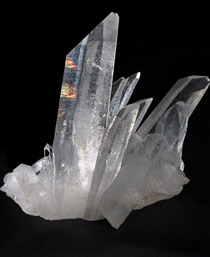
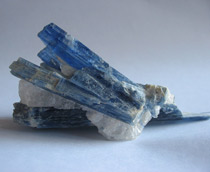
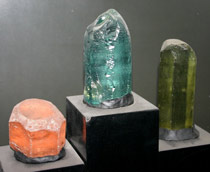
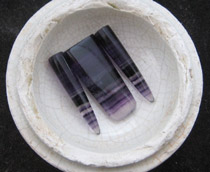
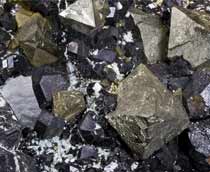
Minerals are natural solids that make up rocks and many everyday materials. Explore how we identify minerals using simple tests like hardness, lustre and crystal shape.
Explore the Topic →
(quiz starts below)
Fascinating Fact:
The colour of the powder a mineral leaves on an unglazed tile is called its streak, and it can be more reliable than surface colour.
In Specialist Nature, minerals are a hands-on way to understand geology and how rocks are built. Minerals have different properties depending on their structure and chemical makeup, so you can often identify them by testing hardness, checking how they reflect light, and noticing crystal shapes or cleavage. These clues are used by geologists in the field and help explain why different rocks behave differently, from splitting neatly to resisting scratches.
Key Terms
Hardness: How easily a mineral can be scratched, usually tested by comparing it to other materials.
Lustre: The way a mineral’s surface reflects light, such as metallic, glassy, or dull.
Cleavage: The tendency of a mineral to break along flat, repeated planes, creating smooth surfaces.
Frequently Asked Questions (Click to see answers)
What is the difference between a mineral and a rock?
A mineral is a naturally occurring solid with a specific chemical composition and structure. A rock is usually a mixture of one or more minerals, so rocks can vary widely depending on which minerals they contain.
How do you identify a mineral at home?
You can identify a mineral by observing its colour, shine, and crystal shape, then trying simple tests like scratching it with a fingernail or coin. Checking whether it breaks in flat sheets, has a magnet effect, or reacts to weak acid can also help.
Why is a mineral’s hardness important?
A mineral’s hardness matters because it helps with identification and it affects how the mineral is used. Hard minerals are chosen for cutting, grinding, or jewellery, while softer minerals may be used for powders, fillers, or as building materials.