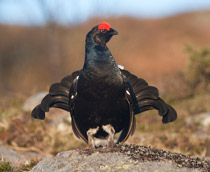
Fascinating Fact:
Black grouse males gather at traditional display sites called leks, where they fan their tails and compete for females.
In Specialist Nature, this quiz focuses on British gamebirds, mostly ground-feeding birds that rely on cover, quick take-offs and camouflage. You will explore habitats, diets, nesting, and the clues that help you tell similar-looking species apart, such as shape, markings, calls and behaviour.
Key Terms
- Gamebird: A bird traditionally hunted for sport or food, often ground-nesting and built for fast, short flights.
- Moorland: Open upland habitat with heather and grasses, important for several UK grouse species.
- Plumage: A bird’s feathers, including their colours and patterns, which can help with camouflage and identification.
Frequently Asked Questions (Click to see answers)
What is the difference between a pheasant and a partridge?
Pheasants are usually larger with longer tails, and males can be very colourful. Partridges are smaller, rounder, and often have shorter tails and more subtle markings that help them blend into fields.
Where do grouse live in the UK?
Grouse are strongly linked to upland and northern habitats. Many live on heather moorland, while some, like black grouse, can also use woodland edges and rough farmland where there is plenty of cover.
Why are pheasants and grouse called gamebirds?
They are called gamebirds because people have traditionally hunted them as “game”. Today, they are also studied for their habitats and breeding, and they can be useful indicators of how healthy the countryside is.
Try These Related Quizzes