Lucy
Ask the AI Tutor
Need help with Rivers? Ask our AI Tutor!
Lucy AI Tutor - Lucy
Connecting with Tutor...
Please wait while we establish connection
Lucy
Hi! I'm Lucy, your AI tutor. How can I help you with Rivers today?
now
Logo

Geography Quiz - Rivers (Questions)

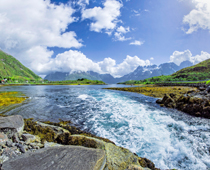
Rivers are like nature’s transport systems, carrying water from hills to seas. Along the way they shape valleys, support wildlife, and sometimes cause powerful floods.

Explore the Topic →
(quiz starts below)

Fascinating Fact:

When rivers flood, they can spread water and mud over nearby land, which can be dangerous but can also make soil very fertile.

In KS2 Geography, pupils learn how rivers start, grow, and change the land around them. Rivers can erode rock, carry sediment, create valleys and floodplains, and provide water for people, plants, and animals.

  • Source: The place where a river begins, such as a spring, lake, or melting snow in the hills or mountains.
  • Floodplain: Flat land beside a river that can be covered with water when the river floods.
  • Meander: A bend or curve in a river where the water flows in a winding path.
What is a river in KS2 geography?

A river is a large, flowing body of water that usually starts in the hills or mountains and travels across the land before reaching a lake, sea, or ocean.

How are rivers formed for children to understand?

Rivers form when rainwater, melting snow, or springs collect and flow downhill. Small streams join together to make bigger rivers that follow the shape of the land.

Why are rivers important to people and wildlife?

Rivers are important because they provide drinking water, help grow crops, give homes to many plants and animals, and are used for transport, energy, and leisure.


Click on the pictures to make them larger.
1. In which part of the river does water flow the fastest?
[ ] Upper course
[ ] Middle course
[ ] Lower course
[ ] Estuary
2. What name is given to the bottom of the river?
[ ] Delta
[ ] Bank
[ ] Bed
[ ] Channel
3. What are the sides of the river called?
[ ] Delta
[ ] Banks
[ ] Bed
[ ] Channel
4. Where is the source of a river?
[ ] Near the sea
[ ] Mud flats
[ ] Lakes
[ ] High ground
5. What are smaller rivers flowing into another river called?
[ ] Tribulations
[ ] Estuaries
[ ] Deltas
[ ] Tributaries
6. When a river carries rocks and soils it is known as what?
[ ] Deposition
[ ] Erosion
[ ] Transportation
[ ] Flooding
7. What is erosion?
[ ] River deposits rocks and soils as it flows
[ ] River carries rocks and soils as it flows
[ ] River removes rocks and soils as it flows
[ ] River dries up
8. What is deposition?
[ ] River deposits rocks and soils as it flows
[ ] River carries rocks and soils as it flows
[ ] River removes rocks and soils as it flows
[ ] River dries up
9. The wide part of the river near the sea is called what?
[ ] Tributary
[ ] Valley
[ ] Channel
[ ] Estuary
10. Where a river deposits sediment faster than the sea can remove it what feature forms?
[ ] Valley
[ ] Delta
[ ] Mountain
[ ] Channel

You can find more about this topic by visiting BBC Bitesize - Explore rivers

Logo
Geography Quiz - Rivers (Answers)
1. In which part of the river does water flow the fastest?
[x] Upper course
[ ] Middle course
[ ] Lower course
[ ] Estuary
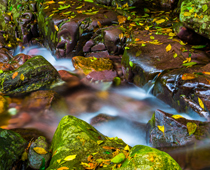
The upper course is on steeper ground so it flows faster
2. What name is given to the bottom of the river?
[ ] Delta
[ ] Bank
[x] Bed
[ ] Channel
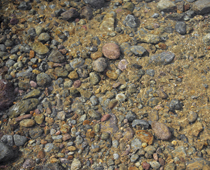
The river bed is made up of rocks, mud, sand or pebbles
3. What are the sides of the river called?
[ ] Delta
[x] Banks
[ ] Bed
[ ] Channel
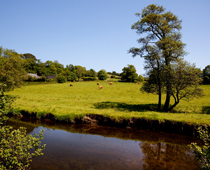
River banks can be eroded by the water in the river over time
4. Where is the source of a river?
[ ] Near the sea
[ ] Mud flats
[ ] Lakes
[x] High ground
Rivers often have their sources in mountains or hills
5. What are smaller rivers flowing into another river called?
[ ] Tribulations
[ ] Estuaries
[ ] Deltas
[x] Tributaries
A tributary is a stream or river that flows into another river rather than into the sea
6. When a river carries rocks and soils it is known as what?
[ ] Deposition
[ ] Erosion
[x] Transportation
[ ] Flooding
Transportation is part of the process that changes the shape of the river over time
7. What is erosion?
[ ] River deposits rocks and soils as it flows
[ ] River carries rocks and soils as it flows
[x] River removes rocks and soils as it flows
[ ] River dries up
Erosion can occur both on the banks and bed of the river
8. What is deposition?
[x] River deposits rocks and soils as it flows
[ ] River carries rocks and soils as it flows
[ ] River removes rocks and soils as it flows
[ ] River dries up
When a river slows down near its end the materials it has been carrying are often deposited
9. The wide part of the river near the sea is called what?
[ ] Tributary
[ ] Valley
[ ] Channel
[x] Estuary
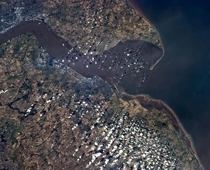
The Humber and the Thames are both famous estuaries in Britain. The picture is a view of the Humber Estuary taken from the International Space Station
10. Where a river deposits sediment faster than the sea can remove it what feature forms?
[ ] Valley
[x] Delta
[ ] Mountain
[ ] Channel
Deltas are named after the Greek letter delta, which is the shape of a triangle