Ask the AI Tutor
Need help with Oceanic Flags 2? Ask our AI Tutor!
AI Tutor - Lucy
Connecting with Tutor...
Please wait while we establish connection
AI Tutor - Lucy

What we call Oceania is technically not a continent. It is actually a collection of islands rather than landmasses. Australia is in fact a continent and contains not only the country which shares its name, but also New Guinea and the surrounding islands. Perhaps surprisingly New Zealand is not a part of the Australian continent, but is on a separate, submerged continent called Zealandia!
Because of the region's nature as many collections of islands, for convenience's sake they have been grouped together under the name Oceania. Opinions as to which lands are a part of Oceania differ, with some using it only for the smaller islands (discounting Australia and New Zealand) whilst others include the Philippines and Indonesia, which are more traditionally thought of as parts of Asia.
For the purposes of this quiz the term Oceania refers to the Australian continent, the Zealandia continent, the island groups of Polynesia, Melanesia and Micronesia, and the countries which are found upon them.
|
|
||||||||||||||||||||||||
|
|
||||||||||||||||||||||||
|
|
||||||||||||||||||||||||
|
|
||||||||||||||||||||||||
|
|
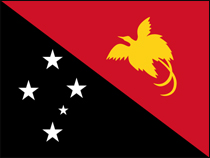
The country was once divided into two territories - German and British New Guinea. British New Guinea was given to Australia in 1905 and renamed Papua. During World War I both territories became Australian possessions. These were unified as the single Territory of Papua and New Guinea which gained its independence from Australia in 1975. It later came to be known simply as Papua New Guinea
|
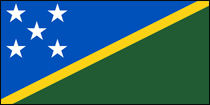
The islands were discovered by a Spanish explorer in 1568 and he named them after the biblical king Solomon who was renowned for his wealth. The islands became a British territory during the 19th century and gained their independence in 1978
|
||||||||||||||||||||||||
Caledonia is, of course, an alternative name for Scotland.
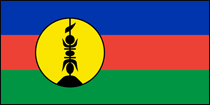
New Caledonia has two official flags. The French Tricolour was used alone until 2010 when the flag of the pro-independence political movement, the FLNKS, was granted equal status. The FLNKS flag is not popular with all New Caledonians and some would prefer a totally different flag used to represent them |
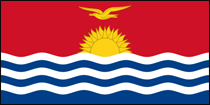
As well as the islands themselves, the language spoken by the Kiribati people was also named after the 18th century British Captain Thomas Gilbert, who was the first European to see the islands. In Gilbertese the word 'Gilbert' is pronounced Kiribati
|
||||||||||||||||||||||||
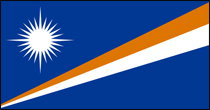
It has been estimated that $759 million was paid to the Marshallese Islanders by the American government in compensation for their exposure to nuclear tests
|
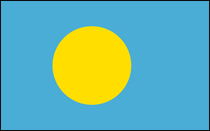
The flag, adopted when Palau became a republic, shows a full moon on a blue background. To the Palauan people the full moon is a time of celebration and it is also a symbol of peace, whilst the blue background is said to represent the Ocean
|
||||||||||||||||||||||||
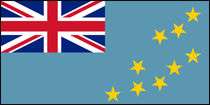
The name Tuvalu actually means "eight together" and refers to the eight islands which were inhabited at the time independence was gained from Britain. Since then a ninth island has been colonised and the flag shows nine stars to illustrate the change
|
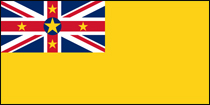
Niue is a self-governing state but it is also a territory of New Zealand. Its status as a freely-associated state has been accepted by the UN as being equivalent to independence for the purposes of international law
|
||||||||||||||||||||||||
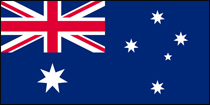
When Australia was united as a country in 1901 it could not be agreed whether the capital city should be Melbourne or Sydney. As a compromise a new city was built, half way between the two, specifically to be the new capital. It was named Canberra
|
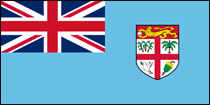
For such a small nation, with a population of less than 1 million, Fiji has been quite successful in the Rugby World Cup. They have competed in 5 of the 7 tournaments to date but have yet to get any further than the last eight teams
|