
Ask the AI Tutor
Need help with Renaissance Art? Ask our AI Tutor!
AI Tutor - Lucy
Connecting with Tutor...
Please wait while we establish connection
AI Tutor - Lucy

Step into Renaissance art and see how artists improved realism using proportion, perspective and anatomy. Explore why this period changed painting and sculpture across Europe.
Try your hand at these questions about the Renaissance Art Movement and the influence it has had on the art of later periods.
Click on the pictures for a closer look.
|
|
||||||||||||||||||||||||
|
|
||||||||||||||||||||||||
|
|
||||||||||||||||||||||||
|
|
||||||||||||||||||||||||
|
|
|
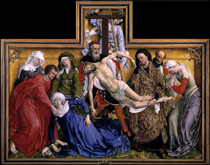
Many Renaissance works outside of Italy had a heavy religious influence. This painting by Rogier van der Weyden in 1435 shows Christ's descent from the cross
|
||||||||||||||||||||||||
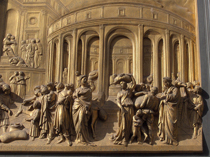
The competition to sculpt a set of bronze doors of the Baptistery of Florence Cathedral drew entries from seven young sculptors including Brunelleschi and Donatello. This particular panel shows a part of the story of Joseph
|
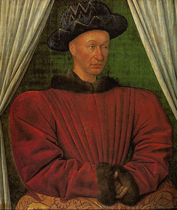
He visited Italy in 1437 and brought back many ideas which he applied in his role as painter of the royal court in France. This portrait by Fouquet is of Charles VII of France
|
||||||||||||||||||||||||
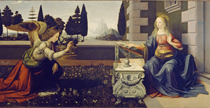
Da Vinci's use of oils as his main medium meant he could more accurately portray light and its effect on a subject. This painting, 'The Annunciation', is thought to be Leonardo's earliest completed work. It dates from between 1475-1480
|
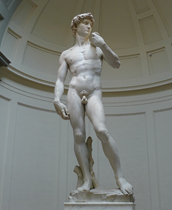
Michaelangelo's other famous work is the ceiling of the Sistine Chapel in Rome, which took him several years to complete!
|
||||||||||||||||||||||||
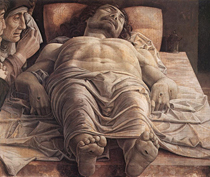
The technique relies on a good use of perspective and ultimately adds to the realism of a painting. This painting by Andrea Mantegna, 'The Lamentation of Christ', is a good example of foreshortening
|
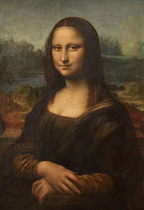
Blending in this way, through the use of thin glazes, gave the illusion of depth or three-dimensionality. The Latin origin is fumare, to smoke! This painting is perhaps da Vinci's most famous work - 'The Mona Lisa'
|
||||||||||||||||||||||||
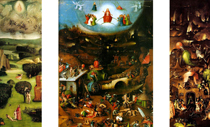
His paintings have a surreal quality and are quite unlike anything else produced at the time. This one is called 'The Last Judgement'
|
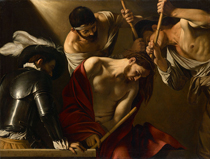
The Enlightenment is characterised by great revolutions in science, philosophy, society and politics. The artistic period that followed the Renaissance was the Baroque which exaggerated emotions. The Baroque piece pictured is 'The Crowning with Thorns' by Caravaggio
|
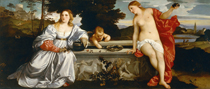
This painting is 'Sacred and Profane Love' by Titian, one of the most important Renaissance artists