Ask the AI Tutor
Need help with North and South American Flags 2? Ask our AI Tutor!
AI Tutor - Lucy
Connecting with Tutor...
Please wait while we establish connection
AI Tutor - Lucy

Discover more flags from North and South America by spotting colours, symbols and layouts. This specialist quiz builds quick visual recognition and comparison skills.
|
|
||||||||||||||||||||||||
|
|
||||||||||||||||||||||||
|
|
||||||||||||||||||||||||
|
|
||||||||||||||||||||||||
|
|
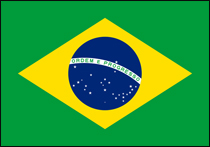
The country was originally named "Land of the Holy Cross" by its Portuguese colonists. It was nicknamed Brazil after the brazilwood which grows there which was harvested for the red dye it produces. Over time the nickname supplanted the official name and the country became formally known as Brazil
|
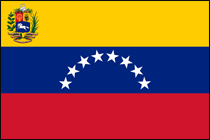
Venezuela is said to have gotten its name because it reminded the Italian explorer Amerigo Vespucci (after whom America is named) of Venice. The word Venezuela is a mix of Italian and Spanish and means "little Venice"
|
||||||||||||||||||||||||
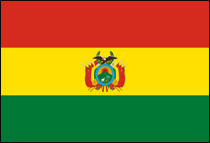
In 1825 Simon Bolivar gave General Antonio de Sucre the options of remaining a part of Peru, of uniting with Argentina, or of becoming an independent state. Sucre chose independence and a new country, named in honour of Bolivar, was born.
This is another flag which bears the name of the country it represents, which should have made the question just that little bit easier! |
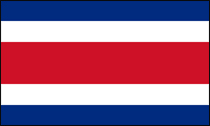
Costa Rica (Rich Coast) is one of the most progressive and stable countries in the whole of the Americas. In 1949 it permanently abolished its army, and in 2009 it was ranked as the most environmentally friendly country on Earth
|
||||||||||||||||||||||||
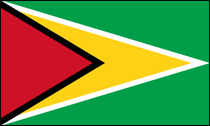
The name Guyana is from a native word meaning "land of many waters." It contains many rivers, one of which is the Demerara after which the sugar is named
|
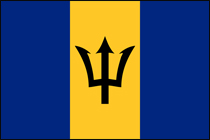
The flag was adopted in 1966 when Barbados became independent from Britain. The blue is said to represent the sea and the gold is for the sand. The broken trident is a symbol of the links Barbados has to the UK; Britannia's trident, broken at the bottom to symbolise Barbados' break from its former status as a colony to that of an independent state
|
||||||||||||||||||||||||
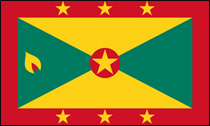
Grenada is blessed with both nutmeg and mace, hence its alternative name. It had been both a French colony and a British colony before it gained independence in 1974
|
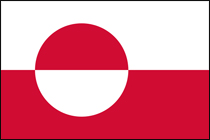
Greenland was settled by the Norsemen in the 10th century AD. According to legend, the icy country was named Greenland in order to attract more settlers, who were no doubt disappointed to find upon arrival that 'Whiteland' would have been a more accurate description! Formerly a Norwegian Sovereignty, Greenland was given to Denmark in 1814
|
||||||||||||||||||||||||
The three islands are "special municipalities of the Netherlands" and are collectively known as the Caribbean Netherlands. When the former country, Netherlands Antilles, was dissolved in 2010, the Caribbean Netherlands became a part of the mother country
|
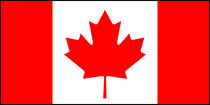
Canada did have its own flag prior to 1965; a red ensign with the Union Jack in the top left corner and the Canadian coat of arms (the British coat of arms with the addition of maple leaves) to the right. This flag was never officially adopted though. The current flag was designed by George Stanley and is based on that of the Royal Military College of Canada
|