Ask the AI Tutor
Need help with Painter - Paul Cezanne? Ask our AI Tutor!
AI Tutor - Lucy
Connecting with Tutor...
Please wait while we establish connection
AI Tutor - Lucy

Explore Paul Cézanne in this Specialist Art quiz, where colour, shape, and brushwork help turn landscapes and still lifes into stepping stones toward modern art.
|
|
||||||||||||||||||||||||
|
|
||||||||||||||||||||||||
|
|
||||||||||||||||||||||||
|
|
||||||||||||||||||||||||
|
|
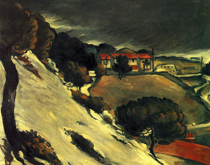
Its full title is L'Estaque, Melting Snow. It was painted whilst Cézanne was living in L'Estaque at the time of the Franco-Prussian war. Some say that this piece is Cézanne's response to the war, showing a small group of houses locked between an ominous sky and a wall of snow. The houses might represent people's lives caught between Prussia (the sky) and France (the snow)
|
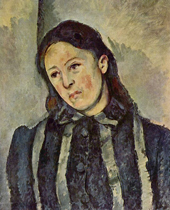
Between 1869 and the 1890s Hortense Fiquet was the model in many portraits by Cézanne. During that time the couple progressed from lovers to man and wife before finally splitting up. This particular portrait is called Madame Cézanne with Loosened Hair
|
||||||||||||||||||||||||
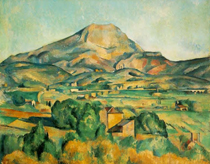
The mountain was visible from Cézanne's house and he painted it often. This version is called Mont Sainte-Victoire seen from Bellevue but other versions include Mont Sainte-Victoire with Large Pine and Mont Sainte-Victoire and the Viaduct of the Arc River Valley
|
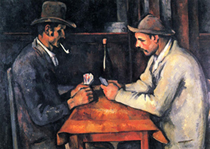
This version of the painting was stolen from Foundation E.G. Bührle in Zürich, Switzerland in 2008, before it was found again in Serbia in 2012. It has an estimated value of £54 million
|
||||||||||||||||||||||||
That's £146 - £176 million! Of the remaining four pieces, two are in museums in the USA, one is in the Courtauld Institute of Art in London, and the last is the Musée d’Orsay, París
|
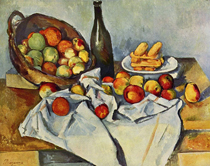
Noted for its errant perspective, this piece has been said to be a link between Impressionism and Cubism. The unnatural tilt of the bottle and angle of the basket are complemented by the different perspectives in which the two sides of the table are seen
|
||||||||||||||||||||||||
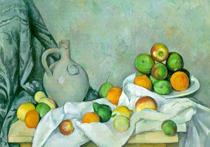
Painted around 1894, this still life, like The Basket of Apples, is a precursor to the 20th century Cubist movement on which Cézanne was a strong influence
|
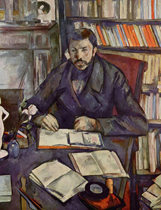
Geffroy was a friend of Monet who introduced him to Cézanne. The portrait was done as an expression of thanks for Geffroy's favourable reviews, but Cézanne was not happy with his work and abandoned it. In a explanatory letter to Monet, he said, "I am a little upset at the meagre result I obtained, especially after so many sittings and successive bursts of enthusiasm and despair"
|
||||||||||||||||||||||||
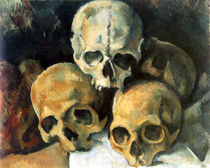
Cézanne's mother had been a great support to him, and after her death the artist began to be obsessed by mortality. Some letters written during the last decade of his life express these thoughts with words such as, "For me, life has begun to be deathly monotonous", "I'm old. I won't have time to express myself", and "I might as well be dead"
|
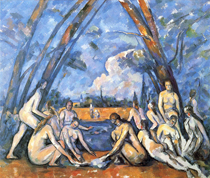
Three similar works by Cézanne share the same name. This piece is sometimes called Big Bathers or Large Bathers in order to distinguish it from the other paintings which are smaller. The Philadelphia Museum of Art in the USA bought the painting in 1937 for a sum of $110,000, and has held it ever since
|