Ask the AI Tutor
Need help with Painter - Raphael? Ask our AI Tutor!
AI Tutor - Lucy
Connecting with Tutor...
Please wait while we establish connection
AI Tutor - Lucy

Raphael was a Renaissance master known for graceful figures and balanced design. Explore his paintings, frescoes, and why his style became a High Renaissance benchmark.
|
|
||||||||||||||||||||||||
|
|
||||||||||||||||||||||||
|
|
||||||||||||||||||||||||
|
|
||||||||||||||||||||||||
|
|
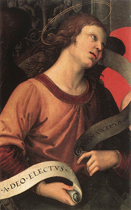
As well as Angel Holding a Scroll, God the Father, Blessed Virgin Mary and Angel also survived. Two of these are in Naples, one in Paris and the last in Brescia
|
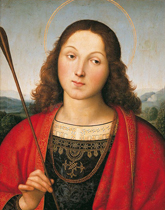
Saint Sebastian was an early Christian martyr who was tied to a tree and shot with arrows, hence the arrow in the painting. According to legend however, Sebastian survived this ordeal and went on to criticise the Roman Emperor Diocletian - who promptly had him clubbed to death!
|
||||||||||||||||||||||||
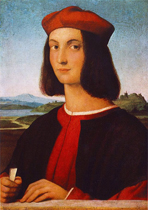
The painting bears little resemblance to its namesake who would have been in his 30s at the time the painting was created. This has led to suggestions that it is a depiction of another subject, such as Agnolo Doni who Raphael is known to have painted
|
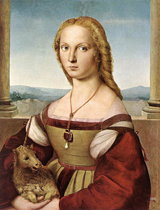
Painted around 1506 Young Woman with Unicorn is thought to have been a wedding present from Raphael to a young couple - the woman in the picture being the bride.
Prior to 1936 the painting featured a symbol of Saint Catherine rather than a unicorn. Restoration work revealed the mythological creature, which in turn was painted over an even earlier image of a dog! |
||||||||||||||||||||||||
Renamed the Stanze di Raffaello in the artist's honour, the room was, at the time, the meeting place of the supreme papal tribunal and the private papal library
|
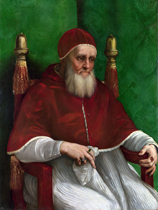
Speaking of the painting, 16th century artist Giorgio Vasari said, "it was so lifelike and true it frightened everyone who saw it, as if it were the living man himself". A true testament to Raphael's skill
|
||||||||||||||||||||||||
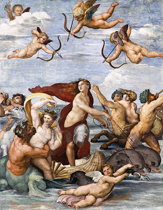
The Triumph of Galatea illustrates a story by the ancient Roman poet Ovid. According to Ovid in his Metamorphoses, Galatea was in love with the shepherd-boy Acis. In jealousy the Cyclops Polyphemus threw a great boulder which killed Acis. Galatea then turned her fallen lover's blood into the River Acis which emerges from beneath a large rock on the island of Sicily
|
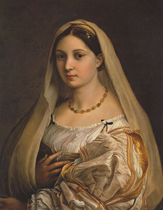
The woman featured in the portrait is also the model in another work by Raphael, La Fornarina. It is thought that she may have been Margherita Luti, Raphael's mistress
|
||||||||||||||||||||||||
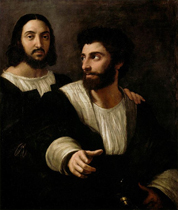
The title of the piece is Self-portrait with a friend. The identity of the friend is unknown, although some believe that it was one of his pupils.
|
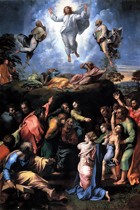
The painting depicts the miracle in which Jesus became radiant, spoke with the ancient prophets Moses and Elijah, and was addressed as "Son" by God's voice from heaven.
Raphael was still working on the piece when he died in 1520 |