Ask the AI Tutor
Need help with Painter - Titian? Ask our AI Tutor!
AI Tutor - Lucy
Connecting with Tutor...
Please wait while we establish connection
AI Tutor - Lucy

Titian shaped Renaissance art with rich colour and powerful portraits. Explore his Venetian style, his famous subjects, and how oil paint helped him create glowing surfaces.
|
|
||||||||||||||||||||||||
|
|
||||||||||||||||||||||||
|
|
||||||||||||||||||||||||
|
|
||||||||||||||||||||||||
|
|
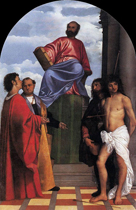
Now located in the Santa Maria della Salute in the same city, the painting shows Saint Mark, the patron saint of Venice, surrounded by four saints invoked for protection from the plague: Roch, Sebastian, Cosmas and Damian
|
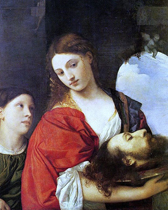
Salome had asked Herod for John's head and he duly obliged.
The woman in the painting can be seen in several of Titian's works including, Vanity, Flora, and Woman at the Mirror |
||||||||||||||||||||||||
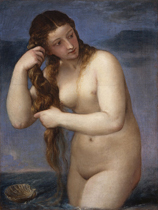
Venus Anadyomene (literally Venus Rising from the Sea) shows the goddess of beauty wringing her hair as she emerges from the Mediterranean. The seashell from which Venus was born can be seen in the bottom left corner
|
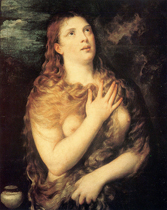
Penitent Magdalene was commissioned by the Duke of Urbino. Mary's nudity is accounted for by the medieval legend which states that she spent her last years naked and alone in a French hermitage
|
||||||||||||||||||||||||
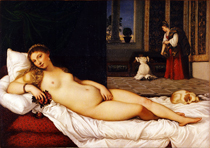
Twain went on to say "it was painted for a bagnio, and it was probably refused because it was a trifle too strong...in truth, it is a trifle too strong for any place but a public art gallery".
In the background of the painting two maids can be seen rummaging through a chest in search of Venus's clothes - apparently more concerned for the goddess' modesty than she is herself! |
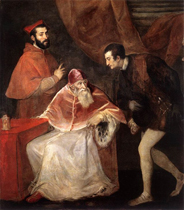
By all accounts Pope Paul III was not a religious man. He rose to his position through his links with the Medici family, made his grandson Alessandro (who was later murdered) a cardinal, fathered several illegitimate children, and spent huge sums of the church's money on art and antiques.
Aware of the dangerous political environment and the sensitivity of his subject, Titian abandoned this piece before it was finished |
||||||||||||||||||||||||
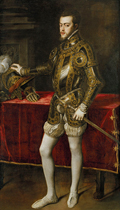
Philip was briefly the King of England after his marriage to Mary I in 1554, and he sent his powerful armada to invade England during the reign of Mary's sister Elizabeth I in 1588.
This picture, Philip II in Armour, was painted in 1551 when he and Titian were both in the German city of Augsberg |
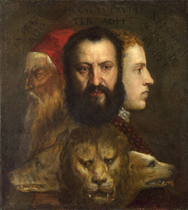
The meaning of the painting can be discerned from the inscription it bears: "From the experience of the past, the present acts prudently, lest it spoil future actions". This has been interpreted by some as meaning that Titian regrets his youthful lack of Prudence.
The three men pictured are thought to be Titian himself, his son Orazio, and his cousin, Marco Vecellio. Each one represents a different stage of life - old age, the prime of manhood, and youth |
||||||||||||||||||||||||
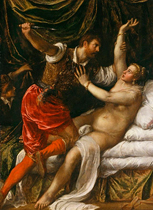
Whether it was true or not, the event depicted in the painting is said to have instigated Rome's revolution which replaced its monarchy with a republic. The piece is thought to have been commissioned by Philip II of Spain circa 1570
|
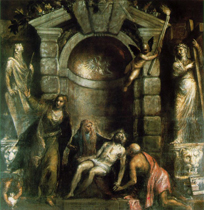
Nicodemus helped to prepare Christ's body for burial. In the painting he can be seen looking into Jesus' face, perhaps representing Titian looking at his own impending passing.
Nicodemus' beard outlined against Jesus' arm is reminiscent of a paintbrush, which is perhaps also intended by the artist |