




Ask the AI Tutor
Need help with British Birds - Ducks 02? Ask our AI Tutor!
AI Tutor - Lucy
Connecting with Tutor...
Please wait while we establish connection
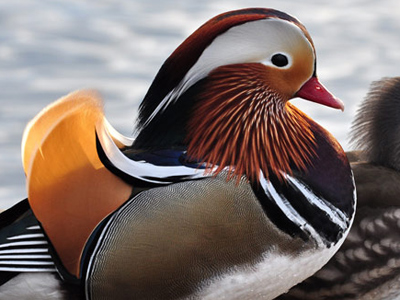
Unlike other species of ducks, most drakes reunite with the hens they mated with after the eggs have hatched.
British Birds - Ducks 02
Some ducks stay all year, others arrive for winter like visiting tourists with feathers. Learn why they travel, and how to spot them.
To see a larger image, click on the picture.
1 .
What is the name of this bird?
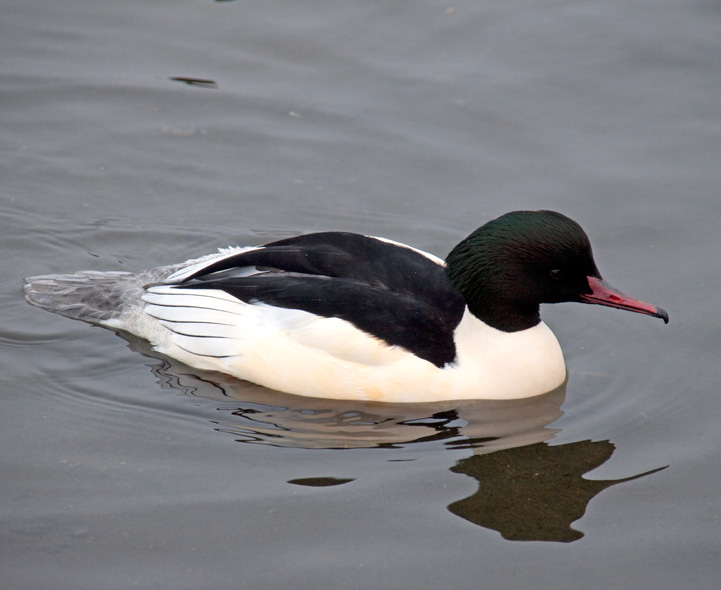
Photograph courtesy of Tony Hisgett
Eurasian Teal
Goosander
Common Goldeneye
Mandarin Duck
- Group: Ducks, Geese and Swans
- Binomial: Mergus merganser
- Order: Anseriformes
- Family: Anatidae
- Status: Resident Breeder And Winter Visitor
- A member of the sawbill family.
- A largely freshwater bird, the goosander first bred in the UK in 1871.
- Its love of salmon and trout has brought it into conflict with fishermen.
2 .
What is the name of this bird?
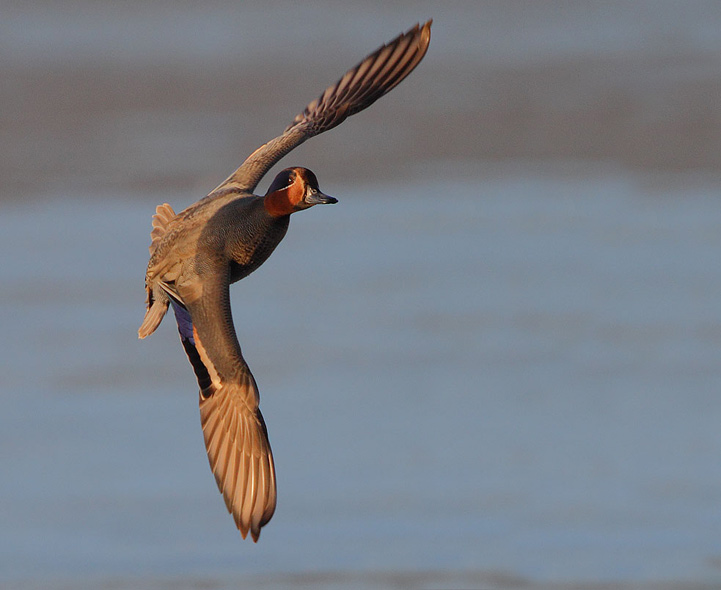
Photograph courtesy of Steve Garvie
Ruddy Duck
Mandarin Duck
Eurasian Teal
Northern Pintail
- Group: Ducks, Geese and Swans
- Binomial: Anas crecca
- Order: Anseriformes
- Family: Anatidae
- Status: Resident Breeder And Winter Visitor
- In flight, the fast, twisting flocks resemble waders despite their short legs.
- It is also rather nimble on the ground by ducks' standards.
3 .
What is the name of this bird?

Photograph courtesy of Mdf
Ruddy Duck
Northern Shoveler
Gadwall
Long-tailed Duck
- Group: Ducks, Geese and Swans
- Binomial: Anas strepera
- Order: Anseriformes
- Family: Anatidae
- Status: Resident Breeder And Winter Visitor
- It is a quieter duck, except during its courtship display.
- Visit gravel pits, lakes, reservoirs and coastal wetlands in winter in order to see these birds.
4 .
What is the name of this bird?
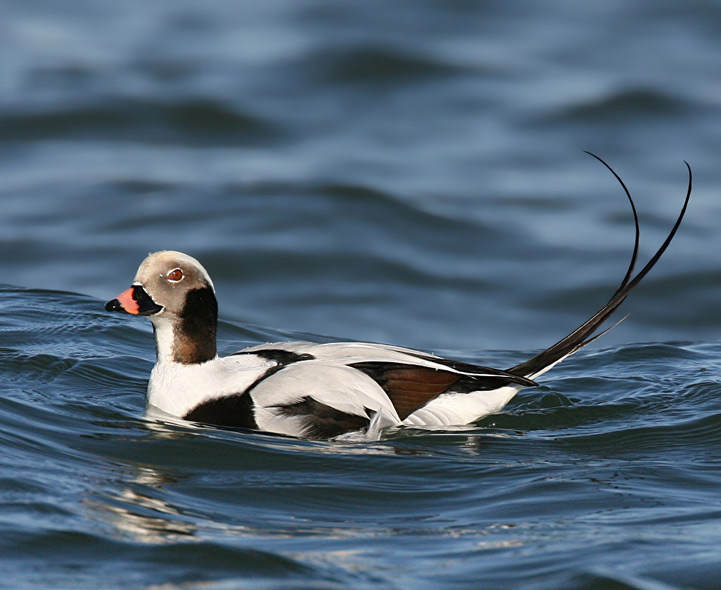
Photograph courtesy of Wolfgang Wander
Long-tailed Duck
Eurasian Teal
Northern Shoveler
Gadwall
- Group: Ducks, Geese and Swans
- Binomial: Clangula hyemalis
- Order: Anseriformes
- Family: Anatidae
- Status: Winter Visitor And Occasional Breeder
- Although they usually feed close to the surface, they are capable of diving to depths of 60 m (200 ft).
- The males are vocal and have a musical yodelling call.
5 .
What is the name of this bird?
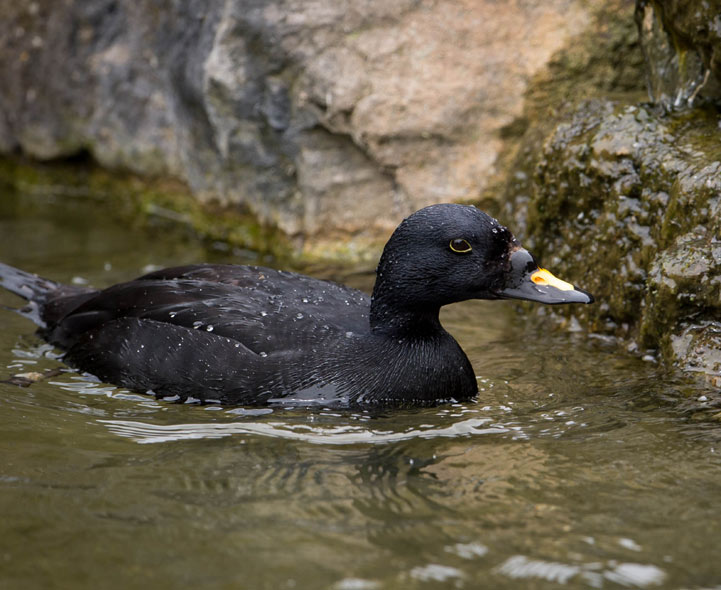
Photograph courtesy of Jason Thompson at Wikipedia
Long-tailed Duck
Goosander
Common Scoter
Mandarin Duck
- Group: Ducks, Geese and Swans
- Binomial: Melanitta nigra
- Order: Anseriformes
- Family: Anatidae
- Status: Resident Breeder And Winter Visitor
- In 2003 a previously unknown wintering population of 50,000+ was found on Shell Flat in the north west of England.
- Due to this development, questions have been raised in Parliament.
6 .
What is the name of this bird?
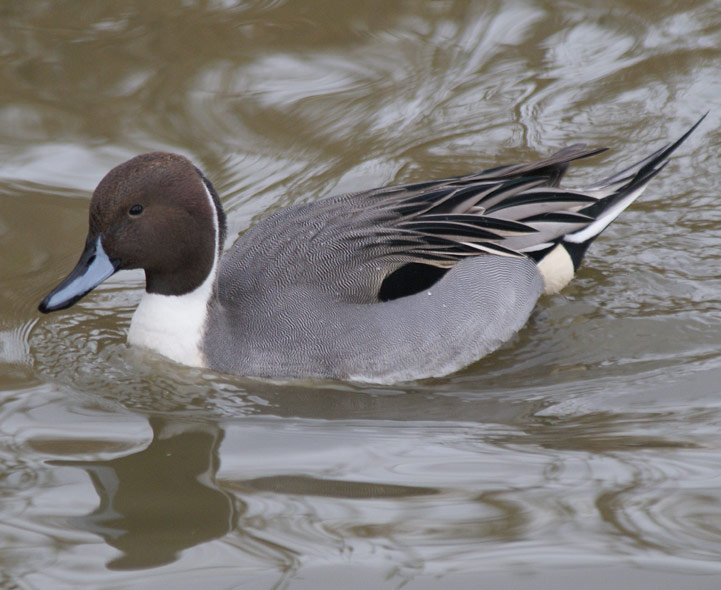
Photograph courtesy of tgreyfox
Northern Pintail
Mandarin Duck
Long-tailed Duck
Northern Shoveler
- Group: Ducks, Geese and Swans
- Binomial: Anas acuta
- Order: Anseriformes
- Family: Anatidae
- Status: Resident Breeder And Winter Visitor
- Hens make a coarse quack and the drakes a flute-like whistle.
- Have been called the 'nomads of the skies' due to their wide-ranging migrations.
7 .
What is the name of this bird?
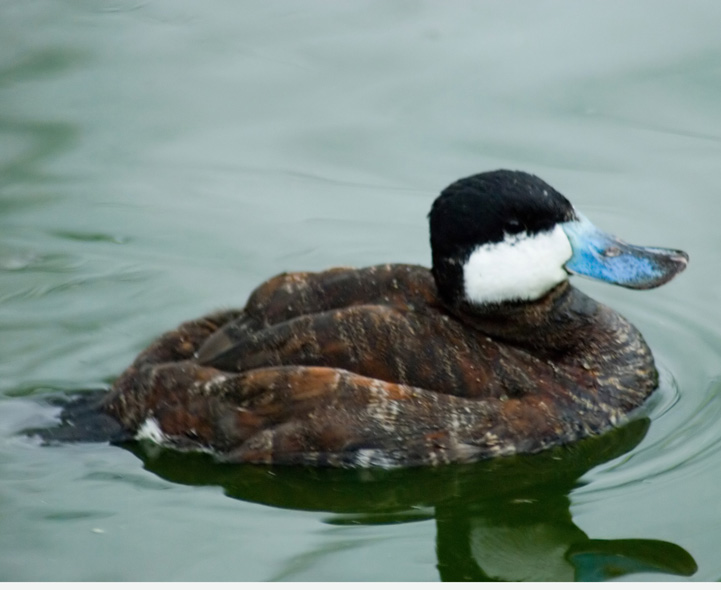
Photograph courtesy of Chris huh
Mandarin Duck
Northern Shoveler
Common Goldeneye
Ruddy Duck
- Group: Ducks, Geese and Swans
- Binomial: Oxyura jamaicensis
- Order: Anseriformes
- Family: Anatidae
- Status: Introduced Species Currently Subject To An Eradication Programme
- The female builds her nest out of grass, locating it in tall vegetation to hide it from predators.
- A typical group of young ranges from 5-15 ducklings.
8 .
What is the name of this bird?
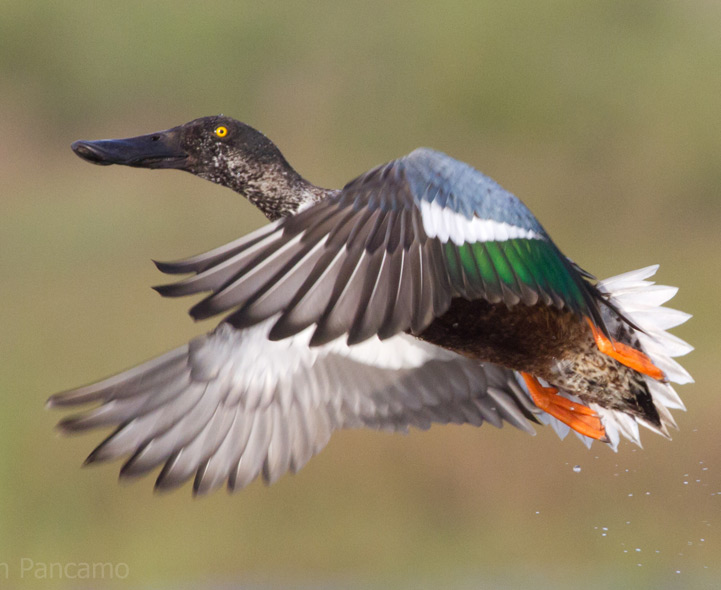
Photograph courtesy of http://blog.pancamo.com/
Northern Shoveler
Mandarin Duck
Eurasian Teal
Northern Pintail
- Group: Ducks, Geese and Swans
- Binomial: Anas clypeata
- Order: Anseriformes
- Family: Anatidae
- Status: Resident Breeder And Winter Visitor
- Surface feeding ducks.
- It is not uncommon for a dozen or more males to pursue a single hen.
- Despite their stout appearance, these birds are nimble fliers.
9 .
What is the name of this bird?
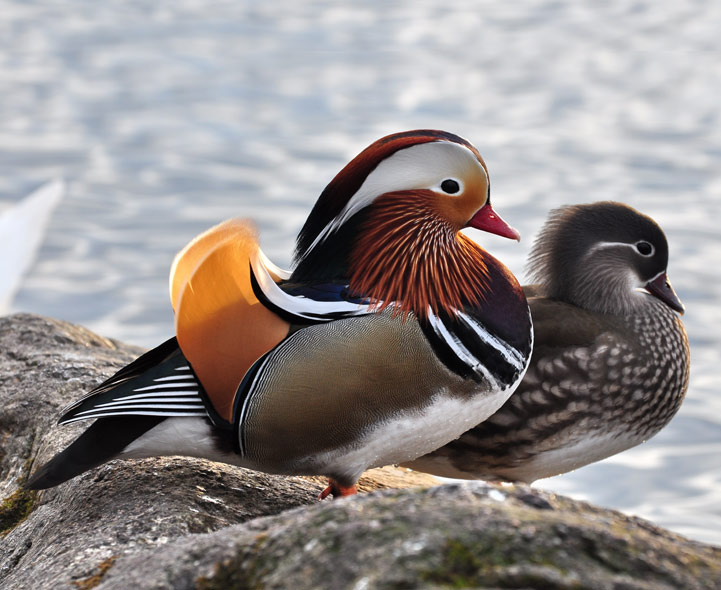
Photograph courtesy of Roland zh
Ruddy Duck
Mandarin Duck
Common Scoter
Eurasian Teal
- Group: Ducks, Geese and Swans
- Binomial: Aix galericulata
- Order: Anseriformes
- Family: Anatidae
- Status: Resident Introduced Population
- The male has the most elaborate and ornate plumage.
- Unlike other species of ducks, most drakes reunite with the hens they mated with after the eggs have hatched.
10 .
What is the name of this bird?
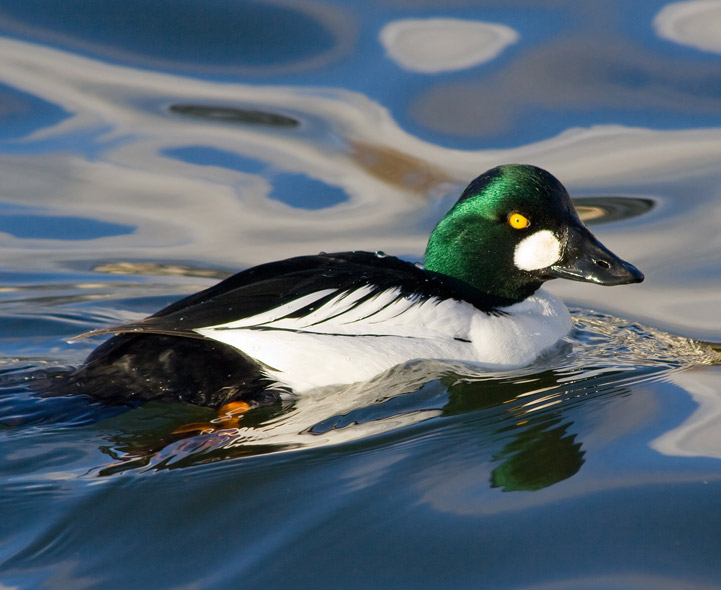
Photograph courtesy of Calibas
Common Goldeneye
Goosander
Common Scoter
Eurasian Teal
- Group: Ducks, Geese and Swans
- Binomial: Bucephala clangula
- Order: Anseriformes
- Family: Anatidae
- Status: Resident Breeder And Winter Visitor
- First nested in Scotland in 1970.
- Since then birds have been attracted to nest in specially designed boxes.
- In winter, birds from Northern Europe visit the UK.



**Unlimited Quizzes Await You! 🚀**
Hey there, quiz champ! 🌟 You've already tackled today's free questions.
Ready for more?
Ready for more?
🔓 Unlock UNLIMITED Quizzes and challenge yourself every day. But that's
not all...
not all...
🔥 As a Subscriber you can join our thrilling "Daily Streak" against other
quizzers. Try to win a coveted spot on our Hall of Fame Page.
quizzers. Try to win a coveted spot on our Hall of Fame Page.
Don't miss out! Join us now and keep the fun rolling. 🎉
**Unlimited Quizzes Await You! 🚀**
Hey there, quiz champ! 🌟 You've already tackled today's free questions. Ready for more?
🔓 Unlock UNLIMITED Quizzes and challenge yourself every day. But that's not all...
🔥 As a Subscriber you can join our thrilling "Daily Streak" against other quizzers. Try to win a coveted spot on our Hall of Fame Page.
Don't miss out! Join us now and keep the fun rolling. 🎉




© Copyright 2016-2026 - Education Quizzes
Work Innovate Ltd - Design | Development |
Marketing
