




Ask the AI Tutor
Need help with Outer Space - Planets? Ask our AI Tutor!
AI Tutor - Lucy
Connecting with Tutor...
Please wait while we establish connection
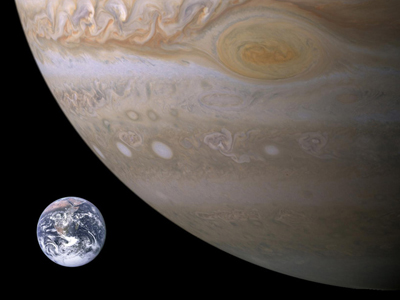
This picture shows the relative size of Earth to Jupiter.
Outer Space - Planets
Planets come in rocky and gas forms, with different atmospheres, temperatures and moons. Explore our Solar System and learn what makes each world unique.
To see a larger image, click on the picture.
1 .
Makemake is the creator of humanity and god of fertility in the mythos of the Rapanui. Where are the Rapanui from?
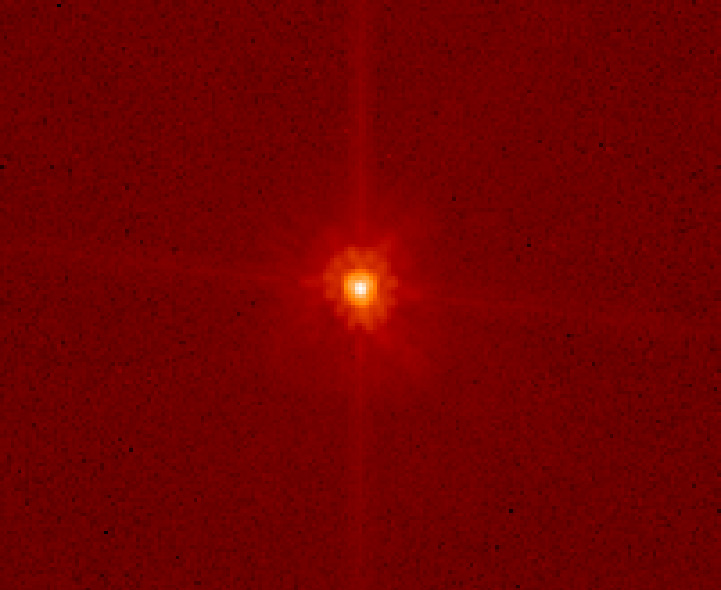
Photograph courtesy of NASA
Guam
Easter Island
Hawaii
South Sandwich Islands
- Discovered by: Michael E. Brown, Chad Trujillo and David Rabinowitz
- Discovery date: March 31, 2005
- No satellites have been detected around Makemake so far.
- The discovery team used the codename 'Easterbunny' for the object before it became Makemake, because of its discovery shortly after Easter.
- Makemake is now designated the fourth dwarf planet in the Solar System.
Makemake was chosen in part to preserve the object's connection with Easter
2 .
A well-known feature of Jupiter is the 'Great Red Spot'. What is this?
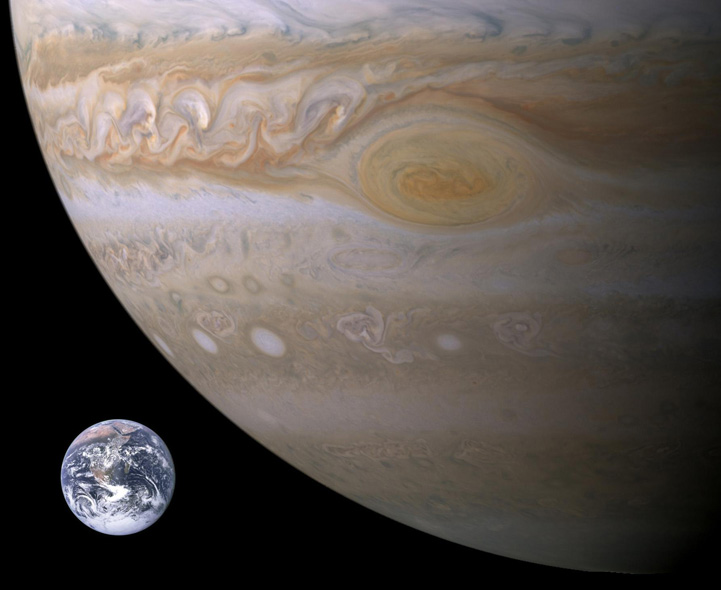
Photograph courtesy of NASA
A volcano
A whirlpool
A storm
A scorched desert
- Jupiter is the fifth planet from the Sun and by far the largest.
- It is more than twice as massive as all the other planets combined (the mass of Jupiter is 318 times that of Earth).
- There are at least 64 moons.
- Jupiter's rotation is the fastest of all the Solar System's planets, completing a rotation on its axis in just under ten hours.
Mathematical models suggest that the storm is stable and may be a permanent feature of the planet
3 .
Who wrote the best-selling book, 'Men Are from Mars, Women Are from Venus'?
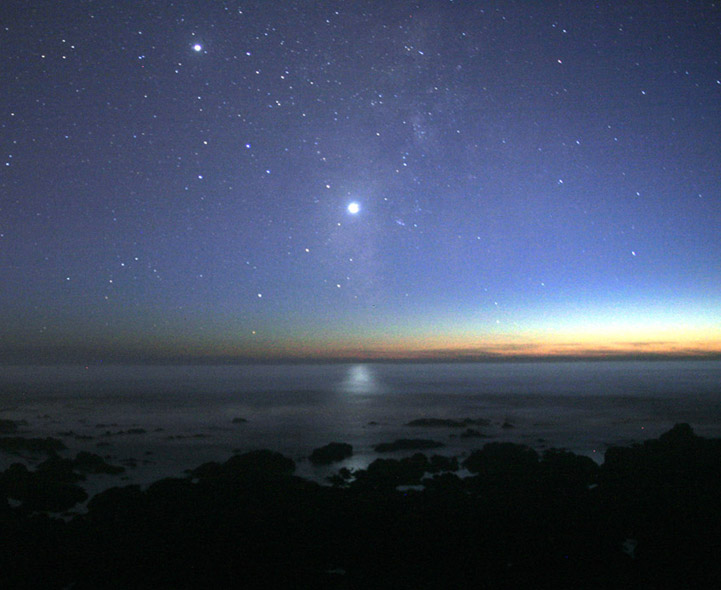
Photograph courtesy of Mila Zinkova
James Black
Jerry Greene
Joseph White
John Gray
- Venus has no magnetic field, perhaps because of its slow rotation.
- In 2004 and 2012 Venus passed directly between the Earth and the Sun, appearing as a large black dot travelling across the Sun's disk. This event is known as a 'transit of Venus' and is very rare: the last one before these was in 1882, and the next not until 2117!
The book has sold more than 7 million copies and is reported to be one of the best selling self-help books of all time
4 .
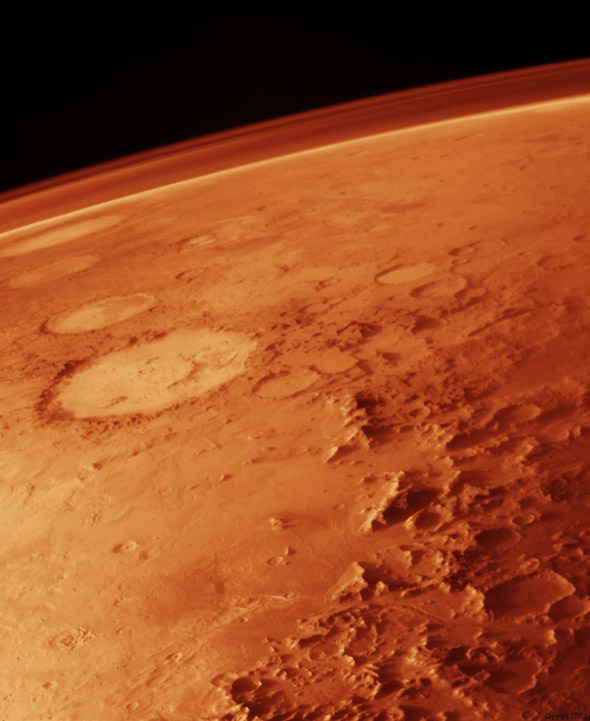
The Mars Science Laboratory is a NASA mission which landed a rover on the surface of Mars in 2012. What is the name of the rover?
Photograph courtesy of NASA
Intuition
Venture
Inquisitive
Curiosity
- Has been known since prehistoric times.
- Is also known as the Red Planet.
- This is due to iron oxide on the surface, giving it a reddish hue.
- The highest known mountain, Olympus Mons, is located on Mars.
- It has two moons, Phobos and Deimos.
- Can easily be seen with the naked eye.
- Its surface appears to be composed mainly of basalt.
- Scarred by impact craters.
- Has the largest dust storms in our Solar System.
5 .
How many Earth years is Pluto's orbital period?
Photograph courtesy of NASA
228 years
248 years
268 years
288 years
- Discovered by: Clyde W. Tombaugh
- Discovery date: February 18, 1930
- Much smaller than any of the official planets and now classified as a 'dwarf planet'.
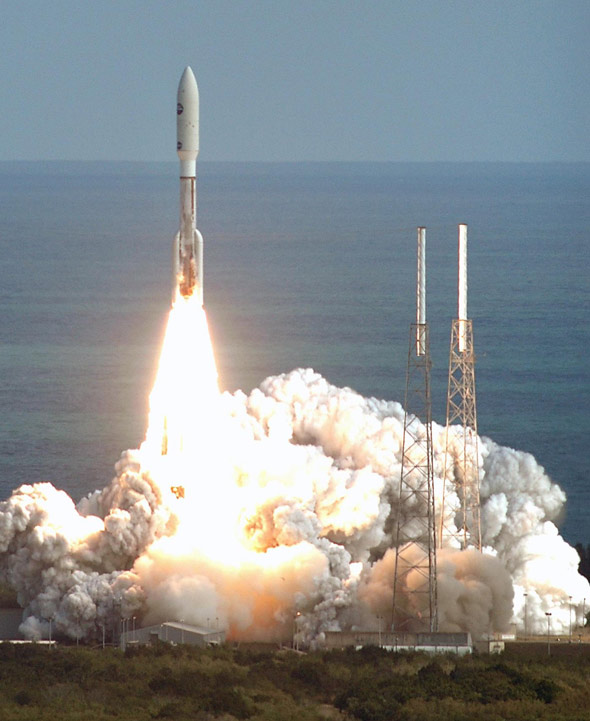
- Pluto has been visited by only one spacecraft.
- New Horizons was launched in January 2006 (see photo). It reached Pluto on July 14th 2015.
- Can be seen with an amateur telescope but it is not easy.
6 .
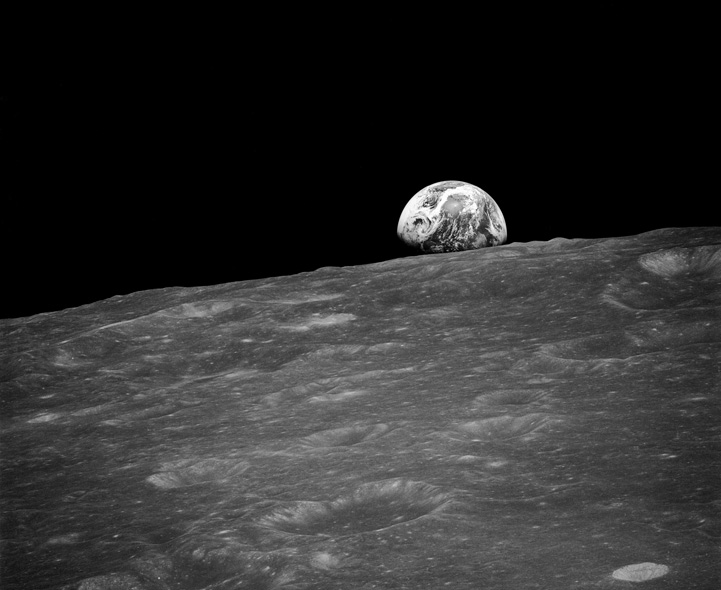
Who was the first human to orbit Earth?
Photograph courtesy of NASA
Vladimir Komarov
Yuri Gagarin
Alexey Leonov
Valeri Polyakov
- It was not until the 20th Century that we had maps of the entire planet.
- Pictures of the planet taken from space are of considerable importance; for example, they are an enormous help in weather prediction and especially in tracking and predicting hurricanes.
- In addition, they are extraordinarily beautiful.
He was a Soviet pilot and cosmonaut. He orbited Earth on 12 April 1961
7 .
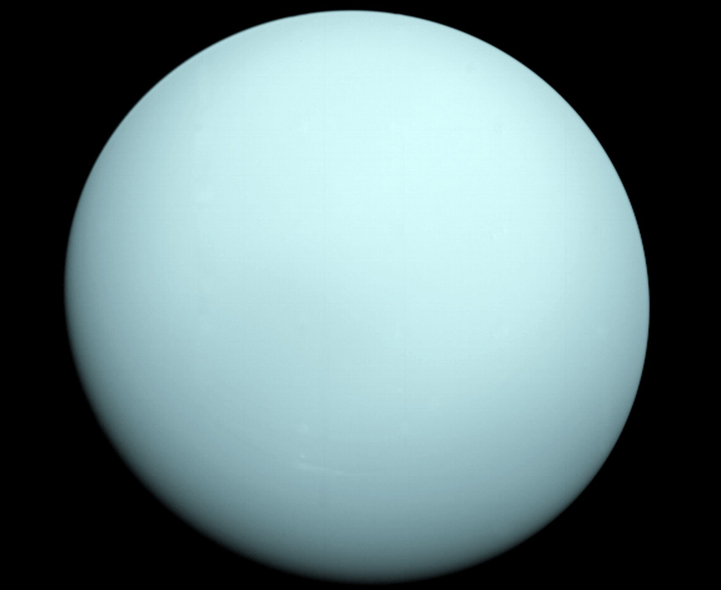
Can you identify this planet?
Photograph courtesy of NASA
Mercury
Ceres
Uranus
Pluto
- Discovered by: William Herschel
- Discovery date: March 13, 1781
- Visible to the naked eye, although due to its distance and slow orbit ancient observers didn't think it was a planet.
- Composed primarily of rock and various ices.
- Has been visited by only one spacecraft, Voyager 2, in January 1986.
- Wind speeds can reach up to 250 metres per second (560 mph).
8 .
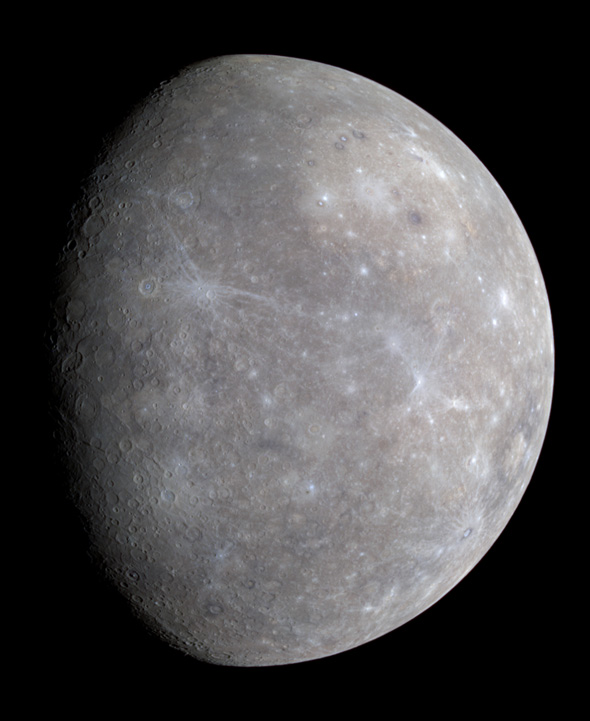
A very rare event in astronomy is the passage of one planet in front of another, as seen from Earth. What is this known as?
Photograph courtesy of NASA
Occultation
Bi-location
Stridation
Defixation
- Mercury is the closest planet to the Sun.
- Has been known since at least the time of the Sumerians (3rd millennium BC).
- Its orbit is highly eccentric.
- Has a similar appearance to the Moon.
- The surface is flexed by significant tidal bulges raised by the Sun - the Sun's tides on Mercury are about 17 times stronger than the Moon's on Earth.
Mercury and Venus occult each other every few centuries, and the event of May 28, 1737 is the only one historically observed. The next occultation of Mercury by Venus will be on December 3, 2133
9 .
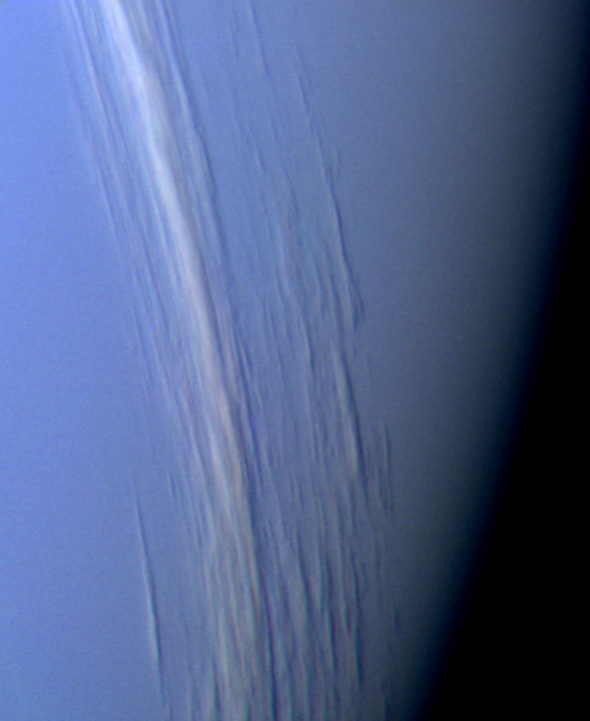
What is the name of Neptune's largest moon?
Photograph courtesy of NASA
Triton
Titan
Poseidon
Nereid
- Discovered by: Urbain Le Verrier, John Couch Adams and Johann Galle
- Discovery date: September 23, 1846
- In 1613, Galileo observed Neptune when it happened to be very near Jupiter, but he thought it was just a star.
- Its atmosphere is mostly hydrogen and helium with a small amount of methane.
- Neptune's winds are the fastest in the solar system, reaching 2000 km/hour.
- It has an internal heat source - it radiates more than twice as much energy as it receives from the Sun.
Triton is the only large moon in the Solar System to orbit 'backwards'
10 .
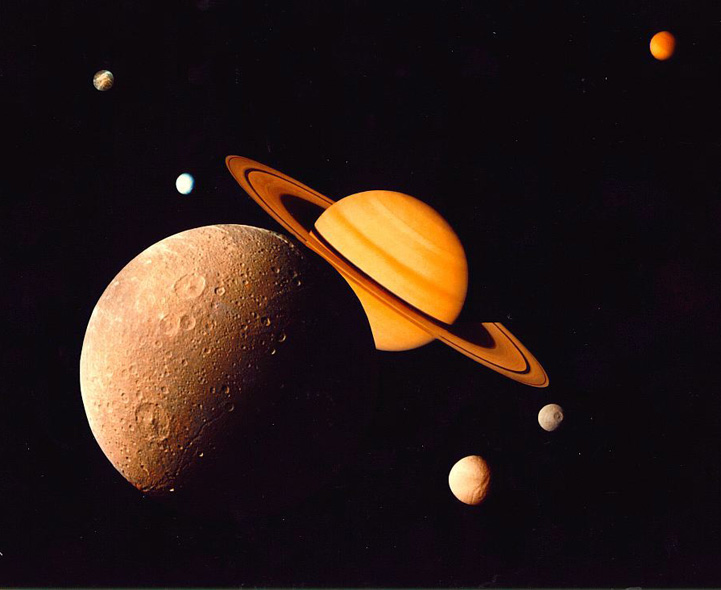
Who composed the classical suite called 'The Planets'?
Photograph courtesy of NASA
Edward Elgar
Franz Liszt
Nikolai Rimsky-Korsakov
Gustav Holst
- Saturn has been known since prehistoric times.
- Galileo was the first to observe it with a telescope in 1610; he noted its odd appearance but was confused by it.
- The ring particles seem to be composed primarily of water ice.
- Is easily visible to the unaided eye and identified as a planet because it doesn't 'twinkle' like the stars do.
Saturn, the Bringer of Old Age, is one of the seven movements of the suite



**Unlimited Quizzes Await You! 🚀**
Hey there, quiz champ! 🌟 You've already tackled today's free questions.
Ready for more?
Ready for more?
🔓 Unlock UNLIMITED Quizzes and challenge yourself every day. But that's
not all...
not all...
🔥 As a Subscriber you can join our thrilling "Daily Streak" against other
quizzers. Try to win a coveted spot on our Hall of Fame Page.
quizzers. Try to win a coveted spot on our Hall of Fame Page.
Don't miss out! Join us now and keep the fun rolling. 🎉
**Unlimited Quizzes Await You! 🚀**
Hey there, quiz champ! 🌟 You've already tackled today's free questions. Ready for more?
🔓 Unlock UNLIMITED Quizzes and challenge yourself every day. But that's not all...
🔥 As a Subscriber you can join our thrilling "Daily Streak" against other quizzers. Try to win a coveted spot on our Hall of Fame Page.
Don't miss out! Join us now and keep the fun rolling. 🎉




© Copyright 2016-2026 - Education Quizzes
Work Innovate Ltd - Design | Development |
Marketing
