




Ask the AI Tutor
Need help with Rivers - Invertebrates? Ask our AI Tutor!
AI Tutor - Lucy
Connecting with Tutor...
Please wait while we establish connection
Play this quiz and see if you get all ten questions correct.
Rivers - Invertebrates
River invertebrates are the small animals that keep freshwater habitats ticking. Discover who they are, what they do, and why they matter, then try the quiz.
To see a larger image, click on the picture.
1 .
Can you identify this invertebrate?
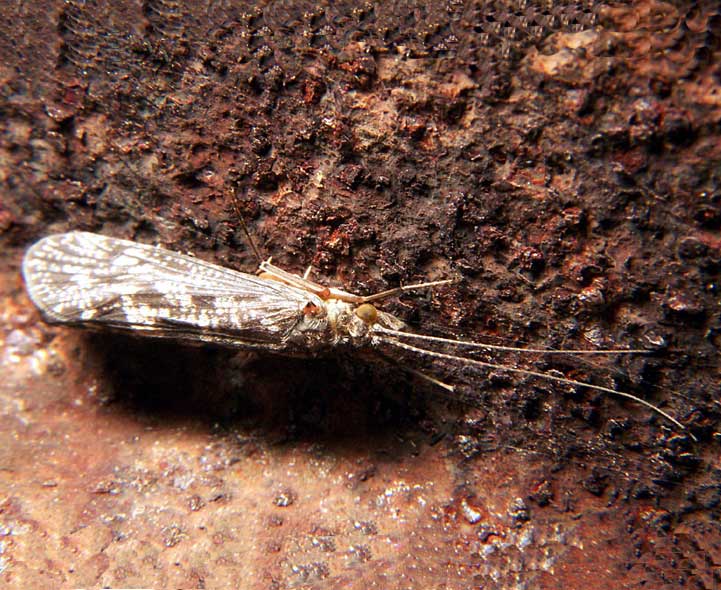
Photograph courtesy of Bruce Marlin
Alderfly
Caddisfly
Mayfly
Snakefly
- Class: Insecta
- Superorder: Amphiesmenoptera
- Order: Trichoptera
- Fossils have been found in rocks dating back to the Triassic period
- At the larvae stage, they build their structures underwater using silk.
- Have a preference for clean water.
- The adult stage is generally short-lived, anything from one week to two months.
- Adults are equipped predominantly to mate, and don't eat.
2 .
Can you identify this invertebrate?
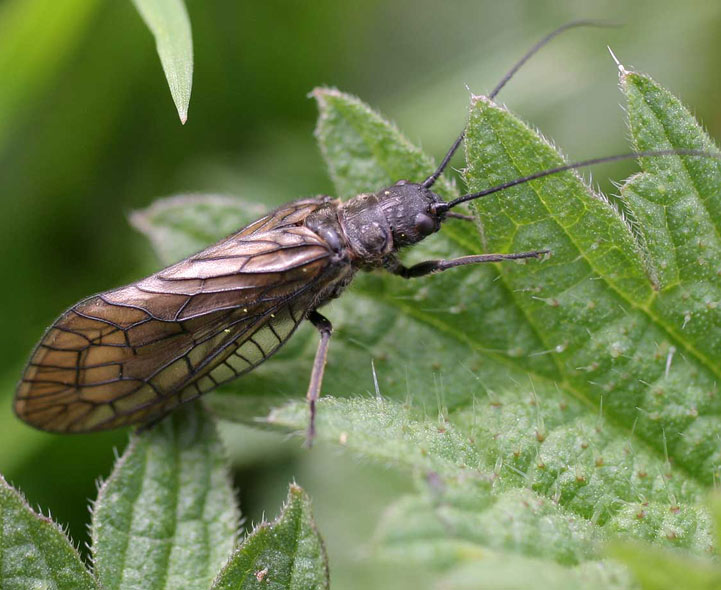
Photograph courtesy of http://www.entomart.be/
Alderfly
Dobsonfly
Fishfly
Caddisfly
- Order: Megaloptera
- Family: Sialidae
- The larvae are aquatic, active, armed with strong sharp mandibles, and breathe by means of seven pairs of abdominal branchial filaments.
- It takes between one and two years to become full sized, whereupon they leave the water until metamorphosis into the sexually mature insect.
- Adults stay near to the water, in which they had lived in when they were younger.
3 .
Can you identify this invertebrate?
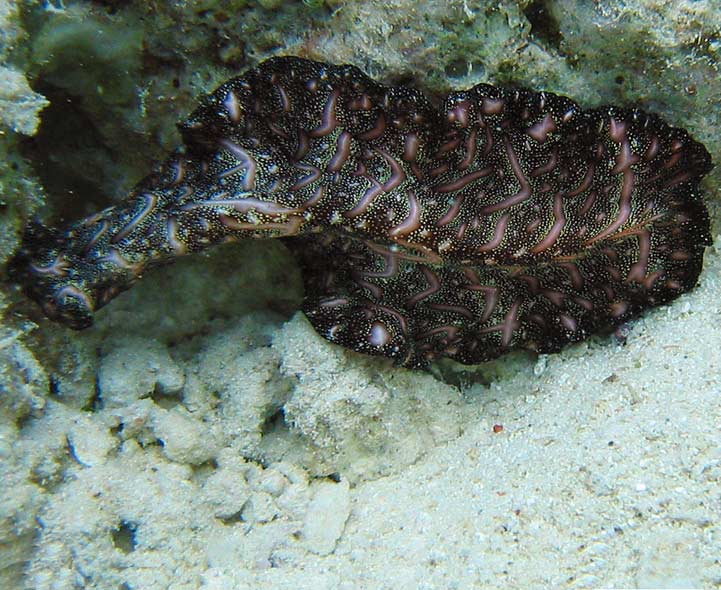
Photograph courtesy of Jan Derk
Acorn worm
Bootlace worm
Horsehair worm
Flatworm
- Do not have internal body cavities.
- Over half of the species are parasitic.
- Has been used successfully in some countries to control populations of imported giant African snails.
- Are bilaterally symmetrical creatures, which means their left and right sides are mirror images of each other.
- A New Zealand species thought to have reached Europe in plant containers is causing concern as it preys on earthworms.
4 .
Can you identify this invertebrate?
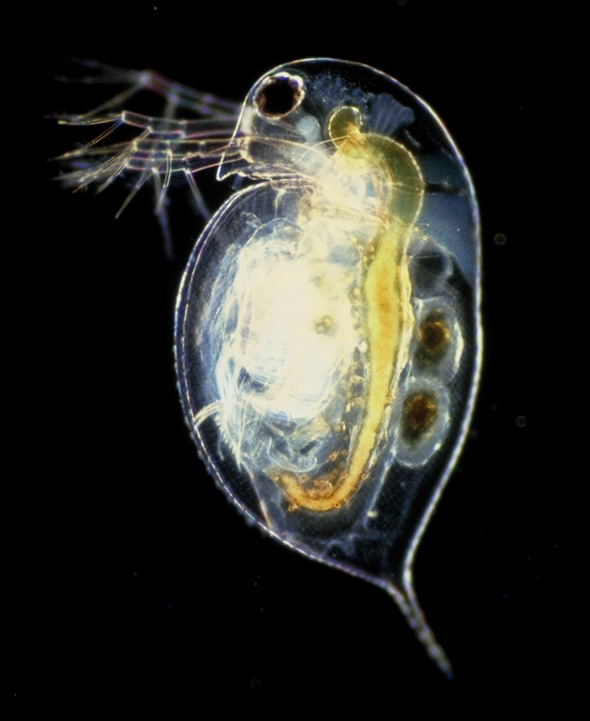
Photograph courtesy of Paul Hebert
Water flea
Water mite
Water nit
Water midge
- Class: Branchiopoda
- Subclass: Phyllopoda
- Order: Cladocera
- Widespread and common in inland aquatic habitats.
- A tiny creature between 0.2 - 6 mm long.
- Its head is turned downwards and it has a single black eye.
- The head has two pairs of antennae, the second longer pair are used for swimming.
5 .
Can you identify this invertebrate?
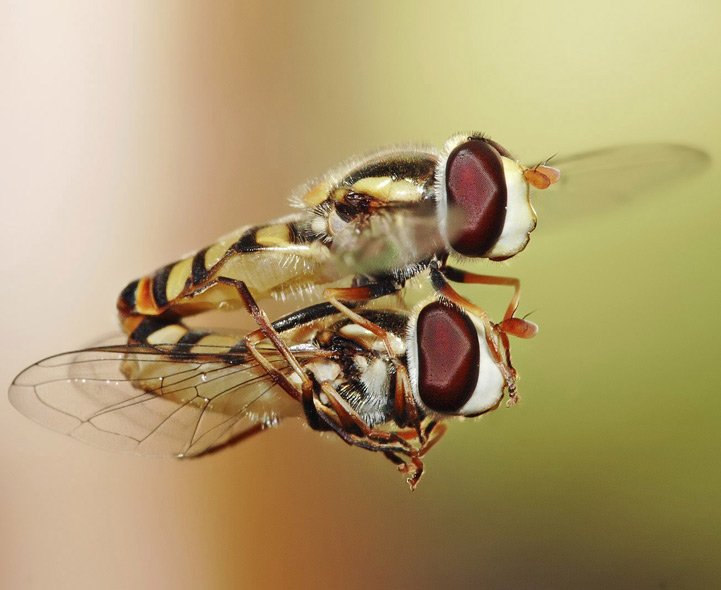
Photograph courtesy of Fir0002
Scorpionfly
Springtail
Hoverfly
Stonefly
- Order: Diptera
- Superfamily: Syrphoidea
- Family: Syrphidae
- Found on all continents except Antarctica.
- Harmless to most animals.
- Many species of the larvae prey on pest insects including aphids and leafhoppers.
- Because of this, gardeners will use plants to attract the species.
6 .
This freshwater snail is popular for aquariums in the United States. What is it called?

Photograph courtesy of Scott Bauer
Mystery snail
Ramshorn snail
Apple snail
River snail
- A freshwater snail is a gastropod, of which there are approximately 4,000 species!
- Most freshwater gastropods have a shell, however there are a few exceptions.
- Some snails breathe using gills, but others need to surface to breathe air.
- Several species are eaten in Asian cuisine.
- Can live happily with tropical fish in aquariums.
- Through archeological research in Guatemala, it has been revealed that freshwater snails were part of the diet of the Maya civilisation.
7 .
Crayfish is a popular dish in Sweden and Finland. It is flavoured with large quantities of which plant?
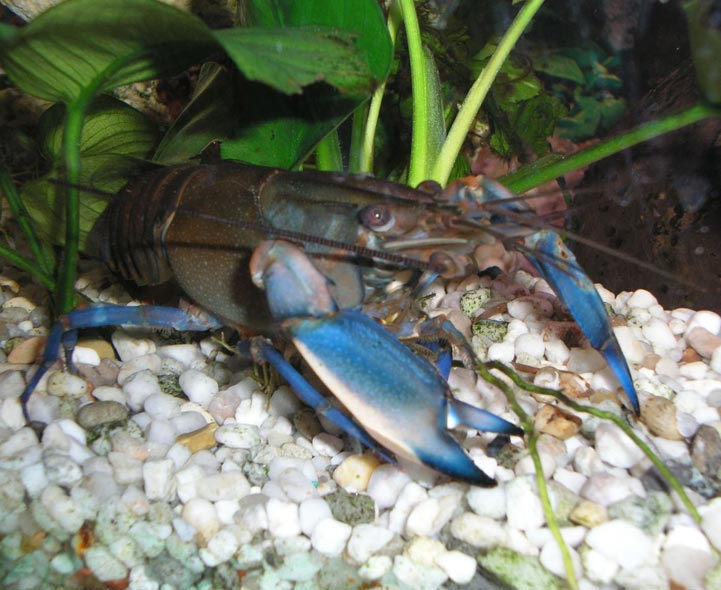
Photograph courtesy of Nick9002
Basil
Thyme
Rosemary
Dill
- Order: Decapoda
- Suborder: Pleocyemata
- Infraorder: Astacidea
- Superfamily: Astacoidea
- Related to the lobster.
- The study of crayfish is called astacology.
- Are found near enough worldwide.
- Louisiana supplies 98% of the crayfish harvested in the USA.
Both the stems and the flowers of dill are used, along with salt, sugar and ale
8 .
Can you identify this invertebrate?
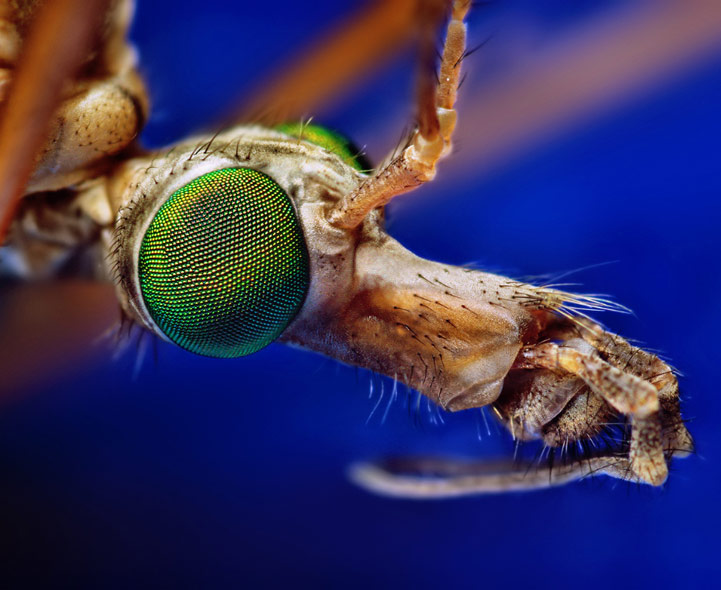
Photograph courtesy of Thomas Shahan
Cranefly
Snakefly
Kedfly
Sawfly
- Order: Diptera
- Family: Tipulidae
- The larvae are called leatherjackets.
- In 1935, Lord's Cricket Ground in London was affected by leatherjackets: several thousand were collected by ground staff and burned, because they caused bald patches on the wicket and the pitch took unaccustomed spin for much of the season.
- Also known as daddy long-legs.
9 .
Can you identify this invertebrate?
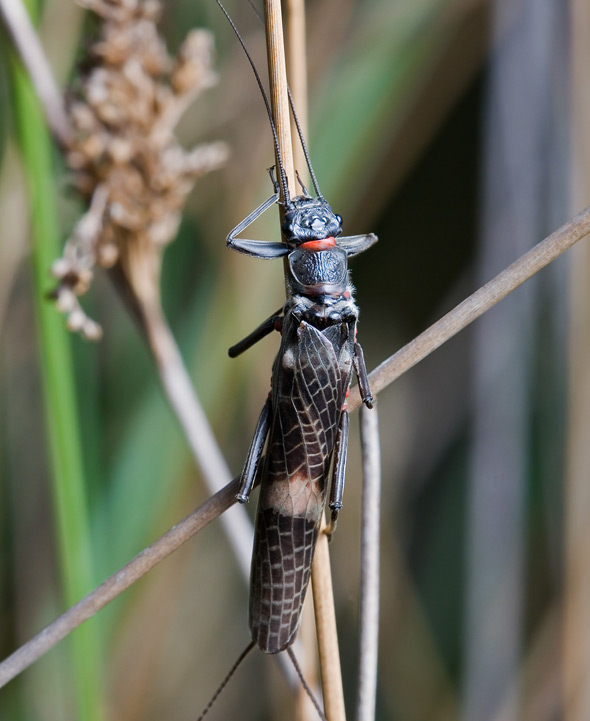
Photograph courtesy of JJ Harrison
Lacewing
Stonefly
Mayfly
Mosquito
- Subclass: Pterygota
- Infraclass: Neoptera
- Superorder: Exopterygota
- Order: Plecoptera
- Found throughout the world except Antarctica.
- Prefer to live in areas with running water.
- Intolerant of water pollution, so their presence is an indicator of good water quality.
- Females carry thousand of eggs in a ball which they carry on their abdomen at first and later deposit into the water.
- The nymphs physically resemble wingless adults, but often have external gills which may be present on almost any part of the body.
10 .
Leeches are hermaphrodites. What does this mean?
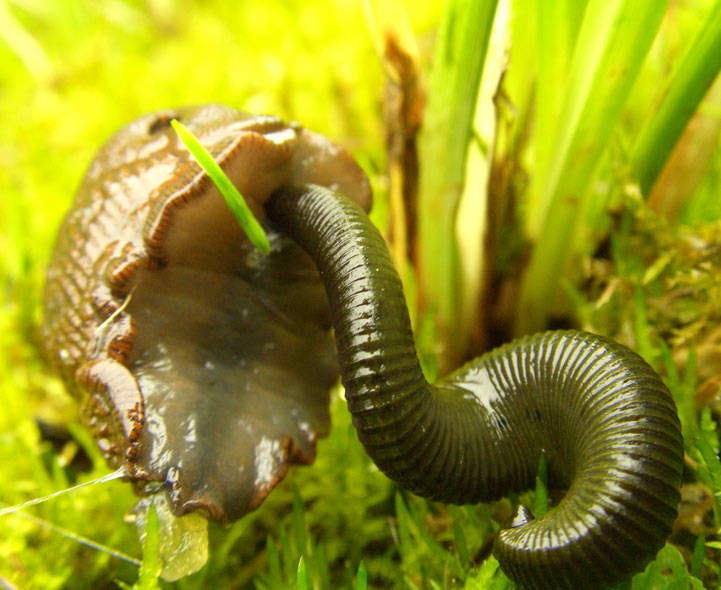
Photograph courtesy of Manuel Krueger-Krusche
They do not sleep
They eat their young
They have both male and female reproductive organs
They have no reproductive organs
- They have two suckers, one at each end of the animal.
- Historically, have been used in medicine to remove blood from patients.
- Leeching can be traced to Ancient India and Greece and has continued well into the 18th and 19th centuries in Europe.
- The use of leeches in modern medicine made its comeback in the 1980s after years of decline, with the advent of microsurgery such as plastic and reconstructive surgeries.



**Unlimited Quizzes Await You! 🚀**
Hey there, quiz champ! 🌟 You've already tackled today's free questions.
Ready for more?
Ready for more?
🔓 Unlock UNLIMITED Quizzes and challenge yourself every day. But that's
not all...
not all...
🔥 As a Subscriber you can join our thrilling "Daily Streak" against other
quizzers. Try to win a coveted spot on our Hall of Fame Page.
quizzers. Try to win a coveted spot on our Hall of Fame Page.
Don't miss out! Join us now and keep the fun rolling. 🎉
**Unlimited Quizzes Await You! 🚀**
Hey there, quiz champ! 🌟 You've already tackled today's free questions. Ready for more?
🔓 Unlock UNLIMITED Quizzes and challenge yourself every day. But that's not all...
🔥 As a Subscriber you can join our thrilling "Daily Streak" against other quizzers. Try to win a coveted spot on our Hall of Fame Page.
Don't miss out! Join us now and keep the fun rolling. 🎉




© Copyright 2016-2026 - Education Quizzes
Work Innovate Ltd - Design | Development |
Marketing
