




Ask the AI Tutor
Need help with The First World War 04? Ask our AI Tutor!
AI Tutor - Lucy
Connecting with Tutor...
Please wait while we establish connection
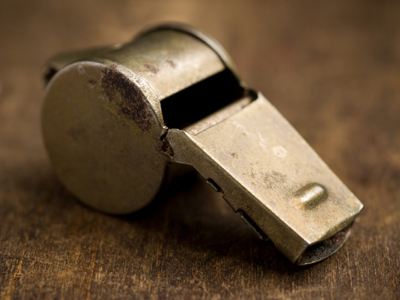
A whistle usually ordered men 'over the top' which meant to leave the trenches to attack the enemy.
The First World War 04
Discover how Britain raised its armies in the First World War, from patriotic volunteers and Pals battalions to strict conscription when voluntary recruiting no longer filled the ranks.
1 .
What was the first poison gas used in the war?
Chlorine
Cyanide
Phosgene
Sulfur
Chlorine is a green coloured gas that is very acidic as well as being poisonous
2 .
The Gallipoli landings of 1915 aimed to defeat which ally of Germany?
Austria
Hungary
Italy
Turkey
The Turkish soldiers had good positions high on the slopes above the beaches at Gallipoli. The attacking forces had no chance of success
3 .
Which 1916 battle was a symbol of the horrors of war?
Artois
Flers
Fromelles
The Somme
51 VCs were won by British soldiers, 17 posthumously
4 .
The Somme aimed to force German troops away from which battle?
Cambrai
Loos
Verdun
Ypres
The idea was to weaken the German defences at Verdun so that the French army could break through
5 .
What signal usually ordered men 'over the top'?
A gunshot
A shout
A siren
A whistle
The more experienced soldiers often went first as they knew that they would have a few seconds to find some cover in a shell hole in no man's land before the Germans reacted and started firing at them
6 .
Which countries' troops fought at Gallipoli?
Australia and New Zealand
Australia and South Africa
Canada and New Zealand
Canada and USA
The ANZAC forces: Australia and N.Z. Army Corps
7 .
What was NOT used during the Battle of the Somme?
Helicopters
Machine guns
Mustard gas
Tanks
Over one million men were killed in this battle alone
8 .
The major German attack on the Western Front in spring 1918 was the .......
Hindenburg Offensive
Luddendorf Offensive
Maastricht Offensive
Scheldt Offensive
Allies retreated but Germans failed to break through
9 .
What method forced men to join the British Army?
Conscription
Encryption
Inscription
Procrastination
It was introduced in 1916 because the army needed to replace the men that had been killed
10 .
What did the Germans call their submarines?
D-Boats
S-boats
U-boats
X-boats
Unterseeboot - German for 'undersea boat'



**Unlimited Quizzes Await You! 🚀**
Hey there, quiz champ! 🌟 You've already tackled today's free questions.
Ready for more?
Ready for more?
🔓 Unlock UNLIMITED Quizzes and challenge yourself every day. But that's
not all...
not all...
🔥 As a Subscriber you can join our thrilling "Daily Streak" against other
quizzers. Try to win a coveted spot on our Hall of Fame Page.
quizzers. Try to win a coveted spot on our Hall of Fame Page.
Don't miss out! Join us now and keep the fun rolling. 🎉
**Unlimited Quizzes Await You! 🚀**
Hey there, quiz champ! 🌟 You've already tackled today's free questions. Ready for more?
🔓 Unlock UNLIMITED Quizzes and challenge yourself every day. But that's not all...
🔥 As a Subscriber you can join our thrilling "Daily Streak" against other quizzers. Try to win a coveted spot on our Hall of Fame Page.
Don't miss out! Join us now and keep the fun rolling. 🎉




© Copyright 2016-2026 - Education Quizzes
Work Innovate Ltd - Design | Development |
Marketing
