




Ask the AI Tutor
Need help with Digestion 02? Ask our AI Tutor!
AI Tutor - Lucy
Connecting with Tutor...
Please wait while we establish connection
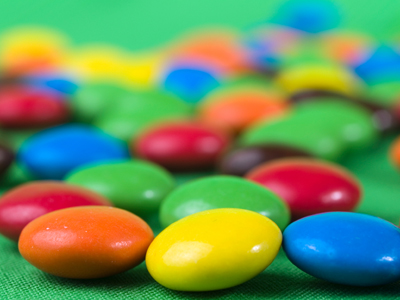
Foods high in carbohydrate include sweets.
Digestion 02
The digestive system breaks food down into nutrients. In KS3 Science, pupils learn how this process fuels the body, supports growth, and helps repair tissues effectively.
1 .
Glucose is stored in the .......
liver
pancreas
small intestine
stomach
It is released when needed
2 .
The small molecules are absorbed into the blood in the .......
large intestine
pancreas
small intestine
stomach
They are small enough to pass through the wall of the small intestine
3 .
Which of the following is a job carried out by the liver?
Absorbs water from the gut
Makes bile
Makes amylase
Stores fats and glycerol
It has been estimated that the liver has about 500 different jobs to do in your body
4 .
What does the large intestine do?
Absorbs digested food into the blood
Absorbs water from the gut
Makes bile to break down fats
Makes enzymes
This changes the undigested part of your food from a sloppy liquid into a soft solid
5 .
Iodine solution is a yellow-brown colour and is used to test for starch. If starch is present what colour does the iodine turn?
blue-black
milky
orange-red
purple
You may have carried out an experiment using iodine, starch and amylase to investigate digestion
6 .
The removal of undigested food is called .......
absorption
contraction
egestion
excretion
The opposite is ingestion which is the scientific word used for taking something into the digestive system
7 .
Fats are stored .......
in the large intestine
in the pancreas
in the stomach
under the skin
The body has special cells to store fat
8 .
The small intestine has special structures, called villi, which help absorption of digested food. Which of the following is NOT a feature?
Good blood supply
Impermeable walls
Large surface area
Thin layer of cells
The walls are permeable to allow absorption to occur
9 .
Which of the following is a function of the pancreas?
Absorbs digested food into the blood
Absorbs water from the gut
Makes bile to break down fats
Makes enzymes
Its other main function is to produce the hormones that regulate the level of sugar in your blood
10 .
The small intestine in an adult is .......
1-2 metres long
6-7 metres long
10-11 metres long
over 20 metres long
It needs to be as long as that to give the enzymes time to break down the food as it slowly passes through the body



**Unlimited Quizzes Await You! 🚀**
Hey there, quiz champ! 🌟 You've already tackled today's free questions.
Ready for more?
Ready for more?
🔓 Unlock UNLIMITED Quizzes and challenge yourself every day. But that's
not all...
not all...
🔥 As a Subscriber you can join our thrilling "Daily Streak" against other
quizzers. Try to win a coveted spot on our Hall of Fame Page.
quizzers. Try to win a coveted spot on our Hall of Fame Page.
Don't miss out! Join us now and keep the fun rolling. 🎉
**Unlimited Quizzes Await You! 🚀**
Hey there, quiz champ! 🌟 You've already tackled today's free questions. Ready for more?
🔓 Unlock UNLIMITED Quizzes and challenge yourself every day. But that's not all...
🔥 As a Subscriber you can join our thrilling "Daily Streak" against other quizzers. Try to win a coveted spot on our Hall of Fame Page.
Don't miss out! Join us now and keep the fun rolling. 🎉




© Copyright 2016-2026 - Education Quizzes
Work Innovate Ltd - Design | Development |
Marketing
