




Ask the AI Tutor
Need help with Vocabulary 13 - Homographs? Ask our AI Tutor!
AI Tutor - Lucy
Connecting with Tutor...
Please wait while we establish connection
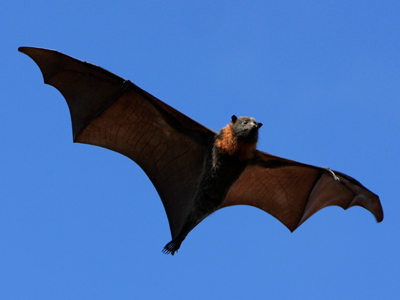
The word 'bat' has more than one meaning. It is not only a flying mammal but also a wooden club used to hit a ball in sport. BAT is a homograph.
Vocabulary 13 - Homographs
For additional practice on this topic at this age group, you may also find our KS3 English revision quizzes useful.
We have all heard of hours, minutes and seconds. The first thing that comes to mind when we think of these words is time because we are so used to telling the time using these words. But look at these sentences:‘I enjoyed my HOUR of glory’
‘He came SECOND in the running race’
‘I could see MINUTE particles floating on the surface of the water.’
What do these sentences tell us? There seem to be meanings for the words in capitals that are not related to the measurements of time they represent. In the first sentence, the HOUR is used for an interval of time that is much less than or more than 60 minutes. In the second sentence, SECOND is the position a runner finished in a race and in the third sentence, MINUTE refers to the smallness of a particle. In these three examples, hour, minute and second are seen to be HOMOGRAPHS.
1 .
Choose the homograph that is connected with a bird and eating.
Swallow
Blackbird
Goose
Rice
'Swallow' is a homograph. The 'swallow' is a species of bird and the word is also a verb connected to eating - 'you need to swallow your food'
2 .
Choose the homograph that is connected to baseball and liquids.
Diamond
Water
Pitcher
Bat
'Pitcher' is a homograph. The 'pitcher' is the person who pitches the ball in a baseball game. A 'pitcher' is also a container for holding liquids, mainly water
3 .
Choose the homograph that is connected to stones and prey.
Quarry
Earth
Gravel
Quake
'Quarry' is a homograph. A 'quarry' is an excavation for the extraction of certain materials such as stone or marble. 'Quarry' is also used to describe a prey, such as a bird or animal, that is hunted by others
4 .
Choose the homograph that is connected to a large undertaking and forecast.
Housing
Skyscraper
Dam
Project
'Project' is a homograph. A 'project' is noun meaning 'a large undertaking' as in 'the government announced a large irrigation project to stimulate the economy.' 'Project' is also a verb meaning 'to set forth parameters for the future', as in 'the secretary wanted us to project the future scenario in financial terms.'
The two words are pronounced differently: the noun as PROJ-(rhyming with LODGE)-ECT, and the verb as PRO-(rhyming with GO)-JECT
The two words are pronounced differently: the noun as PROJ-(rhyming with LODGE)-ECT, and the verb as PRO-(rhyming with GO)-JECT
5 .
Choose the homograph that is connected to an election and dispute.
Contend
Candidate
Vote
Contest
'Contest' is a homograph. A 'contest' is a game or competition as in 'The contest between India and Australia will be interesting.' 'Contest' also means to question a decision.
The two words sound slightly different as the stress is placed on different parts:
CON-test and con-TEST
The two words sound slightly different as the stress is placed on different parts:
CON-test and con-TEST
6 .
Choose the homograph that is connected to movement and money.
Rupees
Proceeds
Coins
Walk
'Proceeds' is a homograph. 'Proceeds' means 'to move forward', as in 'he proceeds to Gate 5 to board his flight.' 'Proceeds' is also revenue from commercial transactions as in 'he deposited the sales proceeds into the bank'
The two words sound slightly different as the stress is placed on different parts:
pro-CEEDS and PRO-ceeds
The two words sound slightly different as the stress is placed on different parts:
pro-CEEDS and PRO-ceeds
7 .
Choose the homograph that is connected to a reduction in price and diminish importance.
Discount
Discredit
Offer
Price
'Discount' is a homograph. 'Discount' is to deduct a certain amount from the usual price. 'Discount' is also to diminish the importance of someone's utterances.
The two words sound slightly different as the stress is placed on different parts:
DIS-count and dis-COUNT
The two words sound slightly different as the stress is placed on different parts:
DIS-count and dis-COUNT
8 .
Choose the homograph that is connected to a ritual in Indian homes and anger.
Irate
Innocent
Incense
Incentive
'Incense' is a homograph. 'Incense' is a gum that produces sweet odour when burned and Indian homes burn incense sticks as a part of a daily ritual. 'Incense' is also to enrage greatly or make angry.
The two words sound slightly different as the stress is placed on different parts:
IN-cense and in-CENSE
The two words sound slightly different as the stress is placed on different parts:
IN-cense and in-CENSE
9 .
Choose the homograph that is connected to a medical item and compactness.
Compass
Compare
Compress
Compete
'Compress' is a homograph. A 'compress' is a kind of pad worn by a patient to help apply pressure on a particular spot. 'Compress' is also to press in order to pack things in lesser space.
The two words sound slightly different as the stress is placed on different parts:
COM-press and com-PRESS
The two words sound slightly different as the stress is placed on different parts:
COM-press and com-PRESS
10 .
Choose the homograph that is connected to tennis and sounds.
Ruckus
Ricket
Rocket
Racket
'Racket' is a homograph. A 'racket' (spelt 'racquet' in the UK) is what you use to play tennis and a 'racket' is also a loud noise
Our Social Circles




© Copyright 2016-2026 - Education Quizzes
Work Innovate Ltd - Design | Development |
Marketing
