




Ask the AI Tutor
Need help with Vocabulary 17 - Prefixes 1? Ask our AI Tutor!
AI Tutor - Lucy
Connecting with Tutor...
Please wait while we establish connection
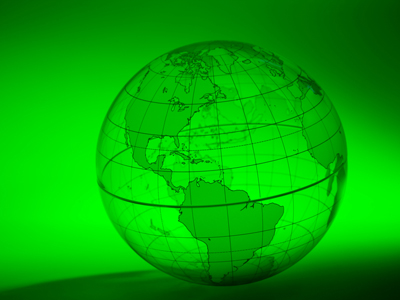
The Northern HEMISPHERE is the part of the Earth north of the equator. The word 'hemisphere' is formed from the prefix 'hemi' meaning 'half'.
Vocabulary 17 - Prefixes 1
We all know that the English language is a versatile one and there are thousands of words that you have learned with their meanings fairly clear. Eight parts of speech contribute to the full complement of words. Some of these words are known as root words or base words. From these root words we can create more words and utilise them for communicating more effectively.
One of the ways to create new words is by adding a prefix to a root word. For instance, if you look at a word such as SPELLING we know exactly what it means. Now, we can form a new word from spelling by adding a prefix. If we add the prefix MIS, we get the new word MISSPELLING. The meaning of misspelling is 'incorrect spelling'. How did we get this meaning? The answer lies in the meaning of the prefix.
One of the ways to create new words is by adding a prefix to a root word. For instance, if you look at a word such as SPELLING we know exactly what it means. Now, we can form a new word from spelling by adding a prefix. If we add the prefix MIS, we get the new word MISSPELLING. The meaning of misspelling is 'incorrect spelling'. How did we get this meaning? The answer lies in the meaning of the prefix.
1 .
"The --- rays of the sun are harmful to human beings." - Choose the appropriate prefixed word to fill up the blank.
Exviolet
Excessviolet
Extraviolet
Ultraviolet
The word is 'ultraviolet' and it has the prefix 'ultra' meaning 'exceeding' or 'beyond'. 'Ultraviolet' is a frequency of nonvisible light beyond violet's wavelength. The other three options are not recognised words
2 .
"The judge's --- against women was clearly seen in the judgment." - Choose the appropriate prefixed word to fill up the blank.
Prejudice
Antijudice
Exjudice
Dejudice
The word is 'prejudice' and it has the prefix 'pre' meaning 'before'. 'Prejudice' means 'to judge without proof'. The other three options are not recognised words
3 .
"India is a country that is situated entirely in the Northern ---." - Choose the appropriate prefixed word to fill up the blank
Hemisphere
Halfsphere
Halfworld
Halfglobe
The word is 'hemisphere' and it has the prefix 'hemi' meaning 'half'. 'Hemisphere' means half a sphere and the Northern Hemisphere is the half of the globe which is north of the equator. The other three options are not recognised words
4 .
"Jack Higgins is a --- of British novelist Harry Patterson." - Choose the appropriate prefixed word to fill up the blank.
Unname
Anothername
Halfname
Pseudonym
The word is 'pseudonym' and it has the prefix 'pseudo' meaning 'untrue' or 'false'. A 'pseudonym' is a fictional name used to hide one's real identity. The other three options are not recognised words
5 .
"His --- was the reason for his downfall." - Choose the appropriate prefixed word to fill up the blank.
Egomania
Extramania
Demania
Ultramania
The word is 'egomania' and it has the prefix 'ego' meaning 'self'. 'Egomania' means 'excessive love for one's self'. The other three options are not recognised words
6 .
"Arnab Goswami, the TV anchor was --- of the BJP spokesperson's stand on the black money issue." - Choose the appropriate prefixed word to fill up the blank.
Extracritical
Hypercritical
Excesscritical
Highcritical
The word is 'hypercritical' and it has the prefix 'hyper' meaning 'in excess'. 'Hypercritical' means 'to be severely critical'. The other three options are not recognised words
7 .
"PhD students were asked to --- the technical paper for non-technical people." - Choose the appropriate prefixed word to fill up the blank.
Extraphrase
Paraphrase
Underphrase
Overphrase
The word is 'paraphrase' and it has the prefix 'para' meaning 'alongside' or 'in another form'. 'Paraphrase' means 'to restate' or 'to tell in another form'. The other three options are not recognised words
8 .
"The demand for --- was made by the Tamil Nadu people way back in the 1960s." - Choose the appropriate prefixed word to fill up the blank.
Autocontrol
Autogovernance
Autonomy
Autoadministration
The word is 'autonomy' and it has the prefix 'auto' meaning 'of the self'. 'Autonomy' is the right of self-government. The other three options are not recognised words
9 .
"India's --- parameters are slowly picking up and should do well in the coming months." - Choose the appropriate prefixed word to fill up the blank.
Bigeconomic
Hugeeconomic
Largeeconomic
Macroeconomic
The word is 'macroeconomic' and it has the prefix 'macro' meaning 'large' or 'aggregate'. 'Macroeconomic' means 'the aggregate of the economic parameters'. The other three options are not recognised words
10 .
"Rajnikanth is a --- star from South India." - Choose the appropriate prefixed word to fill up the blank.
Fivelanguages
Manylanguages
Multilingual
Alllanguages
The word is 'multilingual' and it has the prefix 'multi' meaning 'many'. 'Multilingual' describes someone who can speak many languages. The other three options are not recognised words
Our Social Circles




© Copyright 2016-2026 - Education Quizzes
Work Innovate Ltd - Design | Development |
Marketing
