




Ask the AI Tutor
Need help with Between ourselves ...? Ask our AI Tutor!
AI Tutor - Lucy
Connecting with Tutor...
Please wait while we establish connection
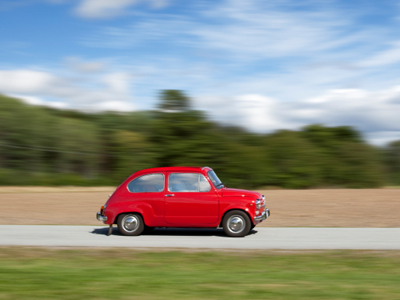
See if you can find the driving question in this quiz!
Between ourselves ...
Learn when to say “between ourselves” and “among ourselves”. Practise prepositions for private conversations, and choose the most natural phrase for the situation.
1 .
Choose the answer that completes the sentence in the most accurate and idiomatic English.
They drove and drove ... ... hours on end ... ... they had almost run out of fuel.
They drove and drove ... ... hours on end ... ... they had almost run out of fuel.
... during ... / ... when ...
... over ... / ... in case ...
... for ... / ... until ...
... along ... / ... although ...
All these Answers apart from No.3 contain errors of logic or style, or both.
2 .
Choose the answer that completes the sentence in the most accurate and idiomatic English.
We had to dismiss our last secretary, because she really seemed to spend more of her time ... ... the window than ... ... our documents.
We had to dismiss our last secretary, because she really seemed to spend more of her time ... ... the window than ... ... our documents.
... staring out of ... / ... dealing over ...
... looking through ... / ... looking through ...
... looking out of ... / ... looking after ...
... watching ... / ... watching over ...
The two different prepositional idioms with 'looking' are the nub of this Answer; the 'identical' versions at Answer 2 are appealing, but the pun does not work entirely naturally.
In Answer 1, 'dealing with' would have been acceptable; Answer 4's double use of 'watching' does not quite work, because she would (probably, more likely) have been watching outside, or through, the window rather than watching the window itself. (One can 'watch the door', i.e. 'keep an eye in case anyone comes', and famously, on the London Underground and elsewhere one is encouraged to 'Mind The Gap'.) One might also 'watch over' a sleeping child, pet or someone that was unwell (like the shepherds on the hills in the Christmas story), but 'watching over' a range of documents does not quite feel natural or appropriate.
In Answer 1, 'dealing with' would have been acceptable; Answer 4's double use of 'watching' does not quite work, because she would (probably, more likely) have been watching outside, or through, the window rather than watching the window itself. (One can 'watch the door', i.e. 'keep an eye in case anyone comes', and famously, on the London Underground and elsewhere one is encouraged to 'Mind The Gap'.) One might also 'watch over' a sleeping child, pet or someone that was unwell (like the shepherds on the hills in the Christmas story), but 'watching over' a range of documents does not quite feel natural or appropriate.
3 .
Choose the answer that completes the sentence in the most accurate and idiomatic English.
We always preferred a teacher who would talk ... ... you, rather than talking ... ... you.
We always preferred a teacher who would talk ... ... you, rather than talking ... ... you.
... to ... / ... about ...
... across ... / ... after ...
... despite ... / ... with ...
... with ... / ... at ...
Answer 4 is the best pair, driven by the final idea of 'talking AT' people (which suggests that the speaker is delivering what they planned to say, completely regardless of what response they are getting). Answer 3 tries to convey a rather similar contrast, but somehow 'doesn't quite work' as an expression.
Answer 1 is possible but probably less likely (the idea being that such a teacher would converse with you face-to-face rather than discussing you 'behind your back'); Answer 2 suggests one who cuts in and interrupts you, rather than waiting until you've had your say before commenting on it.
Answer 1 is possible but probably less likely (the idea being that such a teacher would converse with you face-to-face rather than discussing you 'behind your back'); Answer 2 suggests one who cuts in and interrupts you, rather than waiting until you've had your say before commenting on it.
4 .
Choose the answer that completes the sentence in the most accurate and idiomatic English.
What's the name of that famous book ... ... George Orwell, where the animals take ... ... the farm?
What's the name of that famous book ... ... George Orwell, where the animals take ... ... the farm?
... of ... / ... on ...
... from ... / ... back ...
... by ... / ... over ...
...off ... / ... away ...
Answer 3 is the best; most of the rest are understandable but wrong. 'Taking back' the farm (Answer 2) is acceptable, as you may recognise if you know the story, but only on the assumption that it should have been fully theirs to begin with.
'Animal Farm' is a good read (and not too long; around 100 pages in a typical standard paperback edition), which we would recommend for all sorts of reasons: a fairly recent classic novel (though Orwell titles it as 'a fairy story'), told in consistently good English, with a strong socio-political point, but which can be read with enjoyment on a variety of 'levels'.
If your own country happens to have any totalitarianism in its present system, or within living-memory history, you will find it especially interesting.
'Animal Farm' is a good read (and not too long; around 100 pages in a typical standard paperback edition), which we would recommend for all sorts of reasons: a fairly recent classic novel (though Orwell titles it as 'a fairy story'), told in consistently good English, with a strong socio-political point, but which can be read with enjoyment on a variety of 'levels'.
If your own country happens to have any totalitarianism in its present system, or within living-memory history, you will find it especially interesting.
5 .
Choose the answer that completes the sentence in the most accurate and idiomatic English.
As they say, nobody alive and alert at the time will forget where they were, and what they were doing, when President JF Kennedy of the USA was shot ... ... 1 o'clock ... ... 22 November 1963.
As they say, nobody alive and alert at the time will forget where they were, and what they were doing, when President JF Kennedy of the USA was shot ... ... 1 o'clock ... ... 22 November 1963.
... on ... / ... of ...
... at ... / ... on ...
... during ... / ... the ...
... in ... / ... at ...
... 'at a time, on a date'; in British speech we would actually say 'on the 22nd of November'.
6 .
Choose the answer that completes the sentence in the most accurate and idiomatic English.
'Well done to young Henry ... ... his performance in the School Play; you weren't wrong when you said how good he was getting ... ... drama!'
'Well done to young Henry ... ... his performance in the School Play; you weren't wrong when you said how good he was getting ... ... drama!'
... at ... / ... in ...
... by ... / ... with ...
... in ... / ... for ...
... on ... / ... at ...
We congratulate, applaud (etc.) people ON ~ or occasionally, 'for' ~ being good AT something.
7 .
Choose the answer that completes the sentence in the most accurate and idiomatic English.
They are looking ... ... a house with an annexe, so that they can look ... ... a member of their family who has a serious medical condition.
They are looking ... ... a house with an annexe, so that they can look ... ... a member of their family who has a serious medical condition.
... at ... / ... for ...
... for ... / ... after ...
... through ... / ... over ...
... like ... / ... at ...
In English one looks FOR something that has yet to be found; and looks AFTER a thing or person entrusted to one's care ('You can borrow this book, but please look after it carefully'; 'This is Mr Snodgrass who looks after our technical department').
8 .
Choose the answer that completes the sentence in the most accurate and idiomatic English.
The film is set in a nightmare country, where soldiers will shoot ... ... you unless you smile and wave ... ... the President on Republic Day.
The film is set in a nightmare country, where soldiers will shoot ... ... you unless you smile and wave ... ... the President on Republic Day.
... at ... / ... at ...
... at ... / ... for ...
... onto ... / ... to ...
... against ... / ... on ...
Answer 1 is the best; if you are uncomfortable with the two idiomatic 'ats', you can drop the first one right out without affecting the meaning too much (although there's still a worthwhile, indeed life-and-death distinction between them 'shooting at you' by way of a general warning, and 'shooting you' direct, deliberately and possibly with specific intent to kill or at least significantly injure you).
Smiling 'for' the President is a fairly good alternative (Answer 2), but the remaining two Answers ~ though generally understandable ~ do not qualify as clear standard English.
Smiling 'for' the President is a fairly good alternative (Answer 2), but the remaining two Answers ~ though generally understandable ~ do not qualify as clear standard English.
9 .
Choose the answer that completes the sentence in the most accurate and idiomatic English.
The first portrait we have of him is ... ... a young toddler, perhaps two or three years old, sitting ... ... his parents ... ... a crowd at an open-air concert.
The first portrait we have of him is ... ... a young toddler, perhaps two or three years old, sitting ... ... his parents ... ... a crowd at an open-air concert.
... of ... / ... behind ... / ... amidst ...
... with ... / ... beside ... / ... during ...
... for ... / ... among ... / ... between ...
... as ... / ... between ... / ... among ...
Answer 4 'rings all the right bells' here.
'He' can't sit 'among' his parents since (at least biologically) he can only have two of them, so the correct preposition is 'between' (as in 'deciding between two options, in a dilemma'). The corollary of this is that one can't be 'between' a crowd, what with a crown needing to consist of rather more than just two people.
Elements of some of the other Answers are promising, but no other complete Answer is adequate; if 'he' were 'sitting behind' his parents (Answer 1) from the photographer's viewpoint, we wouldn't be able to see him in the picture, while 'amidst' is an unnecessarily old-fashioned, pedantic word that sits ill in this context.
'He' can't sit 'among' his parents since (at least biologically) he can only have two of them, so the correct preposition is 'between' (as in 'deciding between two options, in a dilemma'). The corollary of this is that one can't be 'between' a crowd, what with a crown needing to consist of rather more than just two people.
Elements of some of the other Answers are promising, but no other complete Answer is adequate; if 'he' were 'sitting behind' his parents (Answer 1) from the photographer's viewpoint, we wouldn't be able to see him in the picture, while 'amidst' is an unnecessarily old-fashioned, pedantic word that sits ill in this context.
10 .
Choose the answer that completes the sentence in the most accurate and idiomatic English.
'We haven't paid ... ... our share of that wonderful dinner.'
'You really needn't pay, this is our treat; but if you like, you could pay ... ... the theatre tickets.'
'We haven't paid ... ... our share of that wonderful dinner.'
'You really needn't pay, this is our treat; but if you like, you could pay ... ... the theatre tickets.'
... for ... / ... me back for ...
... for ... / ... back to me of ...
... ( - * ) ... / ... us back ...
( * = no word needed here)
( * = no word needed here)
... ( - * ) ... / ... to us back ...
( * = no word needed here)
( * = no word needed here)
We pay a bill (etc) in English; but we pay it, by means of money or a card or whatever, FOR an item or service, i.e. in exchange for it.
We pay a person for an item or service; and if they did the original transaction on our behalf, we pay them back for it. The phrase 'pay back' can also be used of someone seeking revenge (not necessarily in terms of money): 'I'll pay you back for damaging my precious car'.
Please do have a care with verbs taking two objects (direct and indirect): 'I bought a hat for my sister, and while I was about it, I bought myself a scarf' ... i.e. you buy a thing (direct object) FOR someone (indirect recipient), or you send it TO them or you shout it AT them; but you buy somebody a thing, tell someone a secret, promise them a reward etc., and if you do it this way round, with the person specified first, you do NOT need any preposition. Coming from various 'other' languages, that may feel strange ... try treating yourself to a little further practice!
We pay a person for an item or service; and if they did the original transaction on our behalf, we pay them back for it. The phrase 'pay back' can also be used of someone seeking revenge (not necessarily in terms of money): 'I'll pay you back for damaging my precious car'.
Please do have a care with verbs taking two objects (direct and indirect): 'I bought a hat for my sister, and while I was about it, I bought myself a scarf' ... i.e. you buy a thing (direct object) FOR someone (indirect recipient), or you send it TO them or you shout it AT them; but you buy somebody a thing, tell someone a secret, promise them a reward etc., and if you do it this way round, with the person specified first, you do NOT need any preposition. Coming from various 'other' languages, that may feel strange ... try treating yourself to a little further practice!



**Unlimited Quizzes Await You! 🚀**
Hey there, quiz champ! 🌟 You've already tackled today's free questions.
Ready for more?
Ready for more?
🔓 Unlock UNLIMITED Quizzes and challenge yourself every day. But that's
not all...
not all...
🔥 As a Subscriber you can join our thrilling "Daily Streak" against other
quizzers. Try to win a coveted spot on our Hall of Fame Page.
quizzers. Try to win a coveted spot on our Hall of Fame Page.
Don't miss out! Join us now and keep the fun rolling. 🎉
**Unlimited Quizzes Await You! 🚀**
Hey there, quiz champ! 🌟 You've already tackled today's free questions. Ready for more?
🔓 Unlock UNLIMITED Quizzes and challenge yourself every day. But that's not all...
🔥 As a Subscriber you can join our thrilling "Daily Streak" against other quizzers. Try to win a coveted spot on our Hall of Fame Page.
Don't miss out! Join us now and keep the fun rolling. 🎉




© Copyright 2016-2026 - Education Quizzes
Work Innovate Ltd - Design | Development |
Marketing
