




Ask the AI Tutor
Need help with At The Moment - Prepositions & In Time Phrases? Ask our AI Tutor!
AI Tutor - Lucy
Connecting with Tutor...
Please wait while we establish connection
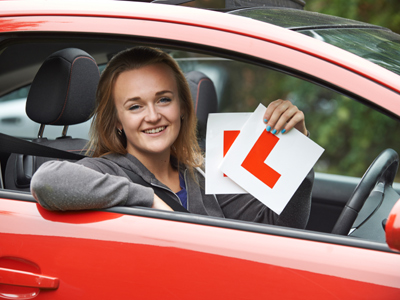
She is one of those lucky people who passed her Driving Test first time on her seventeenth birthday.
At The Moment - Prepositions & In Time Phrases
Practise English for talking about what is happening now. Use time words like at the moment, learn common prepositions, and build clearer sentences for everyday conversations.
1 .
Pick the word/s to make the best and clearest English.
I can remember where I was when I heard the news about Princess Diana: it was ... ...
I can remember where I was when I heard the news about Princess Diana: it was ... ...
... the hour of breakfast at the Sunday morning.
... breakfast time on a Sunday morning.
... at a breakfast hour of a sunday morning.
... breakfast o'clock in sunday morning.
2 .
Pick the word/s to make the best and clearest English.
'This is a service announcement for all passengers on Platform 7: the delayed 2:22 to Crewe will now be departing thirteen minutes late, at ... ... '
'This is a service announcement for all passengers on Platform 7: the delayed 2:22 to Crewe will now be departing thirteen minutes late, at ... ... '
... two hours twenty-five.
... two o'clock and thirty-five.
... twenty-five before three.
... two thirty-five.
This is the simplest correct way ~ once you have done the maths!
But unless the train is running in the small hours of the night, they would be even more likely to call it 'fourteen thirty-five'.
But unless the train is running in the small hours of the night, they would be even more likely to call it 'fourteen thirty-five'.
3 .
Pick the word/s to make the best and clearest English.
She is one of those lucky people who passed her Driving Test first time ... ...
She is one of those lucky people who passed her Driving Test first time ... ...
... her seventeen birthday.
... for her seventeen birthday.
... on her seventeenth birthday.
... on the seventeenth birthday of her.
Things happen 'on' your birthday, and you might receive a gift 'for' your birthday ('for the sake of it', i.e. to mark the occasion).
4 .
Pick the word/s to make the best and clearest English.
My grandfather would always give us a small amount of pocket-money ... ...
My grandfather would always give us a small amount of pocket-money ... ...
... lunchtime of a sunday.
... at lunchtime on a Sunday.
... in lunchtime on the Sundays.
... at time of lunch the Sundays.
We always say 'at [a time]' and 'on [a day]'.
If your language handles these details differently, please note how we do things, for when you are speaking English.
If your language handles these details differently, please note how we do things, for when you are speaking English.
5 .
Pick the word/s to make the best and clearest English.
'Could you please tell me ... ... this film is expected to finish? I need to catch a tram ... ... they stop at eleven o'clock.'
'Could you please tell me ... ... this film is expected to finish? I need to catch a tram ... ... they stop at eleven o'clock.'
... what time ... / ... before ...
... at what time ... / ... after ...
... on what hour ... / ... when ...
... at which o'clock ... / ... once ...
We can just say 'what time it stops' without any preposition in front.
None of the other Answers make sense, since they all suggest catching the tram either at the time when the last one goes, or even afterwards (which, of course, would be impossible).
None of the other Answers make sense, since they all suggest catching the tram either at the time when the last one goes, or even afterwards (which, of course, would be impossible).
6 .
Pick the word/s to make the best and clearest English.
' ... ... Columbus sailed the ocean blue.'
(from an old children's history rhyme)
' ... ... Columbus sailed the ocean blue.'
(from an old children's history rhyme)
Fourteen hundred and ninety-two ...
On fourteen hundred and ninety-two ...
At fourteen hundred and ninety-two ...
In fourteen hundred and ninety-two ...
We always say 'in' a year (or decade, or century, in English: 'in 1969'; 'in the early nineteen-twenties'.
7 .
Pick the word/s to make the best and clearest English.
... ... the Country Fair, there will be rides on the steam train ... ... ten o'clock and half past three.
... ... the Country Fair, there will be rides on the steam train ... ... ten o'clock and half past three.
While ... / ... at ...
During ... / ... at ...
During ... / ... between ...
Within ... / ... under ...
Only this Answer makes good clear sense. If the rides were only 'at' the stated times (Answers 1 & 2), that would only mean two rides altogether, so many people might be disappointed; 'between' suggests they will go fairly regularly and often within those limits ~ possibly every half-hour or so, which might offer ten or twelve trips during the middle of the day.
8 .
Pick the word/s to make the best and clearest English.
We can probably manage to come and fit your new boiler ... ...
We can probably manage to come and fit your new boiler ... ...
... next Wednesday, around ten in the morning.
... on next Wednesday, around ten o'clock in the morning.
...at Wednesday next, around ten hours in the morning.
...the next wednesday, around ten in the morning.
We do not use any preposition before 'next ~day'. Some speakers even turn the phrase round and say 'Wednesday next'.
Meanwhile it is quite usual to talk about 'ten in the morning' or 'three-thirty in the afternoon' or 'eight in the evening' without using 'hours' (which English NEVER does in clock-time phrases, though of course we can talk about a film 'lasting a couple of hours), nor bothering to say 'o'clock'. After all, what else is 'five in the morning' likely to mean: five fingers? Surely not!
Meanwhile it is quite usual to talk about 'ten in the morning' or 'three-thirty in the afternoon' or 'eight in the evening' without using 'hours' (which English NEVER does in clock-time phrases, though of course we can talk about a film 'lasting a couple of hours), nor bothering to say 'o'clock'. After all, what else is 'five in the morning' likely to mean: five fingers? Surely not!
9 .
Pick the word/s to make the best and clearest English.
' ... ... day, upon the stair,
I met a man who wasn't there.
He wasn't there again ... ... ;
I wish that man would go away!'
(A traditional English 'nonsense-rhyme')
' ... ... day, upon the stair,
I met a man who wasn't there.
He wasn't there again ... ... ;
I wish that man would go away!'
(A traditional English 'nonsense-rhyme')
Another ... / ... this day ...
An other ... / ... today ...
The other ... / ... today ...
Some other ... / ... last day ...
If you read this aloud, you should catch a definite simple rhythm in the poem. Apart from the fact that it makes rather strange sense, it reads like quite normal English!
10 .
Pick the word/s to make the best and clearest English.
Let's finish this Quiz with a nice cheerful Christmas carol (a traditional song to celebrate that time of year):
'I saw three ships come sailing in
... ... '
Let's finish this Quiz with a nice cheerful Christmas carol (a traditional song to celebrate that time of year):
'I saw three ships come sailing in
... ... '
... At Christmas Day of the morning.
... In Christmas Day at the morning.
... On Christmas Day in the morning.
... The Christmas Day and the morning.
' ... on [a date], in [a part of the day].'



**Unlimited Quizzes Await You! 🚀**
Hey there, quiz champ! 🌟 You've already tackled today's free questions.
Ready for more?
Ready for more?
🔓 Unlock UNLIMITED Quizzes and challenge yourself every day. But that's
not all...
not all...
🔥 As a Subscriber you can join our thrilling "Daily Streak" against other
quizzers. Try to win a coveted spot on our Hall of Fame Page.
quizzers. Try to win a coveted spot on our Hall of Fame Page.
Don't miss out! Join us now and keep the fun rolling. 🎉
**Unlimited Quizzes Await You! 🚀**
Hey there, quiz champ! 🌟 You've already tackled today's free questions. Ready for more?
🔓 Unlock UNLIMITED Quizzes and challenge yourself every day. But that's not all...
🔥 As a Subscriber you can join our thrilling "Daily Streak" against other quizzers. Try to win a coveted spot on our Hall of Fame Page.
Don't miss out! Join us now and keep the fun rolling. 🎉




© Copyright 2016-2026 - Education Quizzes
Work Innovate Ltd - Design | Development |
Marketing

Don't forget the capital S on 'Sunday' (just like any other day; there's nothing special about Sunday, or at least, not in that respect.)