




Ask the AI Tutor
Need help with How It's Written - Passive Voice? Ask our AI Tutor!
AI Tutor - Lucy
Connecting with Tutor...
Please wait while we establish connection
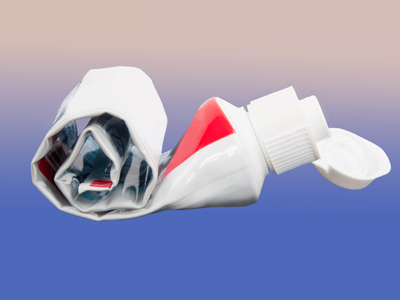
What do you do with the tube once the toothpaste is finished?
How It's Written - Passive Voice
Sometimes English focuses on what happens, not who does it. Learn the passive voice in the present tense, and spot it in real sentences.
1 .
Pick a correct and accurate Passive verb expression.
An interesting reaction occurs when ... ... .
An interesting reaction occurs when ... ... .
... one adds sodium to water.
... we add sodium to water.
... sodium is added to water.
... sodium adds to water.
2 .
Pick a correct and accurate Passive verb expression.
'You can hear the noise as the bins ... ... into the back of the rubbish lorry.'
'You can hear the noise as the bins ... ... into the back of the rubbish lorry.'
... tip ...
... tipped ...
... tipping ...
... are tipped ...
The bins do not tip themselves; this is done by someone else, using a machine. We therefore need a passive form to express the action.
3 .
Pick a correct and accurate Passive verb expression.
'Can you remember what that game ... ... , that ... ... with a set of six sticks in pubs in various counties of central England?'
'Can you remember what that game ... ... , that ... ... with a set of six sticks in pubs in various counties of central England?'
... is called ... / ... people play ...
... is called ... / ... they play ...
... is called ... / ... is played ...
... is called ... / ... are played ...
'The game is called ... and played ...'.
If you are coming to English from one of the other languages that we mentioned earlier, you may have been very tempted by Answers 1 and 2, but these do not have Passives in the second blank.
The game itself is Aunt Sally
If you are coming to English from one of the other languages that we mentioned earlier, you may have been very tempted by Answers 1 and 2, but these do not have Passives in the second blank.
The game itself is Aunt Sally
4 .
Pick a correct and accurate Passive verb expression.
In almost every culture of the world, certain parts of the body ... ... inappropriate to display in a public place.
In almost every culture of the world, certain parts of the body ... ... inappropriate to display in a public place.
... consider ...
... are considering ...
... are considered ...
... are being considered ...
Here we need a simple general Passive: the public display of these human body parts 'is considered' (by people in general) to be offensive, so the parts themselves 'are regarded' as unsuitable to be revealed.
When discussing such a general or universal principle, we do not need to choose a special form to emphasise the continuity of it. If anything, Answer 4 suggests that the opinion is new, or temporary, or both; which contradicts the way the topic was introduced in the Question.
When discussing such a general or universal principle, we do not need to choose a special form to emphasise the continuity of it. If anything, Answer 4 suggests that the opinion is new, or temporary, or both; which contradicts the way the topic was introduced in the Question.
5 .
Pick a correct and accurate Passive verb expression.
'Our product ... ... regularly, and in great quantities, by happy customers all over Europe.'
'Our product ... ... regularly, and in great quantities, by happy customers all over Europe.'
... is bought ...
... is being bought ...
... is buying ...
... buys ...
'People buy it; it is bought (by them).'
Answer 2 is a more subtle version, emphasising the present-continuous 'here and now' of the ongoing success of the marketing campaign. This is certainly good English and you would not have been 'wrong' to choose it.
Answers 3 and 4 contain no Passive element, and therefore make no sense within the context as offered by the Question.
Answer 2 is a more subtle version, emphasising the present-continuous 'here and now' of the ongoing success of the marketing campaign. This is certainly good English and you would not have been 'wrong' to choose it.
Answers 3 and 4 contain no Passive element, and therefore make no sense within the context as offered by the Question.
6 .
Pick a correct and accurate Passive verb expression.
When reading in another language, we should check that nothing ... ... in the translation.
When reading in another language, we should check that nothing ... ... in the translation.
... loses ...
... lacks ...
... is lost ...
... is being lost ...
Answer 4 is also possible; the progressive / continuous form suggests that we should keep checking.
Many other languages deal differently from English with the matter of 'losing or lacking': they may say 'a pencil is lacking to me' rather than 'I am lacking a pencil' or 'I haven't got one'.
'There lacks to me a pencil' is made up of understandable English words, but this isn't how we would express the idea.
If you feel this may be a difficulty for you, it would be worth your checking.
Many other languages deal differently from English with the matter of 'losing or lacking': they may say 'a pencil is lacking to me' rather than 'I am lacking a pencil' or 'I haven't got one'.
'There lacks to me a pencil' is made up of understandable English words, but this isn't how we would express the idea.
If you feel this may be a difficulty for you, it would be worth your checking.
7 .
Pick a correct and accurate Passive verb expression.
'What do you do with the tube once the toothpaste ... ... ?'
'What do you do with the tube once the toothpaste ... ... ?'
... has finished?
... is finished?
... finishes?
... are finished?
This is a Passive usage, since the toothpaste is (or has been) used-up by someone.
Answer 4 is wrong because toothpaste is 'uncountable'. (Tubes can be counted, e.g. that two tubes may be needed on a family holiday; but the substance inside cannot.)
Answer 4 is wrong because toothpaste is 'uncountable'. (Tubes can be counted, e.g. that two tubes may be needed on a family holiday; but the substance inside cannot.)
8 .
Pick a correct and accurate Passive verb expression.
Many people these days have a suspicious feeling that they ... ... by the Government, and by other big institutions and corporations.
Many people these days have a suspicious feeling that they ... ... by the Government, and by other big institutions and corporations.
... are being misled ...
... are misled ...
... are misleading ...
... are be misled ...
This a Present progressive / continuous example.
Such people think: 'The Government (etc.) is/are misleading us; we are being misled ... '.
Such people think: 'The Government (etc.) is/are misleading us; we are being misled ... '.
9 .
Pick a correct and accurate Passive verb expression.
'Don't turn round, but I believe we ... ... ' said James Band quietly to his fellow-agent.
'Don't turn round, but I believe we ... ... ' said James Band quietly to his fellow-agent.
... are followed ...
... are following ...
... are being followed ...
... are follow ...
The progressive / continuous passive form makes the best sense here, since the 'following' must have already begun before J B can notice it or say anything, and presumably it continues afterwards (probably in a long and exciting 'chase sequence')!
10 .
Pick a correct and accurate Passive verb expression.
It's no good just asking a conjuror* how his tricks ... ... .
(* 'conjuror' = 'stage magician')
It's no good just asking a conjuror* how his tricks ... ... .
(* 'conjuror' = 'stage magician')
... work.
... do.
... go.
... are done.
Answer 1 makes good sense, but does not contain a Passive form; Answer 2 would be understood but is not really proper English; 'how they go' (Answer 3, also containing no Passive) would mean 'whether they work as intended, and what audiences typically think of them'.



**Unlimited Quizzes Await You! 🚀**
Hey there, quiz champ! 🌟 You've already tackled today's free questions.
Ready for more?
Ready for more?
🔓 Unlock UNLIMITED Quizzes and challenge yourself every day. But that's
not all...
not all...
🔥 As a Subscriber you can join our thrilling "Daily Streak" against other
quizzers. Try to win a coveted spot on our Hall of Fame Page.
quizzers. Try to win a coveted spot on our Hall of Fame Page.
Don't miss out! Join us now and keep the fun rolling. 🎉
**Unlimited Quizzes Await You! 🚀**
Hey there, quiz champ! 🌟 You've already tackled today's free questions. Ready for more?
🔓 Unlock UNLIMITED Quizzes and challenge yourself every day. But that's not all...
🔥 As a Subscriber you can join our thrilling "Daily Streak" against other quizzers. Try to win a coveted spot on our Hall of Fame Page.
Don't miss out! Join us now and keep the fun rolling. 🎉




© Copyright 2016-2026 - Education Quizzes
Work Innovate Ltd - Design | Development |
Marketing

Answer 4 is wrong because the sodium is added; it does not 'add itself'! ( ... however much energy it may seem to have in it!)