




Ask the AI Tutor
Need help with How Likely? - Modals? Ask our AI Tutor!
AI Tutor - Lucy
Connecting with Tutor...
Please wait while we establish connection
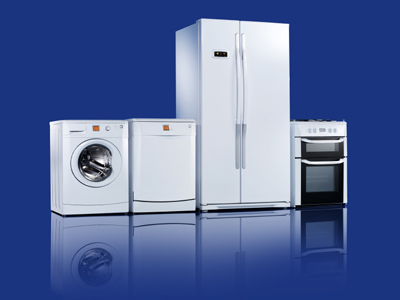
Surely there can't be anything the matter with a brand new machine.
How Likely? - Modals
How sure are you about the future? Learn how English uses might to show possibility, uncertainty, and polite answers, and practise choosing the best meaning in context.
1 .
Choose the answer that makes the clearest sense in good accurate English.
'Surely there ... ... be anything the matter with a brand new machine.'
'Surely there ... ... be anything the matter with a brand new machine.'
... can't ...
... couldn't ...
... mustn't ...
... shouldn't ...
2 .
Choose the answer that makes the clearest sense in good accurate English.
'You want me to park my car fifteen minutes' walk from the main arena? You ... ... joking!'
'You want me to park my car fifteen minutes' walk from the main arena? You ... ... joking!'
... are ...
... must be ...
... may be ...
... shouldn't be ...
Answer 2 is the standard phrase (you may have heard the tennis champion John McEnroe, challenging the court officials at Wimbledon with it, back in about 1980!). It implies that there can be no other explanation for what the official said, other than that he was not being serious.
3 .
Choose the answer that makes the clearest sense in good accurate English.
'There ... ... be traces of water on Mars, but that doesn't mean anyone ever lived there.'
'There ... ... be traces of water on Mars, but that doesn't mean anyone ever lived there.'
... must ...
... can ..
... could ...
... may ...
'One thing may be true, but another thing does not automatically follow from it.'
4 .
Choose the answer that makes the clearest sense in good accurate English.
'He told me he ... ... get round to doing that job next month sometime.'
'He told me he ... ... get round to doing that job next month sometime.'
... might ...
... may ...
... would ...
... will ...
Of the first three Answers, this appears to hold the strongest likelihood.
As this is Reported Speech, 'will' (Answer 4) is not quite right, even though it may have been among the actual words he said.
As this is Reported Speech, 'will' (Answer 4) is not quite right, even though it may have been among the actual words he said.
5 .
Choose the answer that makes the clearest sense in good accurate English.
'That's a very kind thought; one of these days we ... ... well enjoy a trip on your special boat.'
'That's a very kind thought; one of these days we ... ... well enjoy a trip on your special boat.'
... could ...
... would ...
... might ...
... shall ...
This sounds like a sincere acceptance of an open invitation, but there is still the equal possibility that it 'might' never happen ('We might never 'get round to it' ' .)
6 .
Choose the answer that makes the clearest sense in good accurate English.
'He was caught with the drugs in his pocket: I don't see how there ... ... be any doubt that he was guilty.'
'He was caught with the drugs in his pocket: I don't see how there ... ... be any doubt that he was guilty.'
... can ...
... could ...
... might ...
... may ...
'Could' is even better than 'can' (Answer 1) here ~ because, by using the Conditional, it suggests there is even less chance of any other explanation.
7 .
Choose the answer that makes the clearest sense in good accurate English.
'I'm busy all day today; but if you came back tomorrow afternoon, I ... ... be able to help you.'
'I'm busy all day today; but if you came back tomorrow afternoon, I ... ... be able to help you.'
... must ...
... may ...
... might ...
... could ...
Only Answer 1 is clearly wrong here; 2 and 4 express various 'shades' of possibility. But only No.3 picks up the use of the 'theoretical' Past Tense ('If you came, I could ... ') ~ although as a whole, this refers to the possible future.
8 .
Choose the answer that makes the clearest sense in good accurate English.
'I'll come with you to the supermarket if you like, but ... ... they're closed at this time on a Sunday evening.'
'I'll come with you to the supermarket if you like, but ... ... they're closed at this time on a Sunday evening.'
... I bet ...
... probably ...
... perhaps ...
... usually ...
This suggests clearly that you think it more likely than not that your trip there will be wasted. You are not literally making a bet (though you could even say 'I'll bet' or 'I'd bet') ... but you are expressing your opinion that you are certain enough that your money would be safe if you did!
9 .
Choose the answer that makes the clearest sense in good accurate English.
'The car's in the drive, there are lights on and curtains drawn, so someone ... ... be at home.'
'The car's in the drive, there are lights on and curtains drawn, so someone ... ... be at home.'
... may ...
... might ...
... must ...
... could ...
It seems (from the given circumstantial details) as though it is almost certain that someone is at home. None of the other Answers is as strong and confident, though No.4 is possible if we are being very cautious ... and not making assumptions, nor leaping to conclusions!
10 .
Choose the answer that makes the clearest sense in good accurate English.
'You ... ... be one of our Board of Directors, but you are still not allowed to smoke inside the foyer at Head Office.'
'You ... ... be one of our Board of Directors, but you are still not allowed to smoke inside the foyer at Head Office.'
... could ...
... might well ...
... are ...
... would be ...
This is the 'might well' phrase and it means 'It makes no difference whether you are a Director or not; the rules apply just as much to you as to anyone else'.



**Unlimited Quizzes Await You! 🚀**
Hey there, quiz champ! 🌟 You've already tackled today's free questions.
Ready for more?
Ready for more?
🔓 Unlock UNLIMITED Quizzes and challenge yourself every day. But that's
not all...
not all...
🔥 As a Subscriber you can join our thrilling "Daily Streak" against other
quizzers. Try to win a coveted spot on our Hall of Fame Page.
quizzers. Try to win a coveted spot on our Hall of Fame Page.
Don't miss out! Join us now and keep the fun rolling. 🎉
**Unlimited Quizzes Await You! 🚀**
Hey there, quiz champ! 🌟 You've already tackled today's free questions. Ready for more?
🔓 Unlock UNLIMITED Quizzes and challenge yourself every day. But that's not all...
🔥 As a Subscriber you can join our thrilling "Daily Streak" against other quizzers. Try to win a coveted spot on our Hall of Fame Page.
Don't miss out! Join us now and keep the fun rolling. 🎉




© Copyright 2016-2026 - Education Quizzes
Work Innovate Ltd - Design | Development |
Marketing

Answer 1 simply refuses to accept any possibility of a fault: '100% of brand-new machines should do their job without problem.'
Answer 2 suggests there are no circumstances or means in which a fault could have arisen, if the machine was checked at the factory and has been installed and started in accordance with the instructions.
Answer 3 appears to suggest that nobody gave the machine permission to malfunction. This isn't what we would normally say.
Answer 4 expresses the idea that the machine has 'failed in its duty' and 'not done what it was supposed to'; in an ideal world, such things ought never to happen!