




Ask the AI Tutor
Need help with If You Must - Various Tenses? Ask our AI Tutor!
AI Tutor - Lucy
Connecting with Tutor...
Please wait while we establish connection
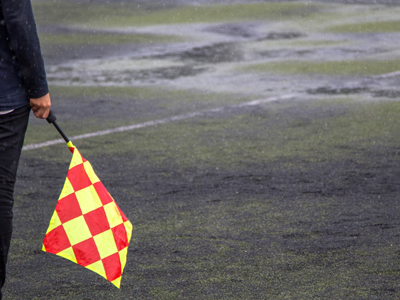
With some reluctance we had to cancel the match.
If You Must - Various Tenses
Explore how “must” works in English. Practise strong obligation, rules, and advice, and learn how word choice changes tone in everyday conversations.
1 .
Choose the answer that completes the gap/s in clear, accurate and sensible English.
'You ... ... go back to the shop first-thing tomorrow, and ask them to replace that faulty thing or give you your money back.'
'You ... ... go back to the shop first-thing tomorrow, and ask them to replace that faulty thing or give you your money back.'
... must ...
... will need to ...
... are going to have to ...
... really ought to make up your mind and ...
'Must' does the job of all these other Answers, and much more quickly!
2 .
Choose the answer that completes the gap/s in clear, accurate and sensible English.
'Any sensible farmer ... ... wait for sunny weather before bringing in his crop.'
'Any sensible farmer ... ... wait for sunny weather before bringing in his crop.'
... should ...
... must ...
... ought to ...
... knows it makes sense to ...
Again, 'must' is the clearest here. If the farmer does anything else, it's likely to be risky and/or turn out an expensive mistake!
3 .
Choose the answer that completes the gap/s in clear, accurate and sensible English.
'Early next year we ... ... tidy the house up and prepare to sell it.'
'Early next year we ... ... tidy the house up and prepare to sell it.'
... must ...
... will be needing to ...
... shall have to ...
... should do something about ...
'Must' is still right here, too ~ because we would use the Present form to suggest future action, as with many other verbs. The time-phrase on the front of the sentence is clear enough; we do not need to try and form a 'false future' version of the 'must' verb.
4 .
Choose the answer that completes the gap/s in clear, accurate and sensible English.
'Paul's class teacher said he ... ... make more effort if he is to reach a good Grade in his exams.'
'Paul's class teacher said he ... ... make more effort if he is to reach a good Grade in his exams.'
... must ...
... should ...
... needed to ...
... would have to start ...
'Must' is fine, yet again, in Indirect / Reported Speech.
Answer 4 would not work (although the sense is clear) because one has 'to start mak-ING ...' (etc.) ...
Answer 4 would not work (although the sense is clear) because one has 'to start mak-ING ...' (etc.) ...
5 .
Choose the answer that completes the gap/s in clear, accurate and sensible English.
'Why ... ... drag her divorce into every possible conversation?'
'Why ... ... drag her divorce into every possible conversation?'
... does she have to ...
... does she feel she has to ...
... must she ...
... on earth does she ...
As ever (in this Quiz), the 'must' version is the simplest. The sentence as a whole is a Rhetorical Question: we don't know what the reasons are for her obsessive talking about this topic, but it seems as though she 'must' bring it up whenever she is in conversation with anyone.
We are sure most of you will have met people like this, whatever their individual obsessions were. Sometimes we describe such behaviour as someone 'having a one-track mind'.
We are sure most of you will have met people like this, whatever their individual obsessions were. Sometimes we describe such behaviour as someone 'having a one-track mind'.
6 .
Choose the answer that completes the gap/s in clear, accurate and sensible English.
'Passengers ... ... keep to the left-hand side of the escalator.'
'Passengers ... ... keep to the left-hand side of the escalator.'
... should ...
... must ...
... please ...
... might ...
This 'must' is explaining safety information: if a passenger decides to stand at the wrong side, this could be unsafe, or at least inconvenient.
7 .
Choose the answer that completes the gap/s in clear, accurate and sensible English.
'In your country, ... ... carry your identity papers with you all the time, when you are out and about?'
'In your country, ... ... carry your identity papers with you all the time, when you are out and about?'
... must you ...
... you must ...
... you have to ...
... do you have to ...
When talking about obligations under The Law of the Land, we often use 'have to' rather than 'must'. Within a question, the verb needs to be introduced by the auxiliary ' do / does ... ? ' .
8 .
Choose the answer that completes the gap/s in clear, accurate and sensible English.
'When I was at school, I really hated ... ... in a line in silence several times a day.'
'When I was at school, I really hated ... ... in a line in silence several times a day.'
... to must stand ...
... to must to stand ...
... musting to stand ...
... having to stand ...
In English one more usually 'hates to do' something, or 'hates having to do' it.
The problem here is that 'must' has no such parts as an Infinitive ('to must') or Participles ('musting'/musted') ... although you've seen them briefly just here, they don't really exist. So we can't very well just go ahead with our sentence as though they did; we need to use a paraphrase or synonym instead.
Answer 4 is the only straightforward option.
The problem here is that 'must' has no such parts as an Infinitive ('to must') or Participles ('musting'/musted') ... although you've seen them briefly just here, they don't really exist. So we can't very well just go ahead with our sentence as though they did; we need to use a paraphrase or synonym instead.
Answer 4 is the only straightforward option.
9 .
Choose the answer that completes the gap/s in clear, accurate and sensible English.
'By the time you've driven as far as Yeovil, you and your passengers ... ... a 'comfort stop' .'
'By the time you've driven as far as Yeovil, you and your passengers ... ... a 'comfort stop' .'
... will must have ...
... are going to must have ...
... will have to take ...
... will need taking ...
Answer 3 is the only correct-English option here, since 'must' has no future form (regular, or otherwise).
10 .
Choose the answer that completes the gap/s in clear, accurate and sensible English.
'The rain came on hard and heavy just before two o'clock, so with some reluctance we ... ... cancel the match.'
'The rain came on hard and heavy just before two o'clock, so with some reluctance we ... ... cancel the match.'
... must ...
... musted ...
... had to ...
... were left with no choice but to ...
The context sets this in the past (another tense which 'must' simply doesn't have), so Answer 2 was also wrong.
Answer 3 is the simplest way around this problem; No.4 is also fine, though it offers a slightly pompous way of explaining a disappointing situation.
Now you must see how many points you scored out of 10 on this Quiz!
Answer 3 is the simplest way around this problem; No.4 is also fine, though it offers a slightly pompous way of explaining a disappointing situation.
Now you must see how many points you scored out of 10 on this Quiz!



**Unlimited Quizzes Await You! 🚀**
Hey there, quiz champ! 🌟 You've already tackled today's free questions.
Ready for more?
Ready for more?
🔓 Unlock UNLIMITED Quizzes and challenge yourself every day. But that's
not all...
not all...
🔥 As a Subscriber you can join our thrilling "Daily Streak" against other
quizzers. Try to win a coveted spot on our Hall of Fame Page.
quizzers. Try to win a coveted spot on our Hall of Fame Page.
Don't miss out! Join us now and keep the fun rolling. 🎉
**Unlimited Quizzes Await You! 🚀**
Hey there, quiz champ! 🌟 You've already tackled today's free questions. Ready for more?
🔓 Unlock UNLIMITED Quizzes and challenge yourself every day. But that's not all...
🔥 As a Subscriber you can join our thrilling "Daily Streak" against other quizzers. Try to win a coveted spot on our Hall of Fame Page.
Don't miss out! Join us now and keep the fun rolling. 🎉




© Copyright 2016-2026 - Education Quizzes
Work Innovate Ltd - Design | Development |
Marketing
