




Ask the AI Tutor
Need help with Analysing Substances - Qualitative? Ask our AI Tutor!
AI Tutor - Lucy
Connecting with Tutor...
Please wait while we establish connection
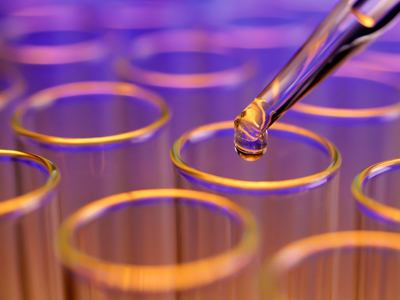
To test for sulfate ions, we add hydrochloric acid and barium chloride solution.
Analysing Substances - Qualitative
Use simple tests to spot ions and gases in unknown chemicals. This GCSE Chemistry quiz covers flame tests, precipitation reactions and gas tests, helping you interpret results safely.
1 .
A positive test for nitrate ions would give which of the following observations?
A lemon-yellow colour when hot and turns to white when cool
A pale yellow precipitate
A dirty green precipitate
Damp red litmus paper turning blue
Red litmus turning blue shows that an alkali has been formed
2 .
Some metal ions form coloured precipitates with sodium hydroxide. Which metal ion forms a light blue precipitate when reacted with sodium hydroxide?
Copper (II) ions
Iron (II) ions
Iron (III) ions
Cobalt ions
Transition metal ions often form coloured compounds, copper is no exception
3 .
If ammonia gas is produced when sodium hydroxide is added to an unknown solution, what ions were present in the unknown solution?
Ammonium + ions
Ammonium - ions
Copper 2+ ions
Iron 3+ ions
The ammonium ions have the formula NH4+. They donate a proton to the hydroxide forming water and NH3 which is a gas at room temperature
4 .
The copper oxide that is produced when copper carbonate is heated is what colour?
White
Green
Black
Purple
The copper is reduced to copper (I) and the carbonate decomposes, releasing carbon dioxide into the air
5 .
Which of the following ions dissolves in excess sodium hydroxide solution?
Magnesium 2+
Aluminium 2+
Calcium 2+
Aluminium 3+
Both magnesium and calcium ions are insoluble in excess sodium hydroxide solution
6 .
If iodine solution is added to ethane, what observation would be made?
Remains brown
Changes from brown to black
Changes from brown to purple
Changes from brown to brick red
Ethane is saturated and does not have a double bond that can react with the iodine
7 .
How do we test for sulfate ions?
Add dilute nitric acid
Heat and look for colour changes
Add hydrochloric acid and barium chloride solution
Add sodium hydroxide and warm it, then add aluminium powder
When sulfate ions combine with barium ions, they form barium sulfate which is insoluble and therefore appears as a precipitate
8 .
Flame tests can be used to identify metals in groups 1 and 2 of the Periodic Table. Which metal burns with an intense yellow/orange flame?
Lithium
Sodium
Potassium
Calcium
Street lights are yellow/orange due to the sodium they contain
9 .
If dilute nitric acid and silver nitrate are added to an unknown solution and a cream precipitate appears, we can tell that the ions that are present are...
chloride ions
bromide ions
iodide ions
chlorine ions
You need to know the results of this test off by heart for the exams
10 .
What is used to identify an unsaturated compound?
Bromine water
Dilute nitric acid
Barium sulfate
Aluminium powder
This is used to test for unsaturated hydrocarbons and oils. Iodine can be used instead of bromine



**Unlimited Quizzes Await You! 🚀**
Hey there, quiz champ! 🌟 You've already tackled today's free questions.
Ready for more?
Ready for more?
🔓 Unlock UNLIMITED Quizzes and challenge yourself every day. But that's
not all...
not all...
🔥 As a Subscriber you can join our thrilling "Daily Streak" against other
quizzers. Try to win a coveted spot on our Hall of Fame Page.
quizzers. Try to win a coveted spot on our Hall of Fame Page.
Don't miss out! Join us now and keep the fun rolling. 🎉
**Unlimited Quizzes Await You! 🚀**
Hey there, quiz champ! 🌟 You've already tackled today's free questions. Ready for more?
🔓 Unlock UNLIMITED Quizzes and challenge yourself every day. But that's not all...
🔥 As a Subscriber you can join our thrilling "Daily Streak" against other quizzers. Try to win a coveted spot on our Hall of Fame Page.
Don't miss out! Join us now and keep the fun rolling. 🎉




© Copyright 2016-2026 - Education Quizzes
Work Innovate Ltd - Design | Development |
Marketing
