




Ask the AI Tutor
Need help with Bonding? Ask our AI Tutor!
AI Tutor - Lucy
Connecting with Tutor...
Please wait while we establish connection
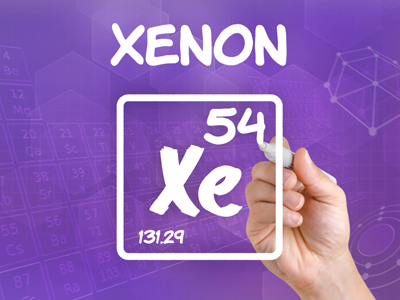
All atoms aspire to be like the unreactive noble gases, such as xenon, with their full outer shells.
Bonding
Bonding explains why substances have different properties. This GCSE Chemistry quiz covers ionic, covalent and metallic bonding, and how electron arrangement and structure affect melting point and conductivity.
1 .
What type of bonding occurs when electrons are shared between the atoms in a molecule?
Covalent
Hydrogen
Ionic
Metallic
One example of this occurs between hydrogen and oxygen atoms in water molecules
2 .
The type of bonding that holds the atoms together in water is...
covalent
hydrogen
ionic
metallic
Hydrogen and oxygen are both non-metals and so share electrons to form covalent bonds
3 .
In an ammonia molecule hydrogen and nitrogen atoms share electrons. What kind of bonding is this?
Covalent
Hydrogen
Ionic
Metallic
Ammonia is an important manufacturing chemical that we make using the Haber process
4 .
The type of bonding that holds the atoms together in salt is...
covalent
hydrogen
ionic
metallic
The sodium atoms donate an electron to the chlorine atom; they become ions - Na+Cl- - and their opposite charges hold them together
5 .
What type of bonding occurs when electrons are transferred from the outer shell of one atom to the outer shell of another?
Covalent
Hydrogen
Ionic
Metallic
One example of this occurs between lithium and fluorine atoms in lithium fluoride
6 .
Graphite is a substance made of carbon atoms only, as is diamond. However, the two substances are very different. Why?
The atoms in diamond are arranged in layers and the atoms in graphite are arranged in a giant covalent structure
The atoms in diamond are arranged in a giant covalent lattice and the atoms in graphite are arranged in layers
The atoms in diamond are arranged in a giant covalent structure and the atoms in graphite are arranged at random
The atoms in diamond are arranged at random and the atoms in graphite are arranged in layers
The atoms in graphite are in layers. The bonding between the layers is weak and because of this they can slide over each other, making the substance very soft and slippery - it is a good lubricant e.g. for things like zip fasteners
7 .
What type of structure does the carbon in diamond form?
Giant structure
Giant covalent structure
Covalent bond
Ionic bond
A diamond owes its hardness to the arrangement of its atoms in this structure
8 .
What type of bonding has 'free' electrons?
Covalent
Hydrogen
Ionic
Metallic
In metals positive metal ions are surrounded by a 'sea' of negative electrons that are free to move. These free electrons are the reason why metals are good conductors of heat and electricity
9 .
Glucose molecules are formed from atoms of carbon, hydrogen and oxygen. What type of bonding is present in a glucose molecule?
Covalent
Hydrogen
Ionic
Metallic
Covalent bonds are made between the non-metal atoms in glucose
10 .
What type of bonding is present in gold?
Covalent
Hydrogen
Ionic
Metallic
A metal consists of positively charged metal ions surrounded by a 'sea' of electrons
You can find more about this topic by visiting BBC Bitesize - Bonding, structure and the properties of matter



**Unlimited Quizzes Await You! 🚀**
Hey there, quiz champ! 🌟 You've already tackled today's free questions.
Ready for more?
Ready for more?
🔓 Unlock UNLIMITED Quizzes and challenge yourself every day. But that's
not all...
not all...
🔥 As a Subscriber you can join our thrilling "Daily Streak" against other
quizzers. Try to win a coveted spot on our Hall of Fame Page.
quizzers. Try to win a coveted spot on our Hall of Fame Page.
Don't miss out! Join us now and keep the fun rolling. 🎉
**Unlimited Quizzes Await You! 🚀**
Hey there, quiz champ! 🌟 You've already tackled today's free questions. Ready for more?
🔓 Unlock UNLIMITED Quizzes and challenge yourself every day. But that's not all...
🔥 As a Subscriber you can join our thrilling "Daily Streak" against other quizzers. Try to win a coveted spot on our Hall of Fame Page.
Don't miss out! Join us now and keep the fun rolling. 🎉




© Copyright 2016-2026 - Education Quizzes
Work Innovate Ltd - Design | Development |
Marketing
