




Ask the AI Tutor
Need help with Bonding - Ionic? Ask our AI Tutor!
AI Tutor - Lucy
Connecting with Tutor...
Please wait while we establish connection
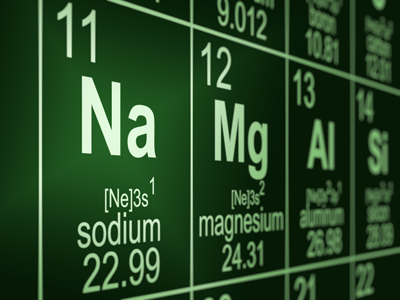
One ionic bond is formed when sodium bonds with chlorine.
Bonding - Ionic
Ionic bonding explains how many salts form and why they behave the way they do. Test electron transfer, ions, and properties like conductivity and melting point.
1 .
The ionic bonds that exist between charged particles result in an arrangement that is called...
a giant ion
an ionic structure
a giant covalent structure
a giant structure
There are no limits to the size of a giant ionic lattice other than the number of ions available
2 .
What happens to the electron configuration of the atoms?
The electron configuration becomes that of a noble gas
The electron configuration always loses one electron
The electron configuration always gains an electron
The electron configuration stays the same
If sodium 2,8,1 loses an electron in an ionic bond, its configuration becomes 2,8 which is the same as neon. Elements that have full outer shells of electrons are stable
3 .
How are electrons involved in ionic bonding?
Electrons are shared between the atoms involved
Electrons are lost or gained by the atoms
Electrons are taken into an inner shell of one of the atoms
Electrons are all moved to the outer shell of the atoms
Electrons are transferred between the atoms
4 .
When a non-metal atom becomes a non-metal ion...
it becomes negatively charged
it becomes neutrally charged
it doesn't change its charge
it becomes positively charged
Non-metal atoms gain electrons so there are more electrons than protons resulting in an overall negative charge on the newly formed ion
5 .
Pick the correct combination for the properties of ionic compounds.
Conduct electricity
Low boiling point
Low boiling point
Do not conduct electricity when dissolved or molten
High melting point
High melting point
Conduct electricity when dissolved or molten
High melting point
High melting point
Do not conduct electricity
Low melting point
Low melting point
This is because ionic compounds are normally formed from giant lattices of ions
6 .
How many ionic bonds are formed when magnesium combines with chlorine?
1
2
3
4
Magnesium has 2 outermost electrons, but chlorine atoms can only gain one electron during ionic bonding. The magnesium atom can therefore transfer electrons to two chlorine atoms i.e. two ionic bonds
7 .
When an atom loses or gains electrons, it becomes...
an electrolyte
a bond
a compound
an ion
In an atom, the number of protons equals the number of electrons so the charges are balanced. When electrons are lost or gained, this is no longer the case
8 .
Ionic bonding usually occurs between what type of atoms?
Metal and metal
Non-metal and non-metal
Metal and non-metal
Metal and noble gas
Two metals joining together form an alloy with metallic bonding, two non-metals will form covalent bonds and, at GCSE level, noble gases are regarded as being inert
9 .
When a metal atom becomes a metal ion...
it becomes negatively charged
it becomes neutrally charged
it doesn't change its charge
it becomes positively charged
Metal atoms lose electrons so there are more protons than electrons resulting in an overall positive charge on the newly formed ion
10 .
How many ionic bonds are formed when sodium bonds with chlorine?
1
2
3
4
One sodium ion combines with one chloride ion to become sodium chloride because only one electron is transferred



**Unlimited Quizzes Await You! 🚀**
Hey there, quiz champ! 🌟 You've already tackled today's free questions.
Ready for more?
Ready for more?
🔓 Unlock UNLIMITED Quizzes and challenge yourself every day. But that's
not all...
not all...
🔥 As a Subscriber you can join our thrilling "Daily Streak" against other
quizzers. Try to win a coveted spot on our Hall of Fame Page.
quizzers. Try to win a coveted spot on our Hall of Fame Page.
Don't miss out! Join us now and keep the fun rolling. 🎉
**Unlimited Quizzes Await You! 🚀**
Hey there, quiz champ! 🌟 You've already tackled today's free questions. Ready for more?
🔓 Unlock UNLIMITED Quizzes and challenge yourself every day. But that's not all...
🔥 As a Subscriber you can join our thrilling "Daily Streak" against other quizzers. Try to win a coveted spot on our Hall of Fame Page.
Don't miss out! Join us now and keep the fun rolling. 🎉




© Copyright 2016-2026 - Education Quizzes
Work Innovate Ltd - Design | Development |
Marketing
