




Ask the AI Tutor
Need help with Crude Oil? Ask our AI Tutor!
AI Tutor - Lucy
Connecting with Tutor...
Please wait while we establish connection
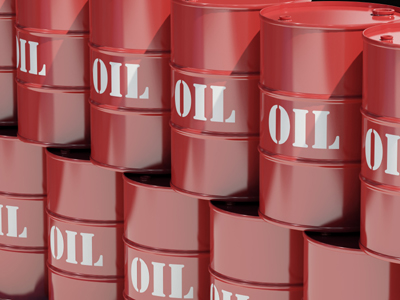
Crude oil contains mainly saturated hydrocarbons called alkanes.
Crude Oil
Crude oil is a complex mixture of hydrocarbons. This GCSE Chemistry quiz tests how it is refined into useful fuels and chemicals, and why different fractions separate.
1 .
Fractional distillation uses which physical property to separate the substances in crude oil?
Melting point
Boiling point
Tensile strength
Freezing point
Crude oil is a mixture of hundreds of alkanes and each has a different boiling point
2 .
Crude oil is fed into the fractionating column...
at high pressure
with a catalyst
as a vapour
with water
It is heated to a temperature in excess of 300oC
3 .
Which of the following is the thickest liquid?
C3H8
C8H18
C12H26
C16H34
Viscosity of the alkanes increases as the molecule gets bigger
4 .
Which of these compounds catches fire most easily?
C3H8
C8H18
C12H26
C16H34
Alkanes with smaller molecules are far more volatile than large ones. It is the vapour from a flammable liquid that burns so the more volatile chemicals from crude oil are easier to ignite
5 .
Which of these compounds has the highest boiling point?
C3H8
C8H18
C12H26
C16H34
The more carbon atoms there are in an alkane, the larger the molecule and the higher the boiling point
6 .
Petrol...
has a higher boiling point than diesel oil
is a thinner liquid than diesel oil
ignites less easily than kerosene
has larger molecules than kerosene
It contains alkanes with fewer carbon atoms than diesel
7 .
Which of the following is a saturated hydrocarbon that could be found in diesel oil?
C4H10
C16H32
C17H36
C18H38O
Diesel cars give better fuel consumption figures than petrol cars because diesel fuel molecules are larger and therefore release more energy than petrol molecules which only have about 8 carbon atoms
8 .
Which of these compounds is collected at the top of the fractionating column?
C3H8
C8H18
C12H26
C16H34
This is propane which is a gas at room temperature
9 .
Hydrocarbons with the smallest molecules have the...
lowest boiling points
lowest flammability
lowest volatility
highest viscosity
Smaller molecules have smaller inter-molecular forces to hold them together
10 .
Crude oil contains mainly saturated hydrocarbons called...
haloalkanes
alkenes
alkanes
cycloalkanes
A saturated hydrocarbon contains only single bonds



**Unlimited Quizzes Await You! 🚀**
Hey there, quiz champ! 🌟 You've already tackled today's free questions.
Ready for more?
Ready for more?
🔓 Unlock UNLIMITED Quizzes and challenge yourself every day. But that's
not all...
not all...
🔥 As a Subscriber you can join our thrilling "Daily Streak" against other
quizzers. Try to win a coveted spot on our Hall of Fame Page.
quizzers. Try to win a coveted spot on our Hall of Fame Page.
Don't miss out! Join us now and keep the fun rolling. 🎉
**Unlimited Quizzes Await You! 🚀**
Hey there, quiz champ! 🌟 You've already tackled today's free questions. Ready for more?
🔓 Unlock UNLIMITED Quizzes and challenge yourself every day. But that's not all...
🔥 As a Subscriber you can join our thrilling "Daily Streak" against other quizzers. Try to win a coveted spot on our Hall of Fame Page.
Don't miss out! Join us now and keep the fun rolling. 🎉




© Copyright 2016-2026 - Education Quizzes
Work Innovate Ltd - Design | Development |
Marketing
