




Ask the AI Tutor
Need help with Crude Oil - Substances from Crude Oil? Ask our AI Tutor!
AI Tutor - Lucy
Connecting with Tutor...
Please wait while we establish connection
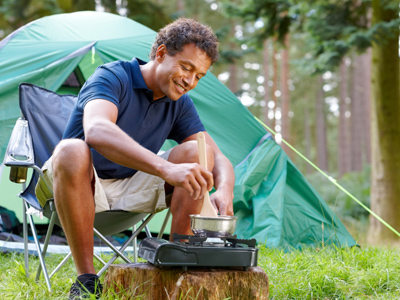
Butane is most likely to be used for camping stoves.
Crude Oil - Substances from Crude Oil
Crude oil makes fuels and chemicals we use daily. This GCSE Chemistry quiz tests fractions, cracking products, and how alkenes and polymers link to real materials.
1 .
The main products from crude oil are fuels. Which of the following fuel is most likely to be used in an aeroplane?
Butane
Diesel
Kerosene
Petrol
A Boeing 747 (Jumbo Jet) burns about 70,000 litres of kerosene flying from London to New York
2 .
Which of these fuels is most likely to be used for camping stoves?
Butane
Diesel
Kerosene
Petrol
Butane is a gas at room temperature and is extremely volatile
3 .
Why does 'light' crude oil cost more than 'heavy' crude oil?
It is lighter in weight
It contains more big molecules
It contains more small molecules
It is lighter in colour
Light crude oil is so-called because it contains less of the longer molecules than heavy crude oil. The small hydrocarbons are much more useful as fuels and as the starting products of many other substances
4 .
Methane is the source of hydrogen for...
the Haber process
making ethanol
producing polymers
cracking hydrocarbons
The Haber process is used to manufacture ammonia
5 .
One possible product of cracking hydrocarbons can be ethene. Ethene can be used to manufacture ethanol, which is used as a fuel. What conditions are required for this reaction to take place?
High pressure and catalyst
High pressure and high temperature
High temperature and catalyst
High pressure, high temperature and catalyst
The catalyst is phosphoric acid, the pressure about 60-70atm and the temperature is around 300°C
6 .
Pick the correct equation to show the production of ethanol from ethene.
C2H4 + H2O → C2H5OH
C2H4 + H2O → C2H4OH
C2H4 + H2 → C2H5OH
C2H6 + H2O → C2H5OH
Ethanol can also be fermented from sugar cane to be used in 'biofuels'
7 .
Ethene can also be used to make poly(ethene). What type of reaction is required for this to occur?
Cracking
Thermal decomposition
Displacement
Polymerisation
Many ethene monomers join together to make poly(ethene) polymers
8 .
When ethene is polymerised, depending on the conditions, slightly different substances are formed. LDPE is formed with very high pressure and a trace of oxygen, whereas HDPE is formed using a catalyst at 50oC and a high pressure. What is the main difference between these two types of poly(ethene)?
LDPE is stronger and has a higher softening temperature than HDPE
HDPE is stronger and has a higher softening temperature than LDPE
HDPE is stronger and has a lower softening temperature than LDPE
LDPE is stronger and has a lower softening temperature than HDPE
These are not the only forms of poly(ethene), there is a medium density version, an ultra-high molecular weight version and Polyethylene terephthalate. It is a widely used polymer
9 .
Plasticisers are sometimes added to polymers. For what reason?
To increase a polymer's melting point
To make the polymer stronger
To make the polymer soluble in water
To make the polymer more flexible
A plasticiser gets between the polymer chains, keeping them further apart. This reduces the forces of attraction between them and makes the material more flexible
10 .
Pick the correct combination for uses for plasticised PVC and unplasticised uPVC.
PVC - ropes and carpets
uPVC - carrier bags and water bottles
uPVC - carrier bags and water bottles
PVC - drain pipes and window frames
uPVC - wire insulation and shrink wrap
uPVC - wire insulation and shrink wrap
PVC - wire insulation and shrink wrap
uPVC - drain pipes and window frames
uPVC - drain pipes and window frames
PVC - drain pipes and window frames
uPVC - carrier bags and carpets
uPVC - carrier bags and carpets
The abbreviation PVC stands for 'poly(viny chloride)'. Vinyl chloride is the old name that was being used for chloroethene when PVC was invented. The 'u' in uPVC tells you that it has been treated to make it resistant to ultra-violet radiation from the sun which makes plastics become very brittle



**Unlimited Quizzes Await You! 🚀**
Hey there, quiz champ! 🌟 You've already tackled today's free questions.
Ready for more?
Ready for more?
🔓 Unlock UNLIMITED Quizzes and challenge yourself every day. But that's
not all...
not all...
🔥 As a Subscriber you can join our thrilling "Daily Streak" against other
quizzers. Try to win a coveted spot on our Hall of Fame Page.
quizzers. Try to win a coveted spot on our Hall of Fame Page.
Don't miss out! Join us now and keep the fun rolling. 🎉
**Unlimited Quizzes Await You! 🚀**
Hey there, quiz champ! 🌟 You've already tackled today's free questions. Ready for more?
🔓 Unlock UNLIMITED Quizzes and challenge yourself every day. But that's not all...
🔥 As a Subscriber you can join our thrilling "Daily Streak" against other quizzers. Try to win a coveted spot on our Hall of Fame Page.
Don't miss out! Join us now and keep the fun rolling. 🎉




© Copyright 2016-2026 - Education Quizzes
Work Innovate Ltd - Design | Development |
Marketing
