




Ask the AI Tutor
Need help with Electrolysis 2? Ask our AI Tutor!
AI Tutor - Lucy
Connecting with Tutor...
Please wait while we establish connection
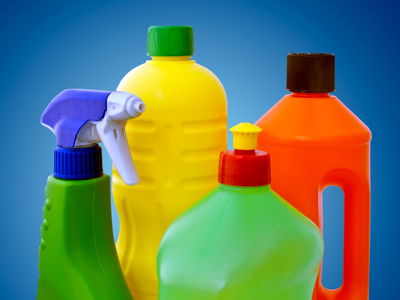
Sodium hydroxide and chlorine are used to make bleach.
Electrolysis 2
Electrolysis of solutions depends on ion choice. This GCSE Chemistry quiz checks what forms at each electrode, and why water can compete with metal and halide ions.
1 .
Aluminium ore (bauxite) must be dissolved in molten cryolite before it can be electrolysed. Why?
Raise the melting point
Lower the melting point
Increase its viscosity
Reduce its viscosity
Cryolite melts at less than 1000°C, bauxite melts at over 2000°C
2 .
Pick the correct half equations for the electrolysis of copper sulfate using copper electrodes.
Cathode: Cu(s) → Cu2+(aq) + 2e-
Anode: Cu2+(aq) + 2e- → Cu(s)
Anode: Cu2+(aq) + 2e- → Cu(s)
Cathode: Cu2+(aq) + 2e- → Cu(s)
Anode: Cu(s)→ Cu2+(aq) + 2e-
Anode: Cu(s)→ Cu2+(aq) + 2e-
Cathode: Cu(s) → Cu+(aq) + e-
Anode: Cu2+(aq) + 2e- → Cu(s)
Anode: Cu2+(aq) + 2e- → Cu(s)
Cathode: Cu(s) → Cu2+(aq) + 2e-
Anode: Cu+(aq) + e- → Cu(s)
Anode: Cu+(aq) + e- → Cu(s)
Remember, in a pair of half equations, everything needs to be balanced, just like in any symbol equation
3 .
The hydrogen produced by the electrolysis of brine is NOT used to...
make margarine
make bleach
make hydrochloric acid
make hydrogen chloride gas
Sodium hydroxide and chlorine are used to make bleach
4 .
What gas forms at the positive electrode during the extraction of aluminium?
Hydrogen
Chlorine
Nitrogen
Oxygen
This oxygen reacts with the carbon of the positive graphite electrodes forming carbon dioxide and as a result, they have to be replaced frequently
5 .
Copper can be purified using electrolysis. Pick the correct combination of components for the electrolytic cell.
Cathode: Impure copper
Anode: Pure copper
Electrolyte: Copper sulfate
Anode: Pure copper
Electrolyte: Copper sulfate
Cathode: Pure copper
Anode: Impure copper
Electrolyte: Copper sulfate
Anode: Impure copper
Electrolyte: Copper sulfate
Cathode: Pure copper
Anode: Pure copper
Electrolyte: Copper sulfate
Anode: Pure copper
Electrolyte: Copper sulfate
Cathode: Impure copper
Anode: Pure copper
Electrolyte: Water
Anode: Pure copper
Electrolyte: Water
Copper ions in solution are attracted to the cathode, where they are deposited as copper atoms
6 .
Choose the correct half equations for the electrolysis of brine.
Anode 2Cl- → Cl2 + 2e-
Cathode 2H+ + 2e- → H2
Cathode 2H+ + 2e- → H2
Anode Cl- → Cl2 + e-
Cathode 2H+ + e- → H2
Cathode 2H+ + e- → H2
Anode 2Cl- → Cl2 + 2e-
Cathode Na+ + e- → Na
Cathode Na+ + e- → Na
Anode Cl- → Cl + 2e-
Cathode H+ + e- → H2
Cathode H+ + e- → H2
Both chlorine and hydrogen are diatomic molecules
7 .
The third product from the electrolysis of brine is sodium hydroxide. This is NOT used to...
make bleach
make paper
make soap
make margarine
Hydrogen is used for hydrogenating oils to produce margarine
8 .
When an electrical current is passed through brine (sodium chloride solution), three products are formed. They are...
chlorine gas, hydrogen gas, sodium chloride solution
chloride ions, hydrogen gas, sodium hydroxide solution
chlorine gas, hydrogen gas, sodium hydroxide solution
chlorine gas, hydrogen ions, sodium hydroxide solution
All three have important uses in the chemical industry
9 .
Which of the following is NOT a use for chlorine?
Kill bacteria
Make bleach
Make PVC
Control pH
The use of chlorine to disinfect drinking water in Victorian Britain had a profound effect on health, reducing the number of people catching water borne bacterial diseases like cholera
10 .
If graphite electrodes are used instead of copper in the electrolysis of copper sulfate, the equation that shows what happens at the anode is...
H2O → H+ + O2 + e-
Cu2+ + 2e- → Cu
2H2O → 4H+ + O2+ 4e-
Cu → Cu 2+ +2e-
Graphite is carbon and is a conductor of electricity and can therefore be used for making electrodes



**Unlimited Quizzes Await You! 🚀**
Hey there, quiz champ! 🌟 You've already tackled today's free questions.
Ready for more?
Ready for more?
🔓 Unlock UNLIMITED Quizzes and challenge yourself every day. But that's
not all...
not all...
🔥 As a Subscriber you can join our thrilling "Daily Streak" against other
quizzers. Try to win a coveted spot on our Hall of Fame Page.
quizzers. Try to win a coveted spot on our Hall of Fame Page.
Don't miss out! Join us now and keep the fun rolling. 🎉
**Unlimited Quizzes Await You! 🚀**
Hey there, quiz champ! 🌟 You've already tackled today's free questions. Ready for more?
🔓 Unlock UNLIMITED Quizzes and challenge yourself every day. But that's not all...
🔥 As a Subscriber you can join our thrilling "Daily Streak" against other quizzers. Try to win a coveted spot on our Hall of Fame Page.
Don't miss out! Join us now and keep the fun rolling. 🎉




© Copyright 2016-2026 - Education Quizzes
Work Innovate Ltd - Design | Development |
Marketing
