




Ask the AI Tutor
Need help with Metals - Extraction of Metals? Ask our AI Tutor!
AI Tutor - Lucy
Connecting with Tutor...
Please wait while we establish connection
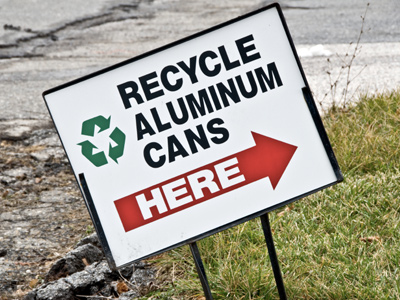
If aluminium cans are not recycled, they can affect the environment by filling up landfill sites.
Metals - Extraction of Metals
How do we get useful metals from rocks, and why do some need electricity? This GCSE Chemistry quiz explores extracting metals, reactivity, and methods like electrolysis and reduction.
1 .
Ores are the starting point for extracting metals because...
ores contain enough metal to make it economically viable
it is easy to extract metals from ores
there are large amounts of metal in ores
ores are found in many locations
That is the definition of an ore
2 .
If aluminium cans are not recycled, they can affect the environment by...
producing poisonous gases
causing acid rain
filling up landfill sites
corroding rapidly in rivers and lakes
There are many other benefits to recycling
3 .
Copper can be obtained from its ore by displacement using scrap iron because...
copper is more reactive than iron
iron is more reactive than copper
scrap iron is cheaper than copper
copper reacts with iron
More reactive elements will displace less reactive metals from their compounds
4 .
Which of these metals is found as itself rather than in a compound?
Sodium
Iron
Aluminium
Gold
Gold is an extremely unreactive metal so it is found as the metal itself, rather than combined with any other element
5 .
Why is aluminium extracted using electrolysis?
Aluminium is more reactive than carbon
Electrolysis is a cheap process
Aluminium is less reactive than carbon
Very little energy is required for electrolysis
Aluminium is a very reactive metal but is protected by a tough layer of aluminium oxide, hiding its true reactivity in everyday situations
6 .
Choose the correct order of reactivity for the five metals.
Mg, Al, Zn, Fe, Sn
Al, Zn, Fe, Sn, Mg
Al, Mg, Fe, Zn, Sn
Sn, Zn, Fe, Al, Mg
Remember 'MAZIT'
7 .
Which of the following is a disadvantage of extracting copper by bioleaching?
Bioleaching uses low grade ores
Bioleaching is slower
Bioleaching is more economical
Bioleaching uses less energy
As always, there are advantages and disadvantages of any method of mining, in the end, it usually comes down to cost-effectiveness. If the mining company can make a profit, even from a slow method like bioleaching, they will use it
8 .
One reason for researching new methods to extract copper from low grade ores is...
more copper is being found
less copper is being used
low grade ores contain a large amount of copper
the price of copper has risen significantly
There is still some copper available in the waste heaps from copper mining but it is uneconomical to find ways to recover it until the price of copper becomes high
9 .
Which of the following shows a balanced chemical equation for the reduction of iron ore in the blast furnace?
Fe2O3 +3CO → 2Fe +3CO2
Fe2O3 +2CO → Fe +3CO2
Fe2O3 +CO → Fe +CO2
Fe2O3 +3CO → 2Fe +CO2
Reduction can be defined in several ways, here, it can be defined as the removal of oxygen
10 .
Metals can be extracted from low grade ores using plants. This process is called...
Photomining
Phytomining
Bioleaching
Electrolysis
Any scientific word beginning with phyto is something to do with plants (phyto is the ancient Greek word for plant)



**Unlimited Quizzes Await You! 🚀**
Hey there, quiz champ! 🌟 You've already tackled today's free questions.
Ready for more?
Ready for more?
🔓 Unlock UNLIMITED Quizzes and challenge yourself every day. But that's
not all...
not all...
🔥 As a Subscriber you can join our thrilling "Daily Streak" against other
quizzers. Try to win a coveted spot on our Hall of Fame Page.
quizzers. Try to win a coveted spot on our Hall of Fame Page.
Don't miss out! Join us now and keep the fun rolling. 🎉
**Unlimited Quizzes Await You! 🚀**
Hey there, quiz champ! 🌟 You've already tackled today's free questions. Ready for more?
🔓 Unlock UNLIMITED Quizzes and challenge yourself every day. But that's not all...
🔥 As a Subscriber you can join our thrilling "Daily Streak" against other quizzers. Try to win a coveted spot on our Hall of Fame Page.
Don't miss out! Join us now and keep the fun rolling. 🎉




© Copyright 2016-2026 - Education Quizzes
Work Innovate Ltd - Design | Development |
Marketing
