




Ask the AI Tutor
Need help with Periodic Table - Trends in the Periodic Table? Ask our AI Tutor!
AI Tutor - Lucy
Connecting with Tutor...
Please wait while we establish connection
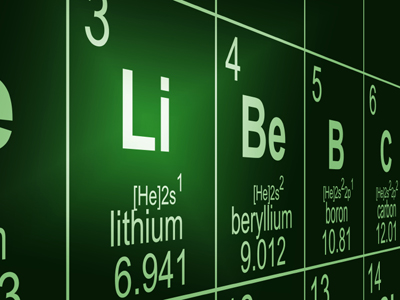
Lithium is the least dense group 1 metal.
Periodic Table - Trends in the Periodic Table
The Periodic Table shows repeating patterns in properties. This GCSE Chemistry quiz explores trends like atomic radius, reactivity, and ionisation energy across periods and down groups.
1 .
As you go down group 1, from lithium to francium, what happens to the reactivity of the elements?
It increases
It remains the same
It decreases
There is no pattern to the changes
Lithium is the least reactive of the group 1 metals. Francium hasn't actually been made in large enough quantities to be tested but the expectation is that it would explode fiercely, covering the vicinty of the explosion in radioactive materials
2 .
As you go down group 7, from fluorine to astatine, what happens to the reactivity of the elements?
It increases
It remains the same
It decreases
There is no pattern to the changes
Fluorine is the most reactive halogen. It is so reactive that it can form compounds with some of the noble gases
3 .
As you move across the periods of the periodic table, which of the following statements is true?
The elements become smaller
The atomic number decreases
The oxides go from being bases to acids
The elements become orange
The chemistry of metals and non-metals is usually opposite to one-another, for example, metals lose electrons but non-metals gain them
4 .
What property can explain the changes in reactivity as you go down a group of elements?
Number of protons
Number of electrons in the outer shell
Number of electron shells
Number of neutrons
The more electron shells, the easier to lose electrons AND the harder to gain electrons
5 .
As you go across a period of the table, what do the elements have the same number of?
Electrons in the outermost energy shell
Number of electron shells
Number of neutrons in the nucleus
Number of electrons
This is one of the few horizontal patterns
6 .
What are the elements arranged in order of in the periodic table?
Atomic number
Atomic mass
Electron shells
Atomic radii
In the modern periodic table, elements are arranged by their atomic number, early attempts to produce a periodic table were based on atomic mass
7 .
What happens to the density of group 1 metals as you go down the group?
It stays the same
It increases
It decreases
It doesn't follow any pattern
Lithium is the least dense group 1 metal
8 .
What happens to density as you go down group 8?
It decreases
It increases
It stays the same
It doesn't follow any pattern
This is one pattern for metals and non-metals that is the same!
9 .
Why does the atomic radius of an element increase as you go down a group?
There are more protons in the element
There are more neutrons in the element
There are more electrons in the nucleus
There are more electron shells around the nucleus
Increasing the number of electron shells around the nucleus increases the radius of the atom
10 .
What happens to the reactivity as you go down group 8?
It increases
It decreases
It stays the same
It doesn't follow any pattern
Group 8 elements do not react, they are the noble gases. As far as the GCSE is concerned, this group is unreactive therefore the reactivity is the same from element to element i.e. zero. Since the 1960s, a few compounds have been made, but with difficulty. So far, no compounds of helium or neon are known and so technically, elements lower down the group are more reactive which is not typical for non-metals



**Unlimited Quizzes Await You! 🚀**
Hey there, quiz champ! 🌟 You've already tackled today's free questions.
Ready for more?
Ready for more?
🔓 Unlock UNLIMITED Quizzes and challenge yourself every day. But that's
not all...
not all...
🔥 As a Subscriber you can join our thrilling "Daily Streak" against other
quizzers. Try to win a coveted spot on our Hall of Fame Page.
quizzers. Try to win a coveted spot on our Hall of Fame Page.
Don't miss out! Join us now and keep the fun rolling. 🎉
**Unlimited Quizzes Await You! 🚀**
Hey there, quiz champ! 🌟 You've already tackled today's free questions. Ready for more?
🔓 Unlock UNLIMITED Quizzes and challenge yourself every day. But that's not all...
🔥 As a Subscriber you can join our thrilling "Daily Streak" against other quizzers. Try to win a coveted spot on our Hall of Fame Page.
Don't miss out! Join us now and keep the fun rolling. 🎉




© Copyright 2016-2026 - Education Quizzes
Work Innovate Ltd - Design | Development |
Marketing
