




Ask the AI Tutor
Need help with Polymerisation? Ask our AI Tutor!
AI Tutor - Lucy
Connecting with Tutor...
Please wait while we establish connection
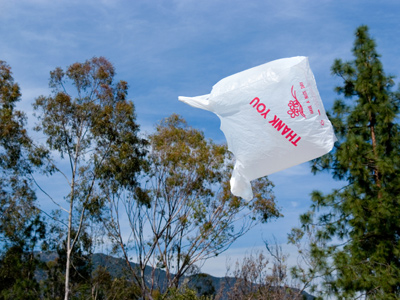
The polymer produced from ethene monomers is poly(ethene) which is used to make 'plastic' bags.
Polymerisation
Polymers are long molecules made from repeating units. This GCSE Chemistry quiz looks at how polymers form, and how their structure links to properties and uses.
1 .
Polymerisation is the process of...
Making large molecules by joining many small molecules together
Making small molecules by breaking down large molecules
Splitting up molecules into their component atoms
Making new elements
This is the opposite of cracking
2 .
The small units that are used to make a polymer are called...
Isomers
Polymers
Monomers
Isotopes
Monomers are reactive small molecules
3 .
Name the polymer produced from ethene monomers.
Poly(propene)
Poly(ester)
Poly(ethene)
Poly(styrene)
Depending on the exact conditions, this can be low density, medium density or high density. Each type has its own specific uses
4 .
The building blocks of polymers are...
unsaturated
saturated
hydrogenated
catalysed
Unsaturated molecules are more reactive
5 .
What happens to the C to C double bond of ethene during polymerisation?
It becomes a triple bond
It remains a double bond
It breaks to become a single bond
It breaks and then reforms
This is how the ethene molecules join to form the polymer
6 .
Carbon and hydrogen are held together by which type of bonding?
Metallic
Covalent
Hydrogen
Ionic
Covalent bonding involves the sharing of electrons between non-metal atoms
7 .
Name the monomer used to produce (poly)styrene.
Propene
Vinyl chloride
Ethene
Styrene
Expanded polystyrene is still a popular packaging material, however, it is gradually being replaced by other more eco-friendly materials
8 .
Which of the following is NOT a disadvantage of polymers.
They are not biodegradable
They fill landfills
They produce toxic gases when burnt
Easy to shape and strong for their weight
They can be moulded into shape whilst they are hot and they keep their shape when cooled. The temperatures required are much lower than the temperatures needed to mould metals in the same way
9 .
A polymer with strong intermolecular forces is called a...
Thermoset
Thermoplastic/softening
Thermopolymer
Thermomonomer
Thermosetting polymers are usually harder and less flexible because of the 'cross-linking' of polymer chains
10 .
Which of the following is NOT a use for a thermoset polymer?
Printed circuit boards
Electrical sockets
Carrier bags
Mattresses
They have the wrong properties to be used for carrier bags



**Unlimited Quizzes Await You! 🚀**
Hey there, quiz champ! 🌟 You've already tackled today's free questions.
Ready for more?
Ready for more?
🔓 Unlock UNLIMITED Quizzes and challenge yourself every day. But that's
not all...
not all...
🔥 As a Subscriber you can join our thrilling "Daily Streak" against other
quizzers. Try to win a coveted spot on our Hall of Fame Page.
quizzers. Try to win a coveted spot on our Hall of Fame Page.
Don't miss out! Join us now and keep the fun rolling. 🎉
**Unlimited Quizzes Await You! 🚀**
Hey there, quiz champ! 🌟 You've already tackled today's free questions. Ready for more?
🔓 Unlock UNLIMITED Quizzes and challenge yourself every day. But that's not all...
🔥 As a Subscriber you can join our thrilling "Daily Streak" against other quizzers. Try to win a coveted spot on our Hall of Fame Page.
Don't miss out! Join us now and keep the fun rolling. 🎉




© Copyright 2016-2026 - Education Quizzes
Work Innovate Ltd - Design | Development |
Marketing
