




Ask the AI Tutor
Need help with Production of Ammonia 2? Ask our AI Tutor!
AI Tutor - Lucy
Connecting with Tutor...
Please wait while we establish connection
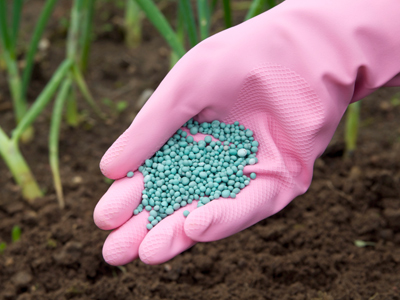
Ammonia is found in fertilisers as ammonium nitrate. Ammonia is reacted with nitric acid to produce ammonium nitrate.
Production of Ammonia 2
Making ammonia efficiently depends on reaction rate and equilibrium. This GCSE Chemistry quiz looks at catalysts, temperature and pressure choices, and why industry balances yield with practical cost.
1 .
The Haber process produces a smaller volume of gas than is reacted together. What effect will increasing the pressure have on this process?
The amount of ammonia is smaller
The amount of product is increased
The amount of reactant produced is larger
The reverse reaction occurs more quickly
In reversible reactions, increasing the pressure favours the reaction direction that leads to a smaller volume
2 .
If a high pressure increases the amount of ammonia produced, why is the process not performed at a much higher pressure than 200 atmospheres?
It is too dangerous
The yield is too high
It is too expensive
Too much hydrogen and nitrogen are used
Very high pressures need reaction vessels and pipes strong enough to cope with the high pressure and these are very expensive. It would also take a lot more energy to produce and maintain the higher pressures which would increase costs even further
3 .
If the Haber process was carried out at low temperature, it would increase the amount of ammonia produced. Why is the process NOT carried out at low temperature?
The forward reaction would be too slow
The forward reaction would be too fast
The reverse reaction would give out too much energy
The forward reaction would give out too much energy
Even though the yield of ammonia would be greater, overall, less ammonia would be produced as the reaction would be a lot slower
4 .
Here is the equation for the Haber process: N2 + 3H2 ⇌ 2NH3 How many moles of gases are there on each side of the equation?
LHS: 3
RHS: 4
RHS: 4
LHS: 4
RHS: 2
RHS: 2
LHS: 2
RHS: 4
RHS: 4
LHS: 2
RHS: 2
RHS: 2
There is 1 mole of nitrogen and 3 moles of hydrogen on the LHS, and 2 moles of ammonia on the RHS
5 .
Ammonia can also be reacted with sulfuric acid to produce ammonium sulfate. Pick the correct equation for this reaction.
2NH3 + H2SO4 → (NH4SO4)2 + H2O
NH3 + H2SO4 → (NH4SO4)2 + H2O
NH3 + H2SO4 → NH4SO4 + H2O
2NH3 + H2SO4 → (NH4)2SO4
Don't try to remember all of the chemical reactions that you have met during your studies, it is much easier to learn the rules for working them out - they are completely predictable
6 .
The forward reaction of the Haber process is exothermic. What does this mean?
It is faster than the reverse reaction
It gives out energy
It takes in energy
It is slower than the reverse reaction
In any reversible reaction, the exothermic direction is favoured by a lower temperature
7 .
The conditions that are chosen for the Haber process, 450oC and 200atm, are the best conditions for what?
The highest yield of ammonia
The fastest yield of ammonia
The slowest reverse reaction
The most ammonia as quickly as possible
Other conditions may give a higher yield, but won't be as fast, or will be faster, but give a smaller yield, so a compromise needs to be reached
8 .
Ammonia is found in fertilisers as ammonium nitrate. Name the acid that the ammonia is reacted with to produce ammonium nitrate.
Hydrochloric acid
Sulfuric acid
Ethanoic acid
Nitric acid
Ammonia + water ? ammonium hydroxide
Ammonium hydroxide + nitric acid ? ammonium nitrate + water
Ammonium hydroxide + nitric acid ? ammonium nitrate + water
9 .
Which of the following statements is true about the role of the iron catalyst in the Haber process?
It speeds up only the forward reaction
It affects the amount of ammonia in the equilibrium mixture
It is used up during the reaction
It increases the rate of reaction in both directions
During reversible reactions, a catalyst has the same effect on both the forward and the reverse reaction. They are used to make sure that the equilibrium point is reached faster than would be possible without the catalyst
10 .
What happens to the hydrogen and nitrogen that are not used in the reaction?
They are recycled
They are put into the air
They are used to make other chemicals
They are dissolved in water
These gases are returned to the reaction vessel so that they can be reacted to make more ammonia, this helps to keep manufacturing costs down
Our Social Circles




**Unlimited Quizzes Await You! 🚀**
Hey there, quiz champ! 🌟 You've already tackled today's free questions.
Ready for more?
Ready for more?
🔓 Unlock UNLIMITED Quizzes and challenge yourself every day. But that's
not all...
not all...
🔥 As a Subscriber you can join our thrilling "Daily Streak" against other
quizzers. Try to win a coveted spot on our Hall of Fame Page.
quizzers. Try to win a coveted spot on our Hall of Fame Page.
Don't miss out! Join us now and keep the fun rolling. 🎉
**Unlimited Quizzes Await You! 🚀**
Hey there, quiz champ! 🌟 You've already tackled today's free questions. Ready for more?
🔓 Unlock UNLIMITED Quizzes and challenge yourself every day. But that's not all...
🔥 As a Subscriber you can join our thrilling "Daily Streak" against other quizzers. Try to win a coveted spot on our Hall of Fame Page.
Don't miss out! Join us now and keep the fun rolling. 🎉
© Copyright 2016-2026 - Education Quizzes
Work Innovate Ltd - Design | Development |
Marketing
