




Ask the AI Tutor
Need help with Rates of Reaction 1? Ask our AI Tutor!
AI Tutor - Lucy
Connecting with Tutor...
Please wait while we establish connection
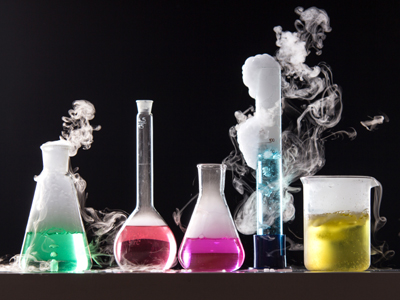
The smallest amount of energy required by particles to react is called the activation energy.
Rates of Reaction 1
Rates of reaction explains how fast chemicals change. Explore collisions, activation energy and catalysts, and learn how temperature, concentration, surface area and pressure affect reaction speed.
1 .
The smallest amount of energy required by particles to react is called...
chemical energy
reaction energy
enabling energy
activation energy
If particles collide with less than the activation energy, a reaction will not take place
2 .
A catalyst is...
a substance that slows down a chemical reaction, and is used up in the reaction
a substance that speeds up a chemical reaction, and is used up in the reaction
a substance that speeds up a chemical reaction, but is not used up in the reaction
a substance that slows down a chemical reaction, but is not used up in the reaction
Make sure that you know this definition off by heart for your GCSE
3 .
Which piece of laboratory equipment would be useful for measuring the volume of gas given off?
Beaker
Gas syringe
Conical flask
Burette
This would be the most convenient and accurate method of measuring the volume of gas given off, although theoretically you could use any of the other pieces of equipment
4 .
Which of the following methods is NOT a valid way to measure the rate of a chemical reaction?
Measuring the mass of a reaction mixture
Measuring the volume of gas given off
Measuring the light transmitted through a solution
Measuring the volume of liquid at the start of the reaction
If you just measured the volume of a liquid at the start, it tells you nothing about how fast the reaction happened after that point in time. Any method of measuring the rate of reaction MUST be measurable during the whole time of the reaction
5 .
Chemical reactions can only occur when...
particles come together with sufficient energy
particles come together for a sufficient amount of time
particles mix together
particles are able to separate
The amount of energy required is called the activation energy
6 .
One method of increasing the chances of particles colliding during a reaction between gases is to...
increase pressure
decrease temperature
use a catalyst
decrease concentration
Increasing pressure needs the gas mixture to be compressed. If it is compressed, the particles will be closer together and therefore more likely to collide
7 .
Which of the following is NOT a factor that affects the rate of a chemical reaction?
Temperature
Concentration
Surface area
The speed at which the chemicals are mixed
For a slow reaction, even if the chemicals are mixed instantaneously, it will still be a slow reaction and vice-versa
8 .
One method of increasing the energy the particles react with is to...
increase pressure
increase temperature
use a catalyst
decrease concentration
Increasing the temperature requires an input of heat energy which makes the particles move around faster, collisions will therfore involve higher energies
9 .
If 80 cm3 of gas was given off in a reaction in 20 seconds, what was the average rate of reaction?
4 cm/s
4 cm3/s
1,600 cm3/s
0.25 cm3/s
Rate of reaction = amount of reactant used up (or amount of product formed) divided by the time taken
10 .
In order to accelerate the rate of a chemical reaction, there are two things which we can do. Pick the correct combination.
Decrease the chances of particle collision
Increase the energy the particles collide with
Increase the energy the particles collide with
Increase the chances of particle collision
Increase the energy the particles collide with
Increase the energy the particles collide with
Increase the chances of particle collision
Decrease the energy the particles collide with
Decrease the energy the particles collide with
Decrease the chances of particle collision
Decrease the energy the particles collide with
Decrease the energy the particles collide with
Particles will only react if they collide with each other so increasing the chances of collisions will increase the chances of a reaction occuring. Increasing the energy of collisions gives a better chance that they will collide with an energy greater than the activation energy



**Unlimited Quizzes Await You! 🚀**
Hey there, quiz champ! 🌟 You've already tackled today's free questions.
Ready for more?
Ready for more?
🔓 Unlock UNLIMITED Quizzes and challenge yourself every day. But that's
not all...
not all...
🔥 As a Subscriber you can join our thrilling "Daily Streak" against other
quizzers. Try to win a coveted spot on our Hall of Fame Page.
quizzers. Try to win a coveted spot on our Hall of Fame Page.
Don't miss out! Join us now and keep the fun rolling. 🎉
**Unlimited Quizzes Await You! 🚀**
Hey there, quiz champ! 🌟 You've already tackled today's free questions. Ready for more?
🔓 Unlock UNLIMITED Quizzes and challenge yourself every day. But that's not all...
🔥 As a Subscriber you can join our thrilling "Daily Streak" against other quizzers. Try to win a coveted spot on our Hall of Fame Page.
Don't miss out! Join us now and keep the fun rolling. 🎉




© Copyright 2016-2026 - Education Quizzes
Work Innovate Ltd - Design | Development |
Marketing
