




Ask the AI Tutor
Need help with Reversible and Irreversible Reactions? Ask our AI Tutor!
AI Tutor - Lucy
Connecting with Tutor...
Please wait while we establish connection
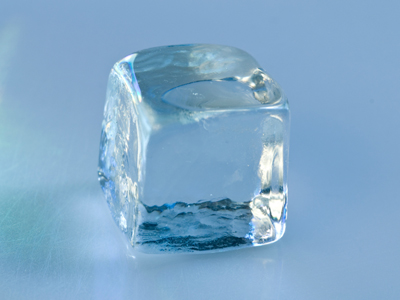
Melting an ice cube is reversible but it is not a chemical reaction.
Reversible and Irreversible Reactions
Learn the difference between reversible and irreversible reactions, and how equilibrium forms. See how changing temperature, pressure or concentration can shift the balance of products and reactants.
1 .
Pick the correct combination for how we represent reversible and irreversible reactions.
reversible ⇌
irreversible →
irreversible →
reversible ←
irreversible →
irreversible →
reversible ⇌
irreversible ←
irreversible ←
irreversible ⇌
reversible →
reversible →
The top or the bottom arrow of the double ended arrow can be bigger or smaller to indicate in which direction the reaction is dominant
2 .
Which of the following reactions is reversible?
Combustion
Neutralisation
The Haber process
Boiling an egg
The Haber process produces ammonia from nitrogen and hydrogen. Ammonia decomposes to form nitrogen and hydrogen
3 .
Which of the following reactions is irreversible?
Reaction between anhydrous copper sulfate and water
Decomposition of ammonium chloride
Reaction between sodium and water
Reaction between hydrogen and nitrogen
When sodium reacts with water, sodium hydroxide is formed and you cannot directly reverse this to get water and sodium metal
4 .
If a reversible reaction is exothermic in the forward direction, it will be...
exothermic in the reverse direction
endothermic in the forward direction
endothermic in the reverse direction
not involve energy in the reverse direction
The reverse reaction is a 'mirror image' of the forward reaction
5 .
A reversible reaction is...
a reaction that can proceed in both directions
a reaction that can only go in one direction
a reaction that can only go backwards
a reaction that does not happen
The reactants react to produce the products, which can then break down or react together to form the reactants
6 .
Why is a reaction described as irreversible?
The products cannot be turned directly back into the reactants
You need to apply heat to make the reaction work
The products can be turned back into the reactants
The reactants cannot be turned into the products
It may be possible to get back to the original reactants by carrying out a series of other chemical reactions but the key feature of a reversible reaction is that the products are converted directly back into the reactants
7 .
Which of the following is reversible?
Frying a potato
Melting an ice cube
Making toast
Baking a cake
The water can be frozen again to form ice. This is a physical change, all the others are irreversible chemical changes
8 .
Which of the following equations is CORRECT?
Sugar ← water + carbon
Anhydrous copper sulfate → copper sulfate + water
Sodium hydrogencarbonate ⇌ sodium carbonate + carbon dioxide + water
Calcium carbonate → calcium oxide + carbon dioxide
This is the word equation for the thermal decomposition of limestone (calcium carbonate).
9 .
Which of the following equations is NOT correct?
CuCO3 → CuO + CO2
2Mg + O2 → 2MgO
NH4Cl → NH3 + HCl
CH4 + 2O2 → CO2 + 2H2O
You should recognise this from the introduction to this quiz, it needs a reversible reaction arrow between the reactants and products
10 .
When a reversible reaction reaches equilibrium...
the reverse reaction is happening more quickly than the forward reaction
the forward reaction is happening more quickly than the reverse reaction
the forward reaction is happening at the same rate as the reverse reaction
the reverse reaction is happening slower than the forward reaction
The forward and reverse reactions are happening at the same time and at the same rate, so the concentrations of reactants and products do not change
Our Social Circles




**Unlimited Quizzes Await You! 🚀**
Hey there, quiz champ! 🌟 You've already tackled today's free questions.
Ready for more?
Ready for more?
🔓 Unlock UNLIMITED Quizzes and challenge yourself every day. But that's
not all...
not all...
🔥 As a Subscriber you can join our thrilling "Daily Streak" against other
quizzers. Try to win a coveted spot on our Hall of Fame Page.
quizzers. Try to win a coveted spot on our Hall of Fame Page.
Don't miss out! Join us now and keep the fun rolling. 🎉
**Unlimited Quizzes Await You! 🚀**
Hey there, quiz champ! 🌟 You've already tackled today's free questions. Ready for more?
🔓 Unlock UNLIMITED Quizzes and challenge yourself every day. But that's not all...
🔥 As a Subscriber you can join our thrilling "Daily Streak" against other quizzers. Try to win a coveted spot on our Hall of Fame Page.
Don't miss out! Join us now and keep the fun rolling. 🎉
© Copyright 2016-2026 - Education Quizzes
Work Innovate Ltd - Design | Development |
Marketing
