




Ask the AI Tutor
Need help with To Kill a Mockingbird - Setting? Ask our AI Tutor!
AI Tutor - Lucy
Connecting with Tutor...
Please wait while we establish connection
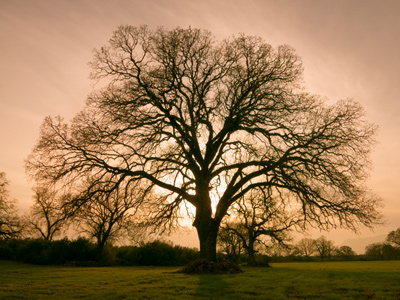
The tree was a single and ancient oak.
To Kill a Mockingbird - Setting
In To Kill a Mockingbird, the setting of Maycomb shapes every event. This quiz explores how streets, houses and public spaces reveal prejudice, community and change.
1 .
What is the name given to the series of economic events which further impoverishes the poor and struggling farmers and agricultural labourers in the novel?
The Great Famine
The Great Recession
The Great Depression
The Women's Suffrage Movement
Poverty is widespread and public in Maycomb. When Miss Caroline tries to insist that Walter Cunningham borrow money for lunch, not realising he could never repay her, she shows how little she knows about the poverty of her pupils
2 .
Which of the following does NOT describe the mood of the courthouse during Tom Robinson's trial?
Despairing
Anxious
Expectant
Tense
Tom Robinson's many supporters have faith that Atticus will successfully defend the innocent man
3 .
"The back of the Radley house was less inviting than the front: a ramshackle porch ran the width of the house; there were two doors and two dark windows between the doors. Instead of a column, a rough two-by-four supported one end of the roof." Which of the following words or phrases is here used ironically?
Less inviting
Ramshackle
Two dark windows
Supported
The front of the Radley house is not exactly "inviting" and the back of the house is especially spooky to the children
4 .
Which of the following is NOT true of the Ewell's cabin?
It has grubby glass windows
It is near the town's rubbish tip
Its roof is covered with tin cans which have been flattened to make shingles
It has no foundation and rests crookedly on four large rocks
The Ewells are extremely poor. The windows of their cabin are just open holes in the outer walls
5 .
Which of the following is true of Jem and Scout's neighbours?
Only the children who live on there have an interest in the lives of their neighbours
Most people on the Finch's street do not know one another
The neighbours politely keep themselves to themselves
The neighbours expect to know everything about one another's lives and personal histories
Mrs Radley's neglect of neighbourly duties such as visiting and stopping for chats provokes gossip amongst the surprised townspeople
6 .
"We had slowed to a cautious gait, and were feeling our way forward so as not to bump into the trees. The tree was a single and ancient oak; two children could not reach around its trunk and touch hands. It was far away from teachers, their spies, and curious neighbours: it was near the Radley lot, but the Radleys were not curious." What happens to break the spooky spell of this passage?
Capurnia calls for Jem and Scout to return home
Jem and Scout reach the schoolhouse
A friend leaps out of hiding to scare Scout and Jem
Boo Radley comes out of his house to watch Scout and Jem go past
The release of tension after Jem and Scout are spooked on their way to the schoolhouse lulls the reader into a sense of complacency
7 .
Where is To Kill a Mockingbird set?
Texas
Alabama
Washington D. C.
New York
The fictional Maycomb County is located in Alabama, one of the southern states of the U.S.
8 .
"Maycomb was an old town, but it was a tired old town when I first knew it. In rainy weather the streets turned to red slop; grass grew on the sidewalks, the court-house sagged in the square." What impression does this description of the town give the reader?
Maycomb is modern and urban
Maycomb is a wealthy town
Maycomb is full of civic pride
Maycomb is poor
The streets are unpaved and no one is employed for the upkeep of the pavements and buildings. The town has declined over the years
9 .
The schoolchildren are mistrustful of Miss Caroline because she is from North Alabama. Their mistrust dates back to which historical event?
The Gold Rush
The Revolutionary War
The Civil War
The Great Depression
The children know that the county where Miss Caroline is from was disloyal to the state of Alabama when it broke away (seceded) from the Union at the beginning of the Civil War. This episode shows the power that historical events and the disagreements of the past still have over the imaginations of the people of Maycomb and which the adults pass down to their children
10 .
Scout narrates the story from an unspecified time in her adulthood. When do the events of the novel take place?
1910s
1930s
1950s
1970s
Like Scout, Harper Lee lived in a small Alabama town during her childhood in the 1930s



**Unlimited Quizzes Await You! 🚀**
Hey there, quiz champ! 🌟 You've already tackled today's free questions.
Ready for more?
Ready for more?
🔓 Unlock UNLIMITED Quizzes and challenge yourself every day. But that's
not all...
not all...
🔥 As a Subscriber you can join our thrilling "Daily Streak" against other
quizzers. Try to win a coveted spot on our Hall of Fame Page.
quizzers. Try to win a coveted spot on our Hall of Fame Page.
Don't miss out! Join us now and keep the fun rolling. 🎉
**Unlimited Quizzes Await You! 🚀**
Hey there, quiz champ! 🌟 You've already tackled today's free questions. Ready for more?
🔓 Unlock UNLIMITED Quizzes and challenge yourself every day. But that's not all...
🔥 As a Subscriber you can join our thrilling "Daily Streak" against other quizzers. Try to win a coveted spot on our Hall of Fame Page.
Don't miss out! Join us now and keep the fun rolling. 🎉




© Copyright 2016-2026 - Education Quizzes
Work Innovate Ltd - Design | Development |
Marketing
