




Ask the AI Tutor
Need help with Electricity - Household Electricity? Ask our AI Tutor!
AI Tutor - Lucy
Connecting with Tutor...
Please wait while we establish connection
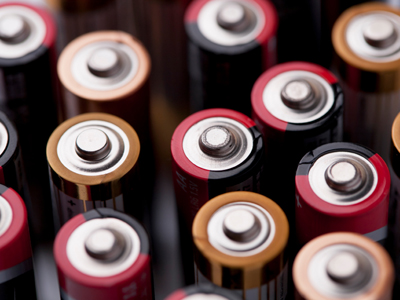
A battery produces direct current (DC).
Electricity - Household Electricity
Learn how household electricity is supplied, why plugs have fuses, and how to stay safe with live, neutral and earth wires in everyday appliances.
1 .
What is DC electricity?
An electrical source supplying current passing in the same direction
An electrical source supplying current passing in a constantly changing direction
An electrical source supplying no current
An electrical source supplying current passing in the opposite direction to voltage
This can be generated using a dynamo or from chemical reactions that occur inside electrical cells
2 .
What is AC electricity?
An electrical source supplying current passing in the same direction
An electrical source supplying current passing in a constantly changing direction
An electrical source supplying no current
An electrical source supplying current passing in the opposite direction to voltage
This can be generated using an alternator or by connecting a device known as an inverter to a DC supply. You can buy inverters that can be connected to the cigarette lighter socket of a car which will change the 12 V DC of the battery to 230 V AC so that you can use devices like a phone charger or laptop charger that require mains electricity
3 .
Most electrical devices connect to the mains supply using what connector?
3-Pin plug
1-Pin plug
4-Pin Plug
5-Pin Plug
You need to know which colour wire goes to what pin - check your knowledge in the next question
4 .
In a plug there are three wires. What colour is the earth wire?
Blue
Green
Green and yellow
Brown
The earth wire is green and yellow, the live wire is brown and the neutral wire is blue
5 .
Why are cables insulated with plastic sheaths?
For aesthetic value
To protect from electric shock
To improve the conductivity of the wires
There is no reason for the cable to be covered
Plastics are flexible and do not conduct electricity
6 .
Why do plugs contain fuses?
To protect the device from damage
To protect from electric shock
Fuses are not used in electrical devices
To protect the device from damage and to protect from electric shock
When too much current passes through a device the fuse breaks, disconnecting the circuit and so ensuring the device is not damaged and there is no risk of electric shock
7 .
Appliances with metal casing are usually what?
Earthed
Unearthed
More expensive than a house
Live
An appliance with a metal casing will always have a wire attached to the case which is connected to the earth wire. This means that in the event of a fault with the appliance, it will not cause an electric shock to anyone touching it
8 .
What type of current does a cell or a battery produce?
DC
AC
No current
Positive current and negative voltage
It has a positive pole and a negative pole
9 .
What is the correct formula for calculating the frequency of a supply?
f = 1⁄T
f = 1⁄2T
f = 2⁄T
f = 3⁄T
Frequency is measured in Hertz (Hz) and the time period is measured in seconds (s)
10 .
What is the frequency of a supply which has a time period of 100 seconds
10 Hz
1 Hz
0.1 Hz
0.01 Hz
One divided by one hundred seconds



**Unlimited Quizzes Await You! 🚀**
Hey there, quiz champ! 🌟 You've already tackled today's free questions.
Ready for more?
Ready for more?
🔓 Unlock UNLIMITED Quizzes and challenge yourself every day. But that's
not all...
not all...
🔥 As a Subscriber you can join our thrilling "Daily Streak" against other
quizzers. Try to win a coveted spot on our Hall of Fame Page.
quizzers. Try to win a coveted spot on our Hall of Fame Page.
Don't miss out! Join us now and keep the fun rolling. 🎉
**Unlimited Quizzes Await You! 🚀**
Hey there, quiz champ! 🌟 You've already tackled today's free questions. Ready for more?
🔓 Unlock UNLIMITED Quizzes and challenge yourself every day. But that's not all...
🔥 As a Subscriber you can join our thrilling "Daily Streak" against other quizzers. Try to win a coveted spot on our Hall of Fame Page.
Don't miss out! Join us now and keep the fun rolling. 🎉




© Copyright 2016-2026 - Education Quizzes
Work Innovate Ltd - Design | Development |
Marketing
