




Ask the AI Tutor
Need help with Light - The Eye? Ask our AI Tutor!
AI Tutor - Lucy
Connecting with Tutor...
Please wait while we establish connection
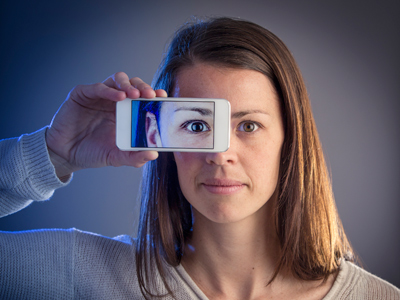
A CCD in a digital camera is the equivalent of the retina in the eye.
Light - The Eye
In GCSE Physics you learn how the eye works like a camera. This quiz tests how light is focused, detected and turned into signals your brain understands.
1 .
What is the formula for the power of a lens?
P = 1⁄f
P = 1⁄2f
P = 2⁄f
P = 2⁄3f
P is power and is measured in dioptres, D. The focal length, f, is measured in metres, m
2 .
What is the power of a lens whose focal length is 0.1 m?
2 D
5 D
10 D
100 D
D stands for dioptre
3 .
Which answer is not a part of the structure of the eye?
Retina
Malleus
Ciliary muscle
Cornea
The malleus is part of the ear. The structure of the eye is made up of the retina, lens, iris, cornea, pupil, ciliary muscle and suspensory ligaments
4 .
The eye can focus on objects ranging between the near point and the far point. In humans with perfect vision, what is approximately the distance of the near point and the far point?
10 cm and 50 m
5 cm and 100 m
25 cm and infinity
2 m and infinity
You can test the near focal length yourself by bringing your finger close to your eye. You will notice that as you bring your finger closer than around 25 cm, your finger will start to become slightly blurred
5 .
A CCD in a digital camera is the equivalent of what in the eye?
Lens
Cornea
Pupil
Retina
CCD stands for charge coupled device and is the electronic equivalent of a film
6 .
What is/are a cause(s) of short sightedness?
Eyeball being too long
Lens unable to focus
The eyeball being too short
Both eyeball being too long and lens unable to focus
If the lens is too fat, it will bend the light too much and the focal point will be in front of the retina
7 .
A manufacturer wants to make a flatter (less curved) lens for a given focal length. How would the manufacturer make this?
Make the lens using a material with a higher refractive index
Make the lens using a material with a lower refractive index
They cannot make a flatter lens
Use a material with the same refractive index but one that they can cut thinner
Normally, a flatter lens will focus light further away, however, if the material has a higher refractive index, it will bend the light through a greater angle. The new flatter lens therefore can be made to focus light at the same point as the original, more curved lens
8 .
What is/are a cause(s) of long sightedness?
Eyeball being too short
Lens unable to focus
Eyeball too long
Both eyeball being too short and lens unable to focus
If the lens is too thin for the length of the eyeball, light entering the eye will be focused behind the retina
9 .
The focal length of a lens is determined by what?
The refractive index of the material from which the lens is made
The curvature of one surface of the lens
The curvature of the two surfaces of the lens
Both the refractive index of the material from which the lens is made and the curvature of the two surfaces of the lens
Materials with higher refractive indices and lenses with greater curvature bend light the most
10 .
What types of lenses are used to correct long and short sightedness?
Convex and concave
Convex and planar
Planar and bi-convex
Bi-concave and bi-convex
These are designed to refract the light just enough to enable the lens to focus it directly onto the retina



**Unlimited Quizzes Await You! 🚀**
Hey there, quiz champ! 🌟 You've already tackled today's free questions.
Ready for more?
Ready for more?
🔓 Unlock UNLIMITED Quizzes and challenge yourself every day. But that's
not all...
not all...
🔥 As a Subscriber you can join our thrilling "Daily Streak" against other
quizzers. Try to win a coveted spot on our Hall of Fame Page.
quizzers. Try to win a coveted spot on our Hall of Fame Page.
Don't miss out! Join us now and keep the fun rolling. 🎉
**Unlimited Quizzes Await You! 🚀**
Hey there, quiz champ! 🌟 You've already tackled today's free questions. Ready for more?
🔓 Unlock UNLIMITED Quizzes and challenge yourself every day. But that's not all...
🔥 As a Subscriber you can join our thrilling "Daily Streak" against other quizzers. Try to win a coveted spot on our Hall of Fame Page.
Don't miss out! Join us now and keep the fun rolling. 🎉




© Copyright 2016-2026 - Education Quizzes
Work Innovate Ltd - Design | Development |
Marketing
