




Ask the AI Tutor
Need help with Medical Physics - Medical Applications? Ask our AI Tutor!
AI Tutor - Lucy
Connecting with Tutor...
Please wait while we establish connection
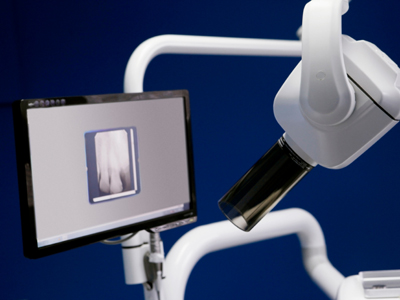
You may have had an x-ray at the dentist.
Medical Physics - Medical Applications
In GCSE Physics you explore medical imaging and treatments that use waves and radiation to look inside the body and help diagnose illness.
1 .
Radioisotopes are used in medical imaging to view how the body is functioning, but how are radioisotopes selected to be used in this kind of imaging process?
Have a short half-life (hours)
Not emit alpha radiation
Emit gamma radiation
All of the above
When radioisotopes emit their radiation, we can detect the radiation with accurate detectors allowing us to track the path of the substance in the body
2 .
Which of the following radiation used in medical physics is ionising?
Ultrasound
X-ray
Both
Neither
Ionising radiation can damage the DNA within cells
3 .
What does a CT scanner usually consist of?
An x-ray tube which continually rotates around your body
An x-fluorescent tube which continually rotates around your body
A gamma ray tube which continually rotates around your body
An x-ray tube which is placed above your body
This enables three-dimensional images of the patient to be built up
4 .
Which of the following radiation used in medical physics is non-ionising?
Ultrasound
X-ray
Both
Neither
It can be used to examine a foetus as it will not harm its cells
5 .
Which of the following would be used to obtain an image of a person's bone structure?
Ultrasound
X-ray
Gamma ray
Beta radiation
X-rays do not pass through solids as easily as soft tissue
6 .
Which type of lens would be used to correct short-sightedness?
Convex
Concave
Converging
Plano-concave
In short sight, the lens of the eye bends the light too much so the focal point is in front of the retina. The use of a concave lens moves the focal point so that it is exactly on the retina and therefore the image is in focus
7 .
What are possible dangers of using X-rays in medical physics?
Tissue damage
Mutations
Both
Neither
Radiographers need to be protected from the X-rays. Potentially, because they use the X-ray machine several times each day, they could be exposed to harmful amounts of radiation
8 .
Which of the following is NOT an advantage of a CT scanner over an X-ray?
It provides a highly detailed image
It gives a higher dose of radiation
Can distinguish between bone and soft tissue
It gives a 3D image
A CT scan involves taking many images using X-rays so a greater dose of radiation passes through the patient
9 .
Which type of lens would be used to correct long-sightedness?
Diverging
Plano-convex
Concave
Convex
The focal point in long-sightedness is behind the retina, using a convex lens in front of the eye's own lens shortens the focal length, bringing the light to a focus exactly on the retina
10 .
Which type of radiation is used to sterilise foods and medical equipment?
Alpha
Beta
Gamma
None of the above
The high energy of gamma rays is able to kill off bacteria which could cause illness or reduce the time a product stays fresh
Our Social Circles




**Unlimited Quizzes Await You! 🚀**
Hey there, quiz champ! 🌟 You've already tackled today's free questions.
Ready for more?
Ready for more?
🔓 Unlock UNLIMITED Quizzes and challenge yourself every day. But that's
not all...
not all...
🔥 As a Subscriber you can join our thrilling "Daily Streak" against other
quizzers. Try to win a coveted spot on our Hall of Fame Page.
quizzers. Try to win a coveted spot on our Hall of Fame Page.
Don't miss out! Join us now and keep the fun rolling. 🎉
**Unlimited Quizzes Await You! 🚀**
Hey there, quiz champ! 🌟 You've already tackled today's free questions. Ready for more?
🔓 Unlock UNLIMITED Quizzes and challenge yourself every day. But that's not all...
🔥 As a Subscriber you can join our thrilling "Daily Streak" against other quizzers. Try to win a coveted spot on our Hall of Fame Page.
Don't miss out! Join us now and keep the fun rolling. 🎉
© Copyright 2016-2026 - Education Quizzes
Work Innovate Ltd - Design | Development |
Marketing
