




Ask the AI Tutor
Need help with Radioactivity - Atoms and Radiation? Ask our AI Tutor!
AI Tutor - Lucy
Connecting with Tutor...
Please wait while we establish connection
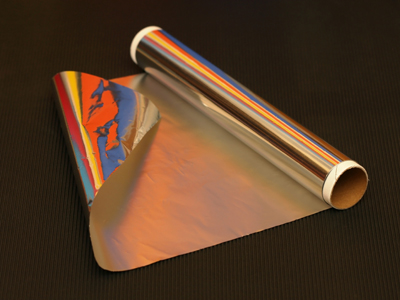
Gamma radiation would not be blocked by a thin sheet of aluminium.
Radioactivity - Atoms and Radiation
In GCSE Physics you explore radioactivity, learning how unstable nuclei emit radiation, how we detect it in the lab, and how to manage risks from everyday background radiation.
1 .
What is background radiation due to?
Nuclear fallout
Rocks
Cosmic rays
All of the above
Cosmic rays account for most of the background radiation that we experience, however the other types can be major factors in specific areas
2 .
What is an alpha particle?
A particle which has one neutron and one proton
A proton
A neutron
A particle which has two neutrons and two protons
It is the nucleus of a helium atom
3 .
What is a beta particle?
A low energy electron
A high energy proton
A high energy electron
A low energy proton
Higher tier candidates may be asked to balance the atomic numbers and mass numbers in an equation showing what happens to an atom when it undergoes radioactive decay to produce an alpha or beta particle
4 .
What is gamma radiation?
A form of electromagnetic radiation
An electron
A proton
A neutron
It is the highest energy radiation of the electromagnetic spectrum
5 .
Which type of radiation would be blocked by a thin sheet of paper?
Alpha
Beta
Gamma
None of the above
Alpha radiation also struggles to penetrate more than a few centimetres through the air
6 .
Which type of radiation would be blocked by a thin sheet of aluminium - but not by paper?
Alpha
Beta
Gamma
They all get blocked
These fast-moving electrons are much smaller than alpha particles
7 .
Which type of radiation would be blocked by several inches of lead - but not by a thin sheet of aluminium or paper?
Alpha
Beta
Gamma
Beta and Gamma
In nuclear reactors at nuclear power stations, gamma radiation is blocked from escaping by several metres of concrete
8 .
What types of radiation can be deflected by electric and magnetic fields?
Alpha
Alpha and Beta
Alpha and Gamma
Beta and Gamma
Gamma radiation has no electrostatic charge
9 .
What is the half-life of a radioactive isotope?
The time it takes to be deadly to humans
The number of isotopes in a sample
The average time it takes for the number of nuclei of the isotope in a sample to halve
The time it takes for the isotope in a sample to decrease by a quarter
This is why the count rate falls by half during one half life. It can be used to calculate how long it will take for the radiation from a particular sample of radioactive substance to drop to a safe level
10 .
Which radiation is deflected more by electric and magnetic fields?
Alpha
Beta
Gamma
None are deflected
Alpha particles are deflected less, despite having a greater charge, due to having a much greater mass than beta particles. They are deflected in opposite directions as they have opposite charges



**Unlimited Quizzes Await You! 🚀**
Hey there, quiz champ! 🌟 You've already tackled today's free questions.
Ready for more?
Ready for more?
🔓 Unlock UNLIMITED Quizzes and challenge yourself every day. But that's
not all...
not all...
🔥 As a Subscriber you can join our thrilling "Daily Streak" against other
quizzers. Try to win a coveted spot on our Hall of Fame Page.
quizzers. Try to win a coveted spot on our Hall of Fame Page.
Don't miss out! Join us now and keep the fun rolling. 🎉
**Unlimited Quizzes Await You! 🚀**
Hey there, quiz champ! 🌟 You've already tackled today's free questions. Ready for more?
🔓 Unlock UNLIMITED Quizzes and challenge yourself every day. But that's not all...
🔥 As a Subscriber you can join our thrilling "Daily Streak" against other quizzers. Try to win a coveted spot on our Hall of Fame Page.
Don't miss out! Join us now and keep the fun rolling. 🎉




© Copyright 2016-2026 - Education Quizzes
Work Innovate Ltd - Design | Development |
Marketing
