




Ask the AI Tutor
Need help with Waves - Properties of Waves 02? Ask our AI Tutor!
AI Tutor - Lucy
Connecting with Tutor...
Please wait while we establish connection
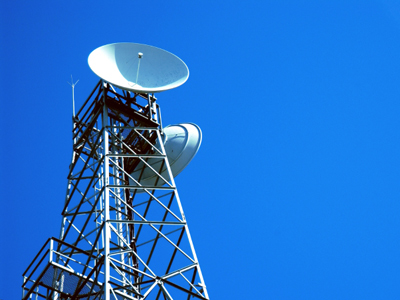
Radio waves are used for communications.
Waves - Properties of Waves 02
This GCSE Physics quiz explores properties of waves, helping you practise oscillations, wavelength, frequency and speed so you feel confident with wave questions in the exam.
1 .
What is the formula of the wave equation?
v=fλ
v=λ⁄f
v=f⁄λ
f=λ⁄v
ALL waves obey the wave equation
2 .
In addition to being reflected and refracted, how can waves also be manipulated?
Diffused
Diffracted
Heated
By freezing
You may have seen this demonstrated in the lab using a ripple tank
3 .
Calculate the wavelength of an electromagnetic wave that has a frequency of 10 kHz.
30 m
30 km
300 km
300 m
Electromagnetic waves have a speed of 300,000,000 m/s (3 x 10⁸ m/s) metres per second i.e. at the speed of light. Although you are not required to remember this number for the exam, knowing it can save you valuable time as you won't need to find it on the data sheet
4 .
What types of waves are used for communications?
Radio waves
Microwaves
Light waves
All of the above
Any electromagnetic wave can be used for communication as the wave can be manipulated to any given frequency or wavelength. The three listed above are the most common waves used for communications
5 .
Calculate the speed of a wave with a frequency of 3 Hz and a wavelength of 100 x 10-9 m.
300 x 10-9 m/s
33 x 10-9 m/s
300 x 10-8 m/s
300 x 109 m/s
Straightforward substitution into the equation - you should have been able to do this without the need for a calculator
6 .
Which of the following is a characteristic of a longitudinal wave?
It contains areas of compression and rarefaction
It contains both electric and magnetic waves
It contains electric waves
It contains magnetic waves
A longitudinal wave will contain areas where the particles in the wave are pushed close together and areas where the particles are far apart
7 .
What are the SI units of wavelength?
Inches
Metres
Feet
Hertz
This is the correct unit to use, however it is acceptable at GCSE to use other units if they match the units that you are given in the question
8 .
Calculate the frequency of a wave with a speed of 3 x 10⁶ m/s and a wavelength of 1 x 10⁴ m.
30 Hz
300 Hz
3000 Hz
3 x 10¹⁰ Hz
This required you to divide the velocity by the wavelength
9 .
The period of a wave T = 1⁄f, if the time period for a wave of wavelength 500 mm is 0.5 seconds, at what speed is the wave travelling?
1 x 10¹⁰ m/s
0.25 m/s
0.5 m/s
1 m/s
Tricky on several levels. It is testing whether you are able to combine equations and work in different units to arrive at an answer in the correct SI format i.e. metres per second
10 .
What units is frequency measured in?
Hertz
Metres
Coulombs
Volts
A frequency of one hertz tells you that one cycle of a wave is passing a certain point in one second. Two hertz means two complete cycles pass in one second and so on



**Unlimited Quizzes Await You! 🚀**
Hey there, quiz champ! 🌟 You've already tackled today's free questions.
Ready for more?
Ready for more?
🔓 Unlock UNLIMITED Quizzes and challenge yourself every day. But that's
not all...
not all...
🔥 As a Subscriber you can join our thrilling "Daily Streak" against other
quizzers. Try to win a coveted spot on our Hall of Fame Page.
quizzers. Try to win a coveted spot on our Hall of Fame Page.
Don't miss out! Join us now and keep the fun rolling. 🎉
**Unlimited Quizzes Await You! 🚀**
Hey there, quiz champ! 🌟 You've already tackled today's free questions. Ready for more?
🔓 Unlock UNLIMITED Quizzes and challenge yourself every day. But that's not all...
🔥 As a Subscriber you can join our thrilling "Daily Streak" against other quizzers. Try to win a coveted spot on our Hall of Fame Page.
Don't miss out! Join us now and keep the fun rolling. 🎉




© Copyright 2016-2026 - Education Quizzes
Work Innovate Ltd - Design | Development |
Marketing
