




Ask the AI Tutor
Need help with Catholicism - The Church? Ask our AI Tutor!
AI Tutor - Lucy
Connecting with Tutor...
Please wait while we establish connection
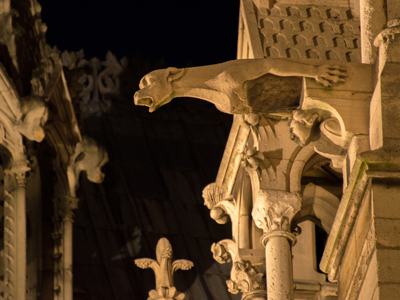
How much do you know about the Catholic church?
Catholicism - The Church
The Catholic Church has a global structure, local parishes, and leaders who teach and serve. Explore how authority works and why community matters.
1 .
Almost all Catholic church interiors have a generic smell about them ~ smoky, spicy, one would probably say ~ and cynics might add with some truth that there is a direct causal connection between this and the lack of woodworm which might otherwise attack the pews (seats), organ-case (if any) and other furniture, and some of the likely carvings around the place. What, in worship, gives rise to this smell?
Catholics do not believe in central or modern heating, so open fires or stoves are used in winter
Palm leaves are regularly burnt as a sacrifice
Incense (a mixture of gum and spices) is burnt by way of an 'echo' of Old Testament burnt-offerings (of sacrificial animals), and to help ennoble the overall sensory experience along with such elements as music and candles
It has something to do with the embalming process where the bodies and relics of Saints are preserved for veneration by subsequent generations
This again is not entirely exclusive to Catholic churches, but you will usually be able to detect it in the majority of 'branches' that use it. There is quite an art to maintaining and handling a loaded censer (watch a film or telecast of a Mass, and see; pity you couldn't smell it onscreen too)! Members of some less ritualistic parishes and denominations sometimes comment on the 'bells and smells' in Catholic worship, but these elements of the ritual are symbolically important, and contribute powerfully to what should rightly be a special atmosphere (in a number of senses of that term!)
2 .
Some religions (and certain more puritanical Christian denominations) believe it is blasphemous ~ i.e. idolatrous, or at least distracting ~ to have decorations in the place of worship which represent living (or once-living) things or people, including animals but also likenesses of holy people (Saints &/or Biblical figures), however well-intentioned and beautifully rendered. For Catholics there is no such problem since we should rejoice in craftsmanship and embrace it as a means of responding to God and 'giving back to Him' as an adjunct and encouragement for our worship. There may well be depictions of Bible stories, unashamedly showing God Himself (usually as a 'wise old man'-type character), the young (and, of course, baby) Jesus, and the Holy Spirit, often in the form of a Dove of Peace. Who else will be much in evidence, in statue, portrait and/or icon form, in a Catholic church?
The Blessed Virgin Mary
The lawgiving prophet Moses
St Peter, the fisherman-turned-evangelist
Abraham, the founding father of God's original chosen people
The others may each well put in an appearance, or indeed several; but for Catholics, Mary is particularly special (see elsewhere on this)
3 .
There are many ways a person may approach God in worship; Jesus Himself proposed quite a simplistic one in urgent or even ordinary circumstances, where a believer might step aside into a quiet place and simply commune with God in prayer. But organised corporate worship (especially, though by no means only, within the Catholic mainstream of Christianity) suggests a more deliberate, respectful, ritualistic approach. Which of these best defines an instinctual Catholic arrival at church for Mass, or some other service?
Rinsing the fingers in a stoop of holy water near the main entrance
Genuflecting (briefly going down on one knee towards the altar) before moving into a pew
Both the above
Neither of the above
There may well be other preparatory stages, but these are quite characteristic. It might be noted that Muslims are also steadily insistent on bodily cleanliness before worship, and also keen on respectful posture. A Protestant ~ such as your author ~ suddenly feels a touch slovenly alongside such observances
4 .
One feature you would almost certainly spot, spaced at regular intervals clockwise around the inside wall of the main space in a Catholic church of any size (though also within some others, unsurprisingly including the 'Anglo-Catholic'), would be a matching series of pictures or carvings showing the key stages of the Passion / Crucifixion story so central to Christian faith. Which of the following is the most correct collective description of these?
Twelve Steps along The Way
Fourteen Stations of the Cross
The Seven Sorrows of Mary
The Ten Temptations
You might like to explore these by finding a series of them online, or better still inside an actual church (better again, with someone suitable alongside you to explain them). At very least, if you are studying Christianity at all seriously, you should acquaint yourself with the sequence of Gospel references and read them thoughtfully in order
5 .
Which of the following is NOT a true label or description for the Pope?
Direct successor of St Peter (to whom Jesus Himself 'gave the keys of the Kingdom' when Peter had voluntarily confessed Him as Messiah)
Bishop of Rome
The Pontiff
The Great Archbishop
'Pontiff' (Ans.3) essentially means 'bridge-builder', i.e. the one who, at any time, helps act as mediator between God and His (Catholic) people. He is also known as the 'Vicar of Christ' ... an initially surprising title, until you research &/or consider it a bit!
6 .
Why might one see one, or quite possibly several, youngish (well-pre-adolescent) children around a Catholic church, dressed like little brides ~ or bridesmaids ~ or groomsmen, when there is no wedding on?
For their Confirmation
For their First Communion
For a Day of Solemn Dedication
For a Baptismal Reunion and Renewal of Vows
Don't be fooled by the pompous but vaguely plausible language in our 'distractors' at Answers 3 & 4. In the Catholic Church, First Communion is a major initiation step but it is not causally linked with Confirmation as it would be in most Protestant denominations. Provided the child professes understanding or acceptance of the cruciality of Transubstantiation within the Mass, they are able to receive communion, and the more detailed background will be studied when they are more cognitively mature. There will be more on Transubstantiation in a parallel quiz on Catholic doctrine and beliefs
7 .
While the Anglican Church within Britain is divided into two provinces of York and Canterbury, who is the top Catholic for England and Wales?
The Archbishop of London
The Archbishop of Westminster
The Cardinal of Winchester
The Cardinal of London
This gentleman is also automatically a Cardinal (identifiable as such, not least, by the red hat that goes with this rank)
8 .
Of course, before a practising Catholic can arrive for Mass, there is something else they mandatorily must have done: what?
Confess their sins, usually to the relevant priest, either by appointment or by 'dropping in' to the Confessional during suitable hours (often on a Saturday afternoon)
Recite the Lord's Prayer and Ten Commandments, read the set Psalm/s for the day and say three Hail Mary's
Make a donation in cash or kind for those less fortunate, e.g. through CAFOD
Rinse out their mouth with Holy Water
Confession is a key and dynamic part of practising the Catholic faith, which we will aim to deal with elsewhere under Rites and Sacraments. The main point is that it would be sacrilegious to approach the Eucharist while knowingly unworthy through unabsolved mortal sin
9 .
Which of the following would you NEVER be likely to see in a Roman Catholic church?
Congregants marking themselves with the sign of the Cross
Communicants at Mass 'receiving in two kinds', i.e. wine as well as bread
The Mass (Eucharist/Communion) being celebrated by a female priest
A service for the Anointing of the Sick
For a range of reasons, it seems pretty certain that within the presumed working lifetime of this quiz there will be no ordination of females within the Catholic communion. Answer 1 will almost certainly be seen on any visit to a Catholic worship service; 'two kinds' (Answer 2) would be unusual but is not unheard-of; the Last Rites (Ans.4) may be offered by a priest in circumstances outside the physical church, but a special service may well be held from time to time within it, using the relevant special materials
10 .
Regarding meanings and definitions, in this context: what does 'catholic' (note the lowercase 'c') actually mean?
Exclusive
Applicable to everyone
Traditionalist
Able to bring relief from guilt
One occasionally hears someone being described as having 'catholic tastes' : i.e., far from 'just' preferring (for instance) the 'theatrical' aspects of worship ~ dressing-up, solemn music, 'bells & smells' etc. ~ they might be keen on a wide range within other fields entirely, such as both rock and classical music, or junk-food and fine wine, or traditional craftsmanly figurative art alongside modern abstract or 'concept' works



**Unlimited Quizzes Await You! 🚀**
Hey there, quiz champ! 🌟 You've already tackled today's free questions.
Ready for more?
Ready for more?
🔓 Unlock UNLIMITED Quizzes and challenge yourself every day. But that's
not all...
not all...
🔥 As a Subscriber you can join our thrilling "Daily Streak" against other
quizzers. Try to win a coveted spot on our Hall of Fame Page.
quizzers. Try to win a coveted spot on our Hall of Fame Page.
Don't miss out! Join us now and keep the fun rolling. 🎉
**Unlimited Quizzes Await You! 🚀**
Hey there, quiz champ! 🌟 You've already tackled today's free questions. Ready for more?
🔓 Unlock UNLIMITED Quizzes and challenge yourself every day. But that's not all...
🔥 As a Subscriber you can join our thrilling "Daily Streak" against other quizzers. Try to win a coveted spot on our Hall of Fame Page.
Don't miss out! Join us now and keep the fun rolling. 🎉




© Copyright 2016-2026 - Education Quizzes
Work Innovate Ltd - Design | Development |
Marketing
