




Ask the AI Tutor
Need help with Christianity - Pilgrimage? Ask our AI Tutor!
AI Tutor - Lucy
Connecting with Tutor...
Please wait while we establish connection
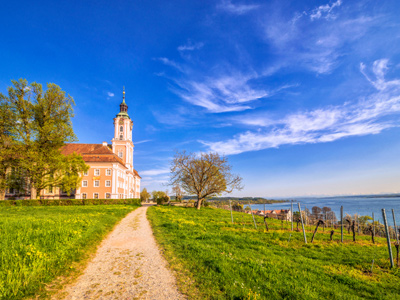
A pilgrimage is a journey.
Christianity - Pilgrimage
Why do Christians go on pilgrimage, and what changes when they return? Explore holy places, spiritual purpose, and how pilgrimage can shape worship, choices, and daily life.
1 .
Ongoing political unrest permitting, many Christians feel it worth making the effort to visit the Holy Land with its sites where Jesus Himself walked, spoke and did His ministry. Which of the following would NOT conveniently fit into such an itinerary?
The birthplace at Bethlehem
The shores of the Sea of Galilee
The road into Damascus
Jerusalem and Golgotha / Calvary
Answer 3 refers to the conversion site of Saul / St Paul; the others are clear references to Jesus's earthly life.
2 .
On the other hand, trying to keep up with the missionary travels of St Paul (even with the benefit of faster modern transport) would be well more than a single holiday's-worth, though there may be niche organisations that try their best. Once again, which of the following would NOT belong on a 'Pauline' itinerary?
Rome
Malta
Ephesus
Alexandria
So far as we know, Paul's travels never took him to Egypt.
Your writer has been briefly to Rome, but also to Malta ('the honeyed island', as this means in Latin) where the site of Paul's shipwreck is named and commemorated; there is an interesting walking-trail based out of Xemxija which takes in a small Roman military bathhouse ~ which could quite plausibly have been his first stop under escort after coming ashore (and the incident with the snake at the bonfire) ~ and not far away from that, there's also an apiary (bee-house) from Roman times. Even seeing these is quite an evocative experience.
Your writer has been briefly to Rome, but also to Malta ('the honeyed island', as this means in Latin) where the site of Paul's shipwreck is named and commemorated; there is an interesting walking-trail based out of Xemxija which takes in a small Roman military bathhouse ~ which could quite plausibly have been his first stop under escort after coming ashore (and the incident with the snake at the bonfire) ~ and not far away from that, there's also an apiary (bee-house) from Roman times. Even seeing these is quite an evocative experience.
3 .
There have been pilgrimages to other places with holy associations for hundreds of years. Whose tomb at Canterbury was the destination for the colourful characters in Chaucer's 'Canterbury Tales'?
St Augustine
St Thomas Becket
St Swithun
St Cantius
Becket was murdered in the cathedral in 1170, a little over two centuries before Chaucer's pilgrims assembled to make their way there to pay their respects. St Augustine (answer 1) was the missionary who had first brought Christianity to Britain; St Swithun (answer 2)'s associations are with Winchester, and 'St Cantius' (answer 4) is, as far as we know, entirely fictitious.
4 .
Earlier even than Canterbury, there is a British shrine at Walsingham dating back to a vision of the Virgin Mary in 1061 ~ just a few years before the Norman Conquest (and Battle of Hastings). In which county is this?
Norfolk
Suffolk
Essex
Hertfordshire
The Walsingham pilgrimage is perennially popular with Catholic and (usually, 'higher') Anglican devotees. Interested quizees can discover more about this online.
5 .
The sheer size of mainland Europe, and the reach of its networks of holy houses (abbeys and monasteries), take longer-distance pilgrimages there to a whole wider dimension. One of the best-known routes is the Way of St James: what is its pilgrims' destination?
The Cathedral at Compostela
The Shrine at Lourdes
The Grotto at Tarbes
The Abbey at Valladolid
This one has been going since the 9th century; Compostela's cathedral houses the most massive censer (incense-burner) in the world, suspended from the ceiling (the 'botafumeiro'), among its many other attractions. This became an increasingly popular 'substitute' pilgrimage destination once the traditional Holy Land was harder to access after the Muslim conquest in the 7th century.
6 .
Which do you think is the most common &/or cogent reason for people to go on pilgrimages anywhere?
To visit particularly special places at first-hand, and walk in the steps of great and sacred people
To put sustained time and effort into doing this, as a personal discipline and sacrifice
To make and deepen friendships with other like-minded souls along the way
As a once-in-a-lifetime experience
It is usually the site itself which determines the experience, but the other reasons usually contribute importantly to it as well.
7 .
Religious places sometimes find their ministry develops over time: for instance, Coventry (the site of one of the great mediaeval cycles of religious 'mystery plays') had its old cathedral bombed almost to total ruin during World War 2, and a brand-new (rare) 20th-century cathedral was built from scratch within 20 years or so; under twinning arrangements with Dresden in Germany, it has a powerful ministry of international fellowship and reconciliation.
Towards the end of the 20th century, a sculpture was donated for installation alongside the 'new' cathedral's Chapel of Industry ~ portraying the head and torso of the crucified Christ, as made of scrap metal from cars that had been involved in fatal accidents.
Why, or how, would the Cathedral authorities find grateful and suitable use for such a well-intentioned, but macabre, artefact?
Towards the end of the 20th century, a sculpture was donated for installation alongside the 'new' cathedral's Chapel of Industry ~ portraying the head and torso of the crucified Christ, as made of scrap metal from cars that had been involved in fatal accidents.
Why, or how, would the Cathedral authorities find grateful and suitable use for such a well-intentioned, but macabre, artefact?
They installed it near a notorious 'accident-blackspot' on the city's road system
They put it on top of the spire, as a feature of the skyline and as an extension of the lightning-conductor
They process around the city's streets behind it on Good Friday each year, in an echo of the old Mystery Plays
They use it as a focal point for the Cathedral's ministry to people who have lost loved ones in road accidents
By strange working of providence (perhaps ...), your author was helping sing the services with a summer 'relief' choir at Coventry, over the weekend in 1997 during which Princess Diana was killed in a car crash in Paris. The Sunday morning service was hastily reconfigured to start with a procession and contemplation beside the sculpture, which had suddenly become so very topical.
Coventry has had strong links with the motor trade since this began: this is how it came to be involved in making and repairing military motors during the War, and hence attracted German bombardment. A modern ministry to those bereaved through motor-related deaths is an entirely reasonable, indeed (when one considers it) healthy initiative for a cathedral in such a position.
Coventry has had strong links with the motor trade since this began: this is how it came to be involved in making and repairing military motors during the War, and hence attracted German bombardment. A modern ministry to those bereaved through motor-related deaths is an entirely reasonable, indeed (when one considers it) healthy initiative for a cathedral in such a position.
8 .
Many churches and other institutions are named in honour of St Helen, mother of the Roman Emperor Constantine the Great ~ and who, as such, was pivotal in the Christianisation of the Empire. It is widely claimed that on her own pilgrimage to the Holy Land, she rediscovered ... what?
The True Cross
The Holy Grail
The Crown of Thorns
The 'purple robe' which had been Jesus' last earthly possession
Of course, this story from the 4th century dates back a long way, during which time both faith and forensics have moved on somewhat; but the belief is still there. Wikipedia, at least, suggests that she returned with a number of other relics, but this was judged the most significant.
9 .
The motif of a journey is attendant on both the birth and death of Jesus. Which of the following did NOT have to travel to Bethlehem to be part of the original Nativity narrative?
The shepherds
The learned rulers from the East (often traditionally referred to as the Three Wise Men)
King Herod and his soldiers
The Holy Family, plus donkey
Herod was keen to get his men into Bethlehem and slaughter any child or infant who could be trying to rival him, according to what he had heard from the 'Wise Men' on their outbound journey about 'a new king born in Bethlehem'. But the Holy Family was able to flee to Egypt and avoid the 'massacre of the innocents'. This in turn brings us back, via a reference to Coventry and its miracle plays ~ since earlier metalsmiths there formed a Guild of Shearmen, who sponsored this scene in their pageant re-enactment, so that they could show off their latest bladed goods!
10 .
Who, at least partly while in prison for practising his nonconformist religion, wrote the devotional classic 'Pilgrim's Progress' ~ in which the life and pitfalls of a believer are described through the analogy of a journey?
John Newton
John Bunyan
John Wesley
J M Neale
Bunyan was serving time in Bedford gaol in the 1670s ... during interesting times, not long after the Restoration and the Plague and Fire of London. The book has, apparently, never been out of print since the first editions went to press, and has appeared in some 200 languages or more.
You can find more about this topic by visiting BBC Bitesize - The revelation of God and the Christian Church



**Unlimited Quizzes Await You! 🚀**
Hey there, quiz champ! 🌟 You've already tackled today's free questions.
Ready for more?
Ready for more?
🔓 Unlock UNLIMITED Quizzes and challenge yourself every day. But that's
not all...
not all...
🔥 As a Subscriber you can join our thrilling "Daily Streak" against other
quizzers. Try to win a coveted spot on our Hall of Fame Page.
quizzers. Try to win a coveted spot on our Hall of Fame Page.
Don't miss out! Join us now and keep the fun rolling. 🎉
**Unlimited Quizzes Await You! 🚀**
Hey there, quiz champ! 🌟 You've already tackled today's free questions. Ready for more?
🔓 Unlock UNLIMITED Quizzes and challenge yourself every day. But that's not all...
🔥 As a Subscriber you can join our thrilling "Daily Streak" against other quizzers. Try to win a coveted spot on our Hall of Fame Page.
Don't miss out! Join us now and keep the fun rolling. 🎉




© Copyright 2016-2026 - Education Quizzes
Work Innovate Ltd - Design | Development |
Marketing
