




Ask the AI Tutor
Need help with Year 2 Fractions - Shapes? Ask our AI Tutor!
AI Tutor - Lucy
Connecting with Tutor...
Please wait while we establish connection

If a shape is divided into four equal parts it has been quartered.
Year 2 Fractions - Shapes
Learn to shade halves and quarters of shapes. Think about equal area, not edges. Spot when parts are the same size and check by folding or cutting lines.
Question 1
2⁄3
1⁄4
1⁄3
1⁄2
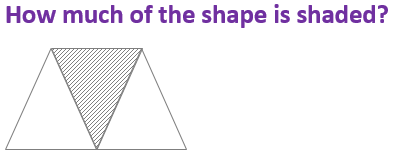
One of the three equal parts is called a third
Question 2
2⁄4
1⁄4
3⁄4
1⁄2
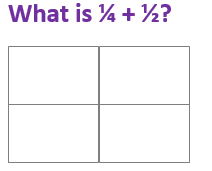
If you shaded in 1 quarter, and then 2 more, you would have shaded 3 of the 4 quarters
Question 3
2⁄4
3⁄4
4⁄4
1⁄4
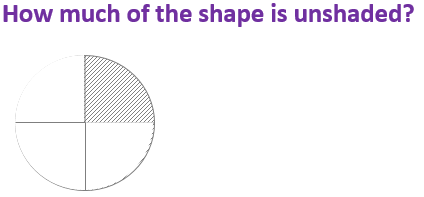
3 of the 4 quarters are not shaded, only one quarter is shaded
Question 4
2⁄4
1⁄4
1⁄2
3⁄4
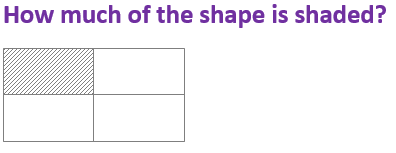
The shape is divided into four equal sections – each one is a quarter. One is shaded
Question 5
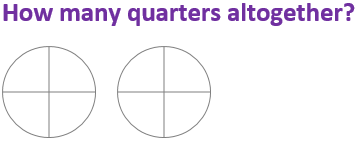
8
6
5
10
Each shape has 4 quarters so there are 8 altogether
Question 6
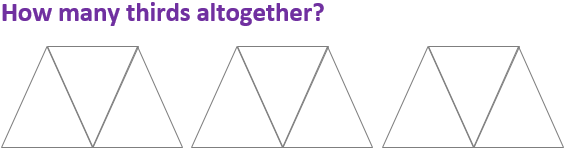
5
3
6
9
Each shape has 3 thirds. There are 3 shapes so 3 x 3 = 9
Question 7
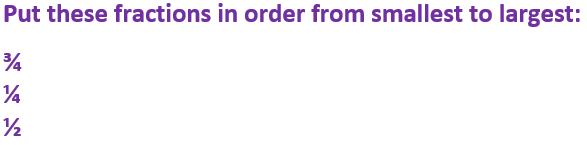
3⁄4, 1⁄4, 1⁄2
1⁄4, 3⁄4, 1⁄2
1⁄2, 1⁄4, 3⁄4
1⁄4, 1⁄2, 3⁄4
1?2 is the same as 2?4
Question 8
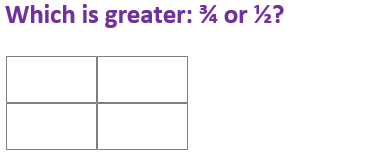
2⁄4
They are both the same
1⁄2
3⁄4
1?2 is the same as 2?4 so 3?4 is greater
Question 9
1⁄2
3⁄4
2⁄5
1⁄4
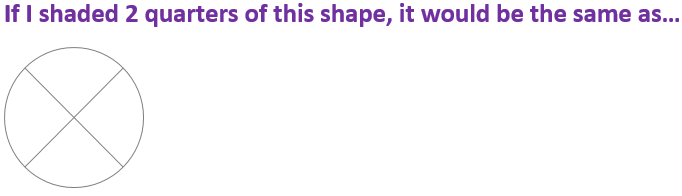
There are four quarters. If I shaded two of them, it would be half of the shape
Question 10
2⁄4
1⁄4
4⁄4
1⁄2
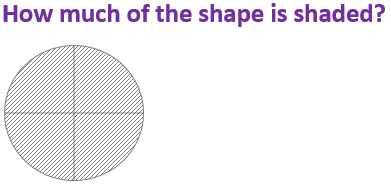
The whole shape is shaded – this is 4 quarters
Our Social Circles




**Unlimited Quizzes Await You! 🚀**
Hey there, quiz champ! 🌟 You've already tackled today's free questions.
Ready for more?
Ready for more?
🔓 Unlock UNLIMITED Quizzes and challenge yourself every day. But that's
not all...
not all...
🔥 As a Subscriber you can join our thrilling "Daily Streak" against other
quizzers. Try to win a coveted spot on our Hall of Fame Page.
quizzers. Try to win a coveted spot on our Hall of Fame Page.
Don't miss out! Join us now and keep the fun rolling. 🎉
**Unlimited Quizzes Await You! 🚀**
Hey there, quiz champ! 🌟 You've already tackled today's free questions. Ready for more?
🔓 Unlock UNLIMITED Quizzes and challenge yourself every day. But that's not all...
🔥 As a Subscriber you can join our thrilling "Daily Streak" against other quizzers. Try to win a coveted spot on our Hall of Fame Page.
Don't miss out! Join us now and keep the fun rolling. 🎉
© Copyright 2016-2026 - Education Quizzes
Work Innovate Ltd - Design | Development |
Marketing
