




Ask the AI Tutor
Need help with Ten Pieces - Igor Stravinsky? Ask our AI Tutor!
AI Tutor - Lucy
Connecting with Tutor...
Please wait while we establish connection
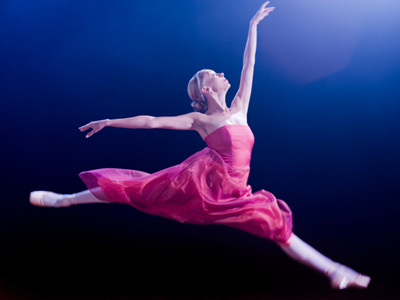
Do you have a favourite ballet?
Ten Pieces - Igor Stravinsky
Meet Igor Stravinsky and explore how his music creates stories through rhythm, melody and orchestral colour. Can you spot changes in mood as the piece develops?
1 .
Though he travelled a lot and settled elsewhere, what was Stravinsky's nationality by birth?
Polish
Russian
Czech
Armenian
He was born and raised around St Petersburg where his father was a professional singer
2 .
He had to leave Russia on the outbreak of World War I (in 1914, as you may remember) ... and what with the Revolution not long after that, it was many years before he could next go 'home'. When did this eventually happen?
1949
1955
1958
1962
Yes: almost half a century later, poor man
3 .
With what form of music (in which Russia had a strong recent tradition, not least through Tchaikovsky) did Stravinsky burst upon the cultural scene in Paris in the years before World War I?
Symphonies
Opera
Ballet
Chamber music
The Firebird, of course, was the first of these in 1910
4 .
Where was Stravinsky living during the years approaching World War II (i.e., the mid- to late 1930s)?
Switzerland
France
Luxembourg
America
He and his family were naturalised as French citizens in 1934 and settled in Paris, where unfortunately his wife and eldest daughter each died
5 .
During the Second World War Stravinsky moved to the USA, and in January 1944 there was a story (probably not true) that he had been in trouble with the Boston police ... over having, supposedly, done what?
Committed a driving offence
Reported some young people for abusing him as a foreigner
Made and played his own new arrangement of the National Anthem, with some more modern chords in the accompaniment
Made music in a public place without the proper permit
This sounds unlikely, but so the story ran. Stravinsky was an intellectual, foreigner, hard drinker and 'unconventional' performance artist, so it was not totally unlikely that he would come into some form of conflict ... He still became naturalised as a US citizen in 1945 (his second such shift in barely 10 years, since France in 1934)
6 .
Which ONE of the following was a true and genuine mark of Stravinsky's acceptance into the USA and its cultural life?
A star on the Walk of Fame in Hollywood
A ballet theatre named in his honour in Massachusetts
A street named after him in New York
Dinner with the President at the White House during the early years of the Cold War (which in simple essence was an intercontinental US/Russian conflict)
Surprising, perhaps ... but it's still there!
7 .
Stravinsky had much of his early and formative musical teaching from one of 'the Five' who had been friends with Mussorgsky: which one?
Cesar Cui
Miliy Balakirev
Nikolai Rimsky-Korsakov
Alexander Borodin
This is the same man who had done the usually-played orchestration of Mussorgsky's Night on the Bare Mountain. The sense of epic and elemental orchestral volume, and colour, certainly seems a strong common tradition between these composers
8 .
During his long and interesting life he 'rubbed shoulders' with many of the great creative and cultural icons of the 20th century. Which of the following people is NOT regarded as having been at least a close friend and/or artistic collaborator?
Coco Chanel (fashion designer)
Pablo Picasso (artist)
Jean Cocteau (writer / cineast)
Ferdinand Porsche (car designer)
There were numerous others, of course!
9 .
Which of Stravinsky's ballets caused riotous scenes when it was premiered in Paris in 1913?
The Firebird
The Rite of Spring
Petrushka
Parade
Parade was by Erik Satie, though it too caused a riot in Paris, 4 years later in 1917 (during the First World War)
10 .
On which instrument was Stravinsky a recital-quality soloist?
The piano
The violin
The clarinet
The trumpet
He had already mastered Mendelssohn's concerto for this instrument while he was not yet long into his teens
You can find more about this topic by visiting BBC - KS2: Igor Stravinsky - The Firebird — suite (1911) (Finale)



**Unlimited Quizzes Await You! 🚀**
Hey there, quiz champ! 🌟 You've already tackled today's free questions.
Ready for more?
Ready for more?
🔓 Unlock UNLIMITED Quizzes and challenge yourself every day. But that's
not all...
not all...
🔥 As a Subscriber you can join our thrilling "Daily Streak" against other
quizzers. Try to win a coveted spot on our Hall of Fame Page.
quizzers. Try to win a coveted spot on our Hall of Fame Page.
Don't miss out! Join us now and keep the fun rolling. 🎉
**Unlimited Quizzes Await You! 🚀**
Hey there, quiz champ! 🌟 You've already tackled today's free questions. Ready for more?
🔓 Unlock UNLIMITED Quizzes and challenge yourself every day. But that's not all...
🔥 As a Subscriber you can join our thrilling "Daily Streak" against other quizzers. Try to win a coveted spot on our Hall of Fame Page.
Don't miss out! Join us now and keep the fun rolling. 🎉




© Copyright 2016-2026 - Education Quizzes
Work Innovate Ltd - Design | Development |
Marketing
