




Ask the AI Tutor
Need help with Electrical Circuits 02? Ask our AI Tutor!
AI Tutor - Lucy
Connecting with Tutor...
Please wait while we establish connection
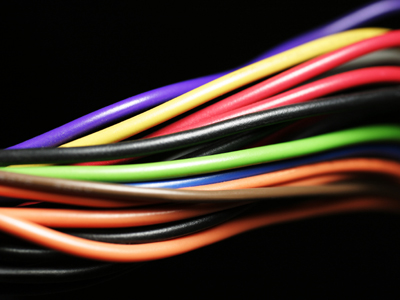
The plastic coating on electrical wires is an insulator.
Electrical Circuits 02
KS3 Science explores electrical circuits. Pupils learn how insulators protect, how conductors carry current, and why circuits work differently when arranged in series or parallel.
1 .
Which of the following statements is true?
A flow of electrons around a circuit is called an electric current
A switch only turns the current off
An open switch allows a small amount of current through it
Two identical bulbs in a series circuit are brighter than one
It can sometimes be helpful to think of electricity flowing round a circuit like water through pipes
2 .
Two bulbs are in series in a complete circuit. If the voltage is increased:
the bulbs get brighter and the current decreases
the bulbs get brighter and the current increases
the bulbs get dimmer and the current decreases
the bulbs get dimmer and the current increases
The number of bulbs was not changed so there is more current flowing and the bulbs are brighter
3 .
Two identical bulbs are in parallel in a complete circuit. If one breaks:
the other bulb is brighter
the other bulb is dimmer
the other goes off
the other stays on
This is a benefit of a parallel circuit, it is usually easier to find out which component has broken as the rest still work
4 .
Two identical bulbs are in parallel in a complete circuit. A third identical bulb is connected in parallel. What happens?
All the bulbs are dimmer
All the bulbs are the same brightness
The third bulb is brighter
The third bulb is dimmer
Adding identical bulbs in parallel uses more current but brightness stays the same
5 .
Wires are usually coated in plastic because:
plastic can be lots of different colours
plastic helps the wires bend
plastic helps the wires conduct electricity
plastic is an insulator
Wires used to be covered with rubber as an insulator but rubber perishes faster than plastic
6 .
If the size of a battery in a complete circuit is increased:
the current decreases
the current increases
the current stays the same
the voltage stays the same
An increase in voltage will increase the current flowing in a circuit (if nothing else is changed)
7 .
Wires are normally made from copper. This is because:
copper has a high resistance
copper is a very good conductor of electricity
copper is cheap
copper is expensive
It is also very malleable and can therefore easily be bent to go round corners
8 .
Three identical bulbs are in parallel in a complete circuit. The current in each bulb:
is different in all bulbs
is greatest in the bulb nearest the battery
is the same
is three times the current flowing from the battery
The current in each bulb is a third of the total current flowing round the circuit
9 .
Which of the following statements is true?
A voltmeter is connected in series to measure voltage.
An ammeter is connected in parallel to measure current.
Different sized bulbs in parallel have the same current flowing through them.
In a parallel circuit with four identical bulbs, the current is shared equally between them.
If the four bulbs were NOT identical, the current would still be shared out, but not equally
10 .
The current in a series circuit containing two bulbs:
is larger between the bulbs
is larger nearer the battery
is smaller nearer the battery
is the same at every place in the circuit
This is an important point to remember about a series circuit
Our Social Circles




**Unlimited Quizzes Await You! 🚀**
Hey there, quiz champ! 🌟 You've already tackled today's free questions.
Ready for more?
Ready for more?
🔓 Unlock UNLIMITED Quizzes and challenge yourself every day. But that's
not all...
not all...
🔥 As a Subscriber you can join our thrilling "Daily Streak" against other
quizzers. Try to win a coveted spot on our Hall of Fame Page.
quizzers. Try to win a coveted spot on our Hall of Fame Page.
Don't miss out! Join us now and keep the fun rolling. 🎉
**Unlimited Quizzes Await You! 🚀**
Hey there, quiz champ! 🌟 You've already tackled today's free questions. Ready for more?
🔓 Unlock UNLIMITED Quizzes and challenge yourself every day. But that's not all...
🔥 As a Subscriber you can join our thrilling "Daily Streak" against other quizzers. Try to win a coveted spot on our Hall of Fame Page.
Don't miss out! Join us now and keep the fun rolling. 🎉
© Copyright 2016-2026 - Education Quizzes
Work Innovate Ltd - Design | Development |
Marketing
