




Ask the AI Tutor
Need help with British Birds - Auks, Avocets, Cranes and Skuas? Ask our AI Tutor!
AI Tutor - Lucy
Connecting with Tutor...
Please wait while we establish connection
The name of this aggressive bird is the subject of one of our questions.
British Birds - Auks, Avocets, Cranes and Skuas
Meet some brilliant British birds, from cliff-dwelling auks to elegant avocets. This quiz helps you spot key features, habitats, and behaviours.
To see a larger image, click on the picture.
1 .
What is the name of this bird?
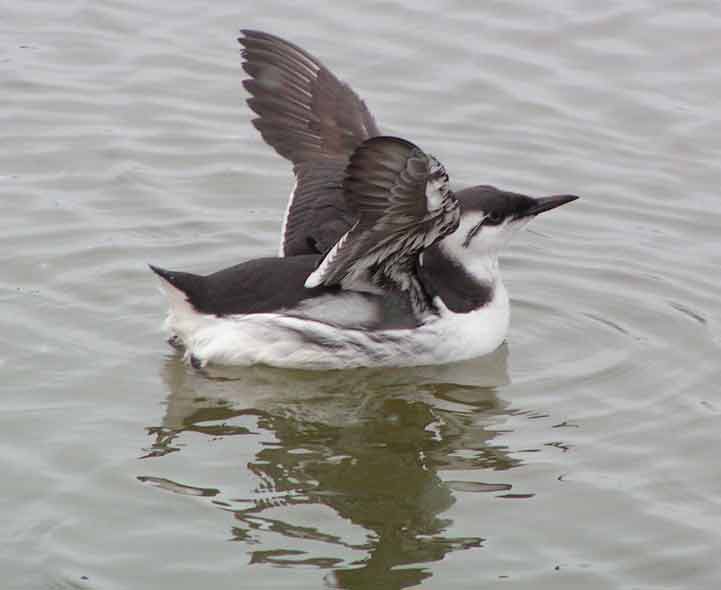
Photograph courtesy of M.Buschmann
Avocet
Common Crane
Common Guillemot
Great Skua
- Group: Auks
- Binomial: Uria aalge
- Order: Charadriiformes
- Family: Alcidae
- Status: Breeding Summer Visitor And Resident Species
- Typically dive to depths of 30–60 m and depths of up to 180 m have been recorded.
- Both male and female become flightless for 1-2 months after breeding.
2 .
What is the name of this bird?
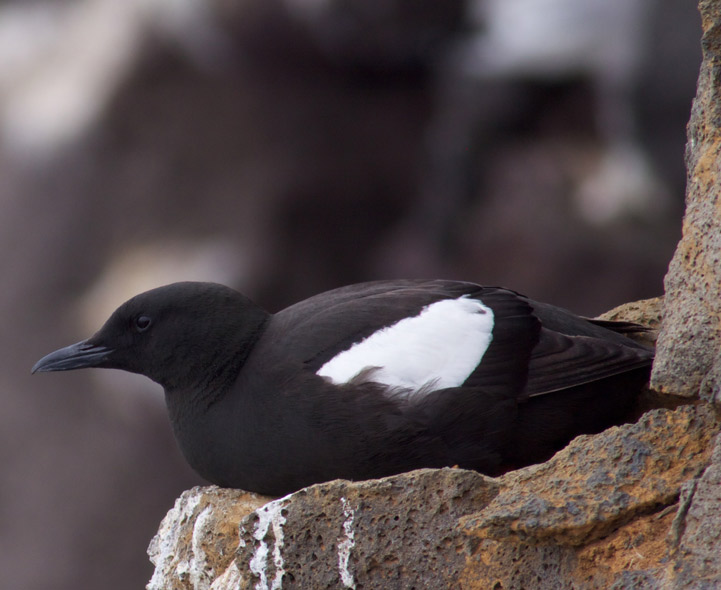
Photograph courtesy of Henrik Thorburn
Avocet
Common Guillemot
Black Guillemot
Atlantic Puffin
- Group: Auks
- Binomial: Cepphus grylle
- Order: Charadriiformes
- Family: Alcidae
- Status: Resident Localised Breeding Species
- It comes to land only to nest, spending the rest of its life at sea, where it is vulnerable to oil spills.
- It is sometimes seen inshore after gales or passing by longer headlands.
3 .
What is the name of this bird?
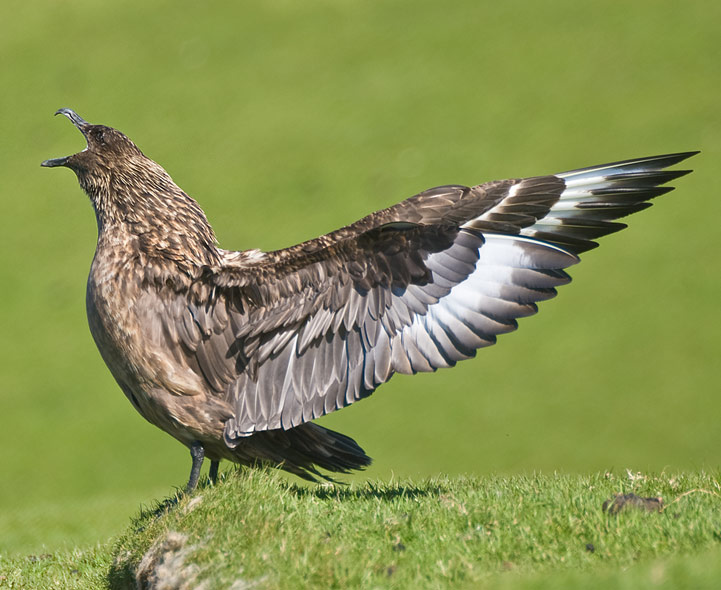
Photograph courtesy of Erik Christensen
Avocet
Great Skua
Atlantic Puffin
Arctic Skua
- Group: Skuas
- Binomial: Stercorarius skua
- Order: Charadriiformes
- Family: Stercorariidae
- Status: Passage Migrant And Localised Summer Breeder
- An aggressive pirate of the seas.
- Deliberately harrasses birds as large as gannets to steal a free meal.
- Breeds on coastal moorland and rocky islands.
4 .
What is the name of this bird?
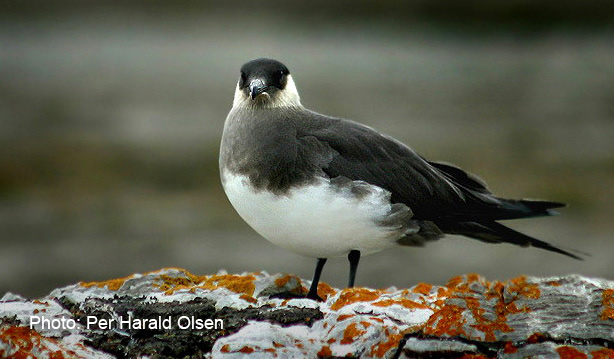
Photograph courtesy of Per Harald Olsen
Avocet
Pomarine Skua
Arctic Skua
Razorbill
- Group: Skuas
- Binomial: Stercorarius parasiticus
- Order: Charadriiformes
- Family: Stercorariidae
- Status: Passage Migrant And Localised Summer Breeder
- Often seen flying low and fast above the waves in pursuit of a tern or other bird.
- Comes to land only to breed and is aggressive towards intruders.
5 .
What is the name of this bird?
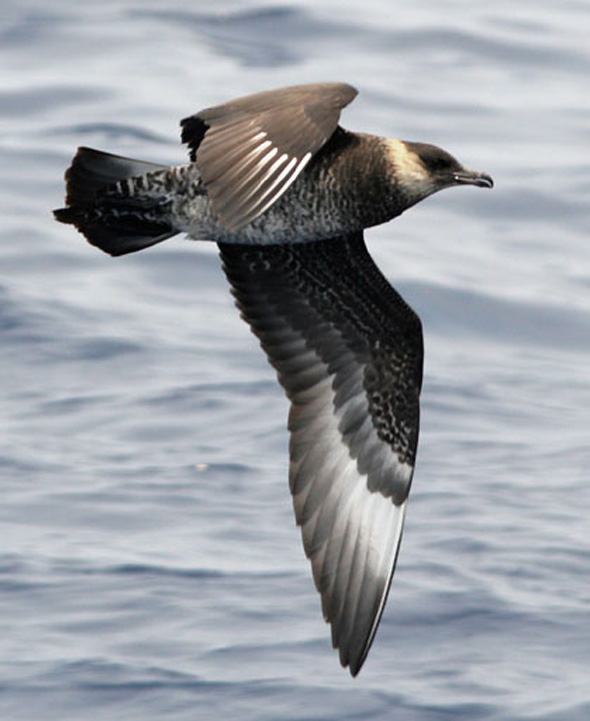
Photograph courtesy of Patrick Coin
Common Guillemot
Black Guillemot
Long-tailed Skua
Pomarine Skua
- Group: Skuas
- Binomial: Stercorarius pomarinus
- Order: Charadriiformes
- Family: Stercorariidae
- Status: Passage Migrant
- Only the White-tailed Eagle and the Golden Eagle are known to take healthy adults.
- Will fly at the head of a human or other intruder approaching its nest.
- Nests on Arctic tundra and islands.
6 .
What is the name of this bird?
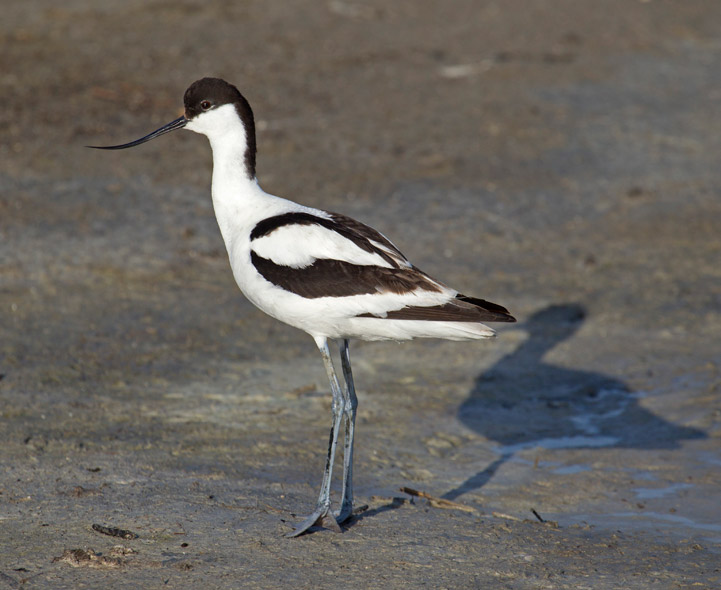
Photograph courtesy of http://www.photo-natur.de/
Long-tailed Skua
Pomarine Skua
Avocet
Atlantic Puffin
- Group: Avocets and Stilts
- Binomial: Recurvirostra avosetta
- Order: Charadriiformes
- Family: Recurvirostridae
- Status: Resident Breeding Species
- Distinctively-patterned black and white wader with a long up-curved beak.
- Its return in the 1940s and subsequent increase in numbers represents one of the most successful conservation and protection projects.
7 .
What is the name of this bird?
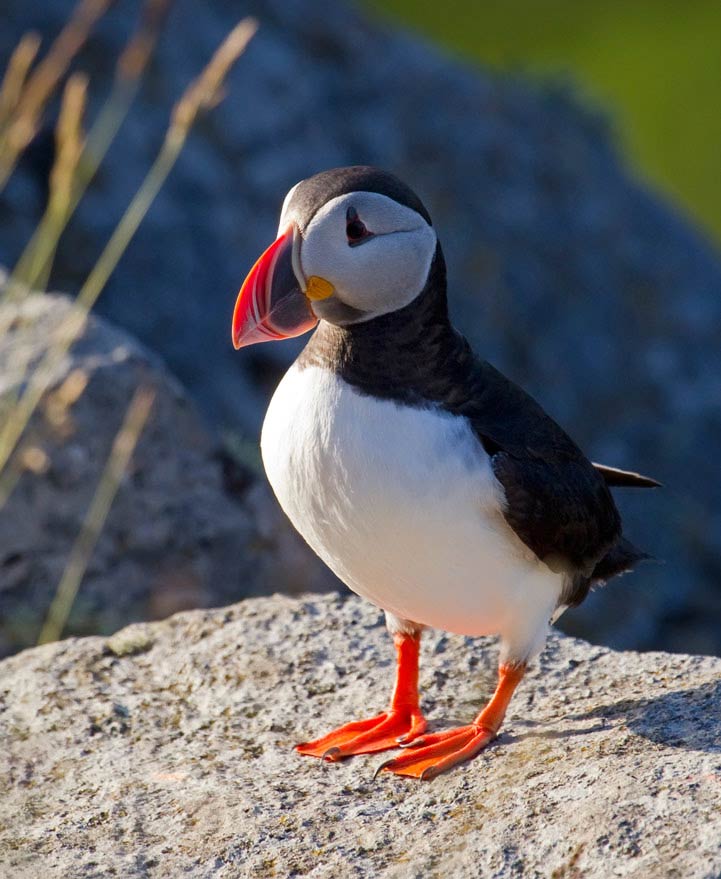
Photograph courtesy of http://www.photo-natur.de/
Common Crane
Long-tailed Skua
Common Guillemot
Atlantic Puffin
- Group: Auks
- Binomial: Fratercula arctica
- Order: Charadriiformes
- Family: Alcidae
- Status: Breeding Summer Visitor
- Used as a symbol for books and other items, this clown among seabirds is one of the world's favourite birds.
- Typically silent at sea, except for soft purring sounds it sometimes makes in flight.
8 .
What is the name of this bird?
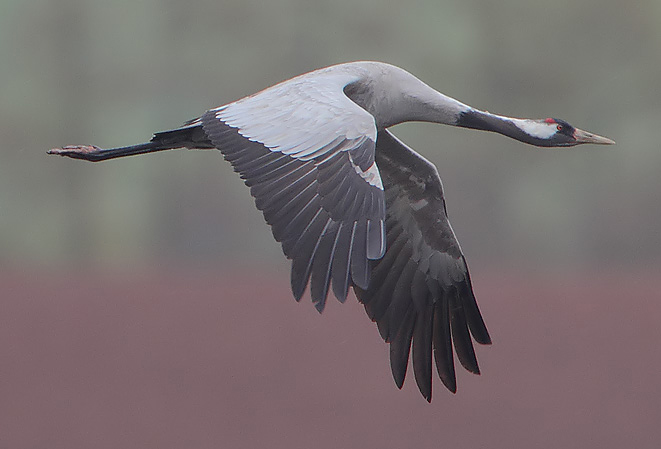
Photograph courtesy of Steve Garvie
Great Skua
Avocet
Black Guillemot
Common Crane
- Group: Cranes
- Binomial: Grus grus
- Order: Gruiformes
- Family: Gruidae
- Status: Resident Breeding Species And Passage Migrant
- An Act of Parliament of 1533 included a measure that made the taking of this bird's eggs an offence.
- A scarce spring and autumn migrant to Britain.
9 .
What is the name of this bird?
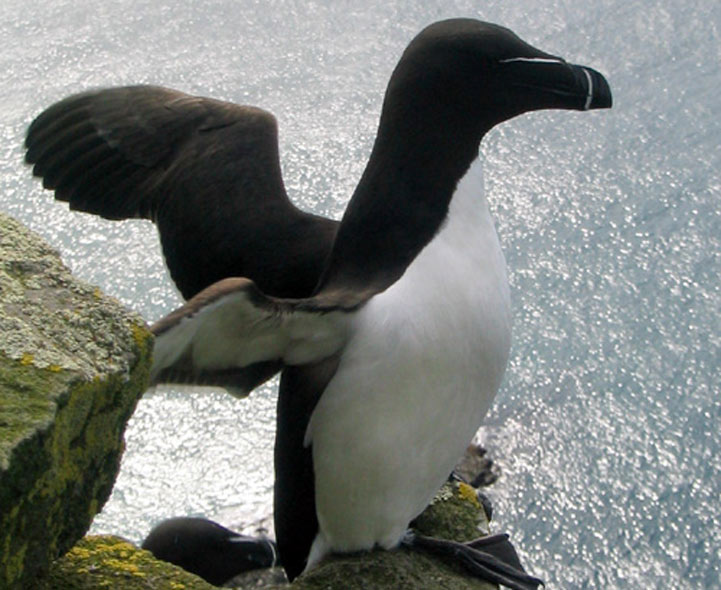
Photograph courtesy of Jessica
Razorbill
Great Skua
Avocet
Pomarine Skua
- Group: Auks
- Binomial: Alca torda
- Order: Charadriiformes
- Family: Alcidae
- Status: Breeding Summer Visitor And Resident Species
- Fishing nets, pollution and declining fish stocks all threaten the bird.
- Though the average lifespan is roughly 13 years, a bird ringed in the UK in 1967 survived for at least 41 years.
10 .
What is the name of this bird?
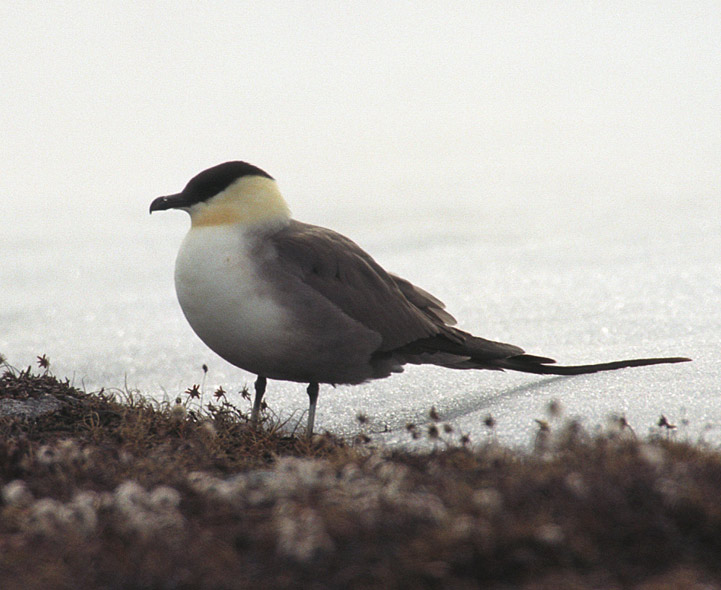
Photograph courtesy of Jerzy Strzelecki
Long-tailed Skua
Atlantic Puffin
Pomarine Skua
Common Crane
- Group: Skuas
- Binomial: Stercorarius longicaudus
- Order: Charadriiformes
- Family: Stercorariidae
- Status: Passage Migrant
- Good numbers of birds spend the winter off west African coasts.
- Onshore winds and rough weather further out to sea are the best conditions for bringing them to our coasts.
This quiz was kindly sponsored by gardenature – a great place to go to buy bird box cameras and other fascinating bird-watching products.




**Unlimited Quizzes Await You! 🚀**
Hey there, quiz champ! 🌟 You've already tackled today's free questions.
Ready for more?
Ready for more?
🔓 Unlock UNLIMITED Quizzes and challenge yourself every day. But that's
not all...
not all...
🔥 As a Subscriber you can join our thrilling "Daily Streak" against other
quizzers. Try to win a coveted spot on our Hall of Fame Page.
quizzers. Try to win a coveted spot on our Hall of Fame Page.
Don't miss out! Join us now and keep the fun rolling. 🎉
**Unlimited Quizzes Await You! 🚀**
Hey there, quiz champ! 🌟 You've already tackled today's free questions. Ready for more?
🔓 Unlock UNLIMITED Quizzes and challenge yourself every day. But that's not all...
🔥 As a Subscriber you can join our thrilling "Daily Streak" against other quizzers. Try to win a coveted spot on our Hall of Fame Page.
Don't miss out! Join us now and keep the fun rolling. 🎉




© Copyright 2016-2026 - Education Quizzes
Work Innovate Ltd - Design | Development |
Marketing
