




Ask the AI Tutor
Need help with British Birds - Warblers? Ask our AI Tutor!
AI Tutor - Lucy
Connecting with Tutor...
Please wait while we establish connection
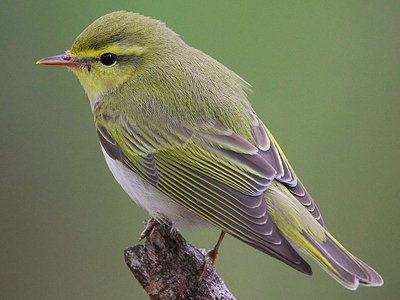
This is a bird of open but shady mature woodlands, such as beech, with some sparse ground cover for nesting.
British Birds - Warblers
Warblers are small, lively birds that can be easier to hear than see. Explore their songs, habitats and migration, and learn simple ID clues for Britain.
To see a larger image, click on the picture.
1 .
What is the name of this bird?
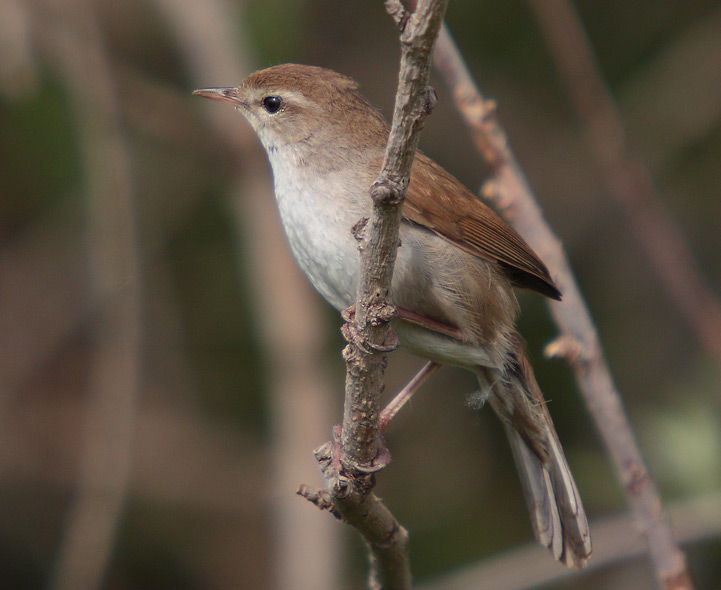
Photograph courtesy of Mark S Jobling
Eurasian Reed Warbler
Wood Warbler
Cetti's Warbler
Sedge Warbler
- Group: Old World Warblers
- Binomial: Cettia cetti
- Order: Passeriformes
- Family: Sylviidae
- Status: Resident Breeding Species
- It is one of the UK's most recent colonists, first breeding here in 1973.
- Likes damp areas close to wetlands.
- A skulking bird and can prove very difficult to see.
- Named after an Italian zoologist.
2 .
What is the name of this bird?
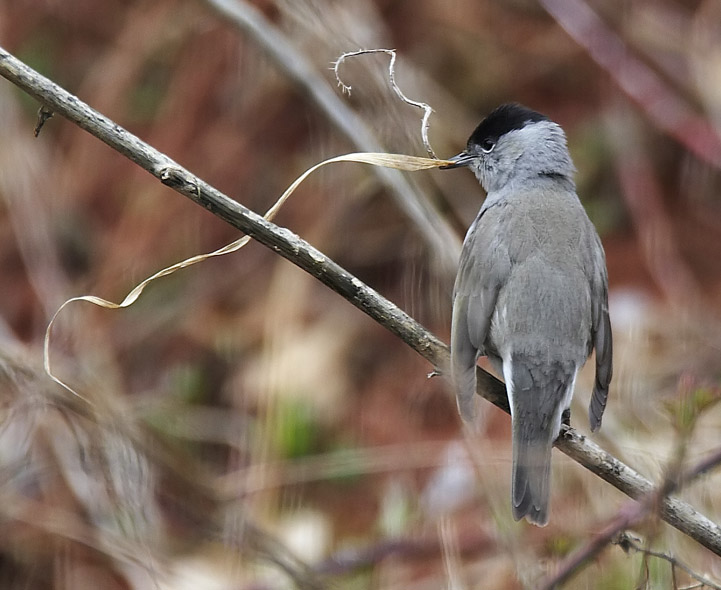
Photograph courtesy of Jakub Stanco
Blackcap
Cetti's Warbler
Wood Warbler
Eurasian Reed Warbler
- Group: Old World Warblers
- Binomial: Sylvia atricapilla
- Order: Passeriformes
- Family: Sylviidae
- Status: Resident Breeding Species & Summer Visitor
- The alarm call, 'tacc', sounds like two pebbles striking one another.
- Its song is a rich and varied warble, starting with a chattering and finishing with a flourish of flute-like notes.
3 .
What is the name of this bird?
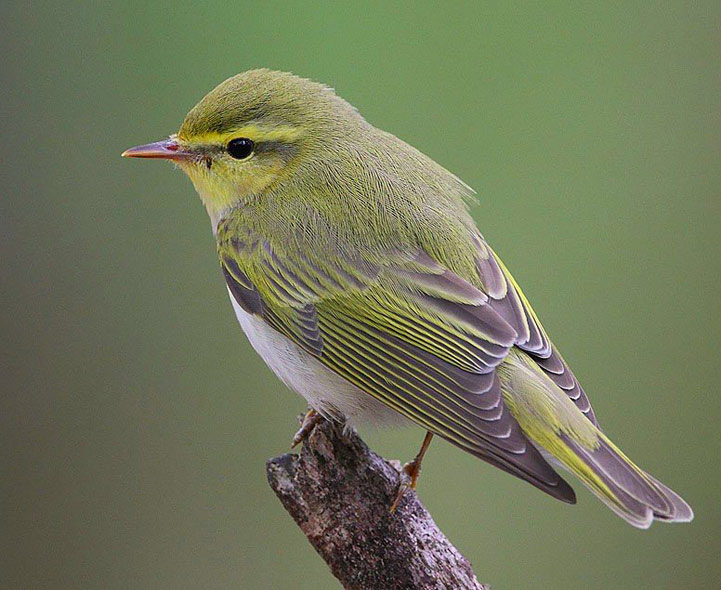
Photograph courtesy of Steve Garvie
Wood Warbler
Cetti's Warbler
Blackcap
Eurasian Reed Warbler
- Group: Old World Warblers
- Binomial: Phylloscopus sibilatrix
- Order: Passeriformes
- Family: Sylviidae
- Status: Breeding Summer Visitor
- This warbler is strongly migratory and the entire population winters in tropical Africa.
- This is a bird of open but shady mature woodlands, such as beech, with some sparse ground cover for nesting.
4 .
What is the name of this bird?
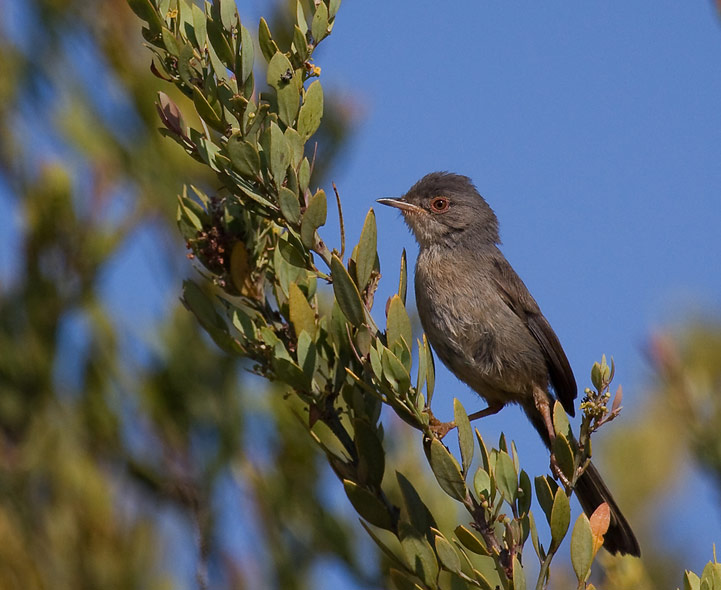
Photograph courtesy of J Dietrich
Dartford Warbler
Blackcap
Garden Warbler
Marsh Warbler
- Group: Old World Warblers
- Binomial: Sylvia undata
- Order: Passeriformes
- Family: Sylviidae
- Status: Resident Breeding Species
- This long-tailed warbler has suffered in the past from severe winters.
- Its population crashed to a few pairs in the 1960s, since when it has gradually recovered, increasing in both numbers and range.
5 .
What is the name of this bird?
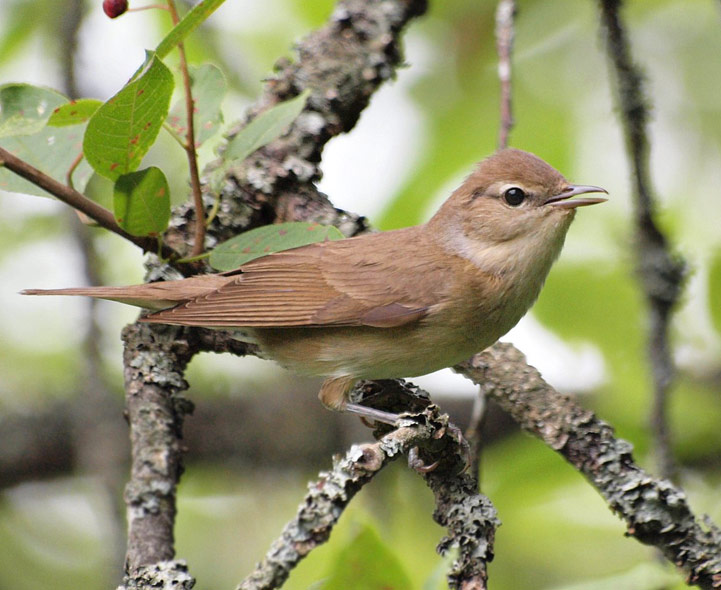
Photograph courtesy of Billyboy
Cetti's Warbler
Blackcap
Garden Warbler
Sedge Warbler
- Group: Old World Warblers
- Binomial: Sylvia borin
- Order: Passeriformes
- Family: Sylviidae
- Status: Breeding Summer Visitor
- A very plain bird with no distinguishing features (a feature in itself!).
- Especially likes coppiced woodland. Sometimes seen in farmland hedgerows.
- Its song is a pleasant chattering with many clearer notes like a blackbird.
6 .
What is the name of this bird?
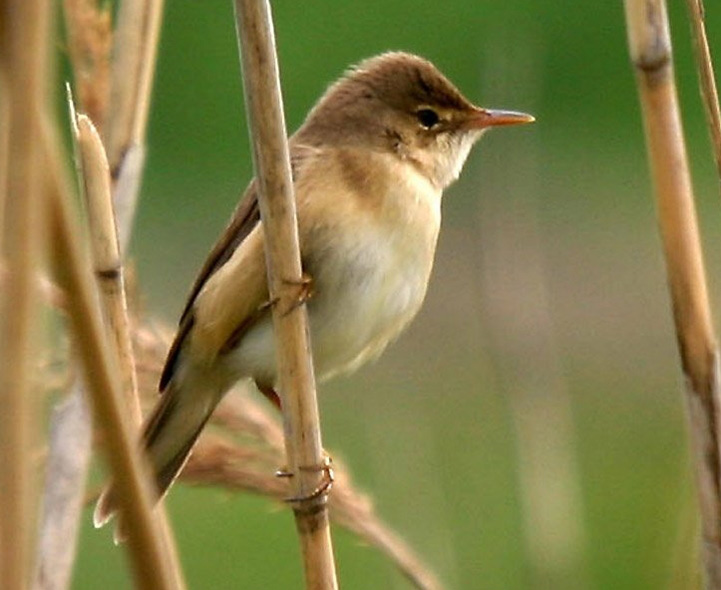
Photograph courtesy of Martien Brand
Cetti's Warbler
Eurasian Reed Warbler
Wood Warbler
Blackcap
- Group: Old World Warblers
- Binomial: Acrocephalus scirpaceus
- Order: Passeriformes
- Family: Sylviidae
- Status: Breeding Summer Visitor
- In the summer, can be looked for in reedbeds in lowland central and southern England and Wales.
- Sings from within the reedbed rather than from a perch, so often heard rather than seen.
7 .
What is the name of this bird?
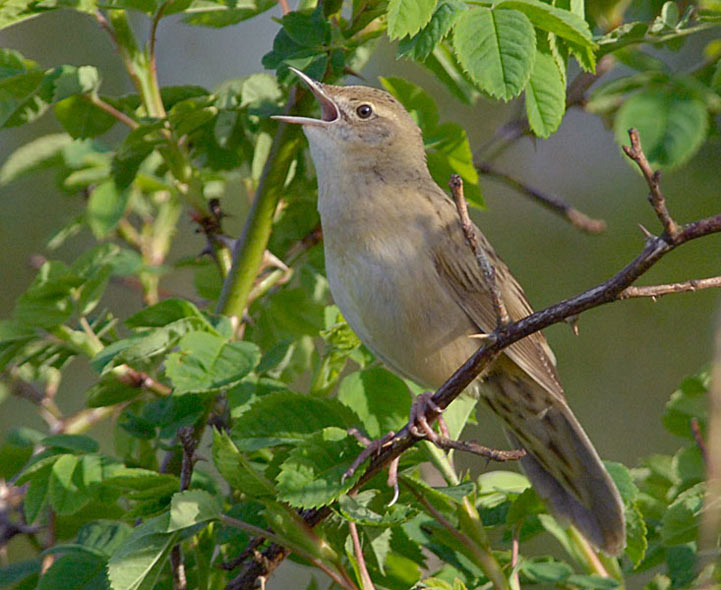
Photograph courtesy of Stefan Hage
Dartford Warbler
Blackcap
Grasshopper Warbler
Marsh Warbler
- Group: Old World Warblers
- Binomial: Locustella naevia
- Order: Passeriformes
- Family: Sylviidae
- Status: Breeding Summer Visitor
- It creeps through grass and low foliage.
- A skulking species which is very difficult to see.
- The song is a monotonous mechanical insect-like reeling, often given at dusk.
- It winters from Africa to India.
8 .
What is the name of this bird?
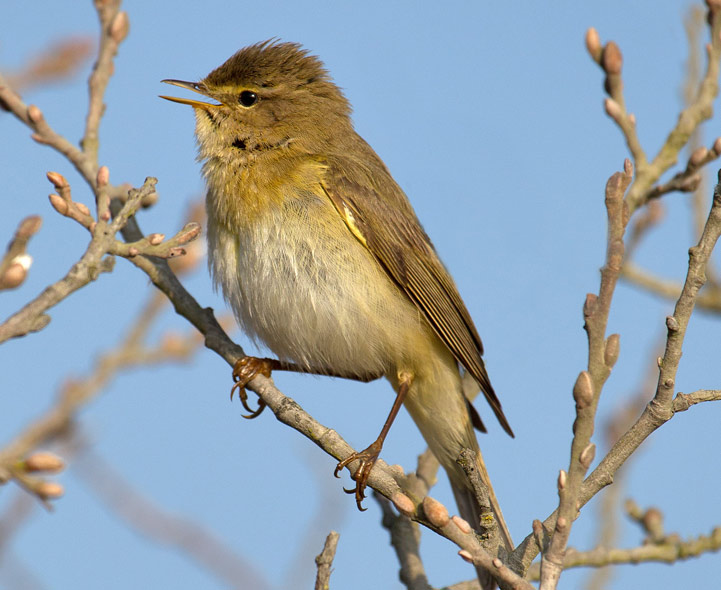
Photograph courtesy of http://photo-natur.de/
Marsh Warbler
Garden Warbler
Cetti's Warbler
Willow Warbler
- Group: Old World Warblers
- Binomial: Phylloscopus trochilus
- Order: Passeriformes
- Family: Sylviidae
- Status: Breeding Summer Visitor
- Very common and widespread.
- Its song is a simple repetitive descending whistle, while the contact call is a disyllabic 'hoo-eet'.
- It is greenish brown above and off-white to yellowish below.
9 .
What is the name of this bird?
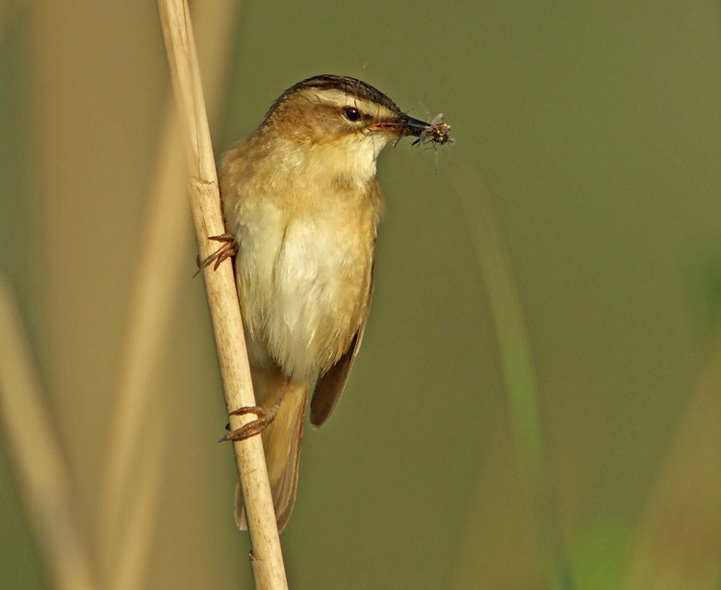
Photograph courtesy of Gabriel Buissart
Blackcap
Sedge Warbler
Willow Warbler
Dartford Warbler
- Group: Old World Warblers
- Binomial: Acrocephalus schoenobaenus
- Order: Passeriformes
- Family: Sylviidae
- Status: Breeding Summer Visitor
- It is a summer visitor, and winters in Africa, south of the Sahara Desert.
- The song is varied, rushed and chattering, with sweeter phrases and some mimicry.
- This warbler is mostly insectivorous.
10 .
What is the name of this bird?
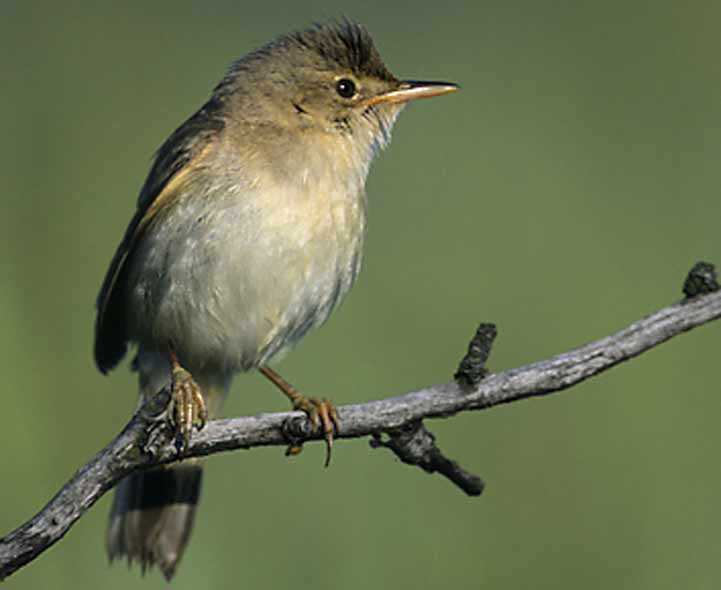
Photograph courtesy of http://www.marekszczepanek.pl/
Eurasian Reed Warbler
Wood Warbler
Marsh Warbler
Dartford Warbler
- Group: Old World Warblers
- Binomial: Acrocephalus palustris
- Order: Passeriformes
- Family: Sylviidae
- Status: Breeding Summer Visitor
- It is notable for incorporating striking imitations of a wide variety of other birds into its song.
- The UK population of this warbler has fallen and is now of serious conservation concern.



**Unlimited Quizzes Await You! 🚀**
Hey there, quiz champ! 🌟 You've already tackled today's free questions.
Ready for more?
Ready for more?
🔓 Unlock UNLIMITED Quizzes and challenge yourself every day. But that's
not all...
not all...
🔥 As a Subscriber you can join our thrilling "Daily Streak" against other
quizzers. Try to win a coveted spot on our Hall of Fame Page.
quizzers. Try to win a coveted spot on our Hall of Fame Page.
Don't miss out! Join us now and keep the fun rolling. 🎉
**Unlimited Quizzes Await You! 🚀**
Hey there, quiz champ! 🌟 You've already tackled today's free questions. Ready for more?
🔓 Unlock UNLIMITED Quizzes and challenge yourself every day. But that's not all...
🔥 As a Subscriber you can join our thrilling "Daily Streak" against other quizzers. Try to win a coveted spot on our Hall of Fame Page.
Don't miss out! Join us now and keep the fun rolling. 🎉




© Copyright 2016-2026 - Education Quizzes
Work Innovate Ltd - Design | Development |
Marketing
