




Ask the AI Tutor
Need help with Insects and Spiders - Butterflies 1? Ask our AI Tutor!
AI Tutor - Lucy
Connecting with Tutor...
Please wait while we establish connection
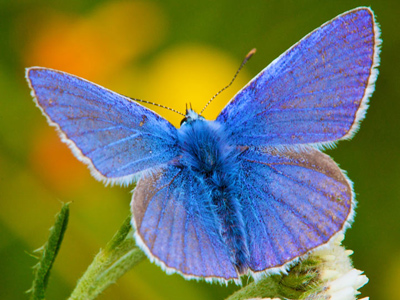
This butterflies food plant is predominantly Bird's foot trefoil. Can you identify it?
Insects and Spiders - Butterflies 1
Butterflies are colourful insects with fascinating life cycles and patterns. Explore how to spot common species, where they live, and why weather and plants matter so much.
To see a larger image, click on the picture.
1 .
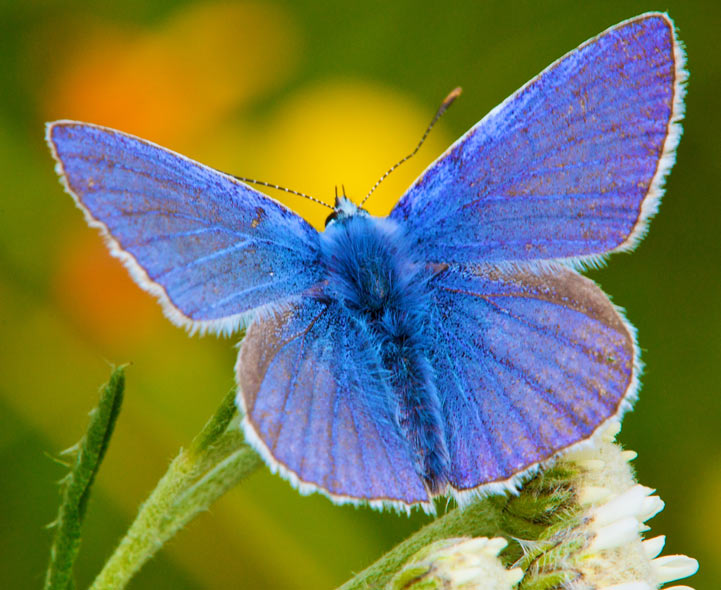
Can you identify this butterfly?
Photograph courtesy of http://ernstvikne.wordpress.com/
Common Brimstone
Chequered Skipper
Holly Blue
Common Blue
- Order: Lepidoptera
- Family: Lycaenidae
- Genus: Polyommatus
- Species: P. icarus
- Is found throughout Britain, even as far north as Orkney.
- Food plant is predominantly Bird's foot trefoil.
- The habitat includes woodland, coastal dunes, meadows.
- Wherever their food plant is, this butterfly is likely to be.
2 .
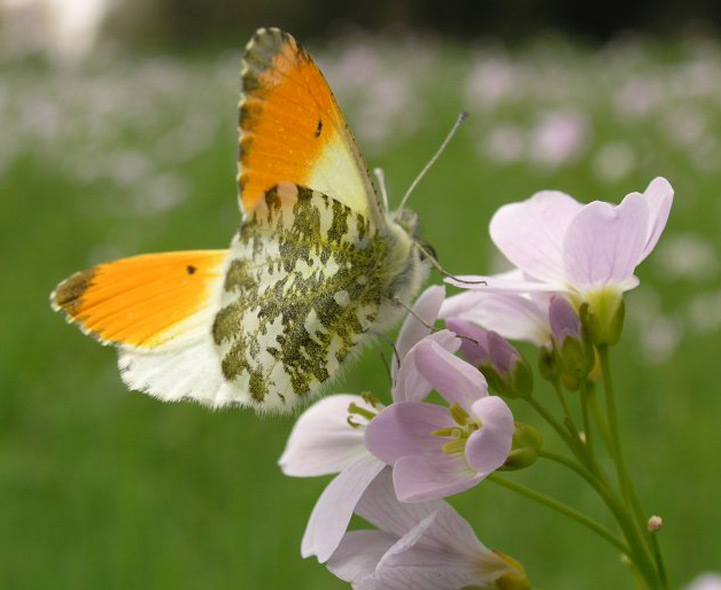
Can you identify this butterfly?
Photograph courtesy of Guido Gerding
Orange Tip
Small Copper
White Admiral
Purple Hairstreak
- Order: Lepidoptera
- Family: Pieridae
- Genus: Anthocharis
- Species: A. cardamines
- A true sign of spring, being one of the first species to emerge.
- Flies in every direction, wandering amongst woodland margins and headgerows.
- Has a wide range of habitats, including gardens.
3 .
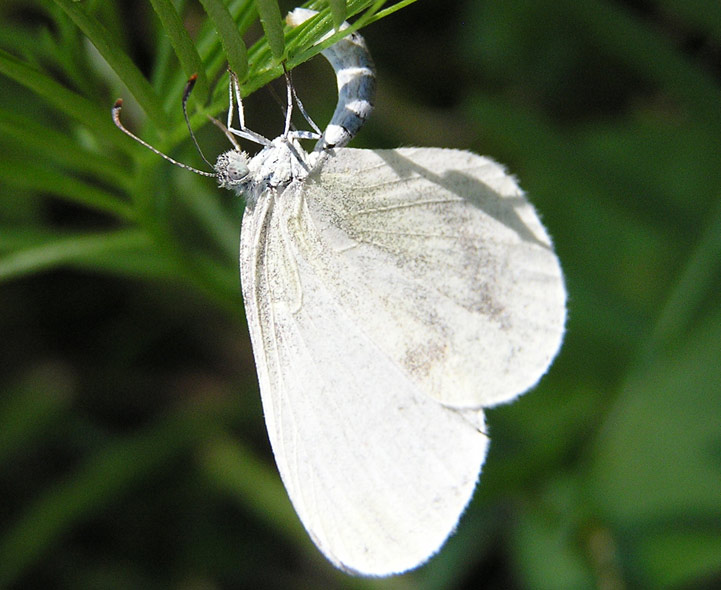
Can you identify this butterfly?
Photograph courtesy of Olaf Leillinger
Chequered Skipper
White Admiral
Wood White
Common Brimstone
- Order: Lepidoptera
- Family: Pieridae
- Genus: Leptidea
- Species: L. sinapis
- A dainty butterfly with a slow and delicate flight.
- Adults always rest with their wings closed.
- Warm, damp and sheltered is its ideal habitat.
- Female lays her eggs on members of the pea family in late May and June.
4 .
Can you identify this butterfly?
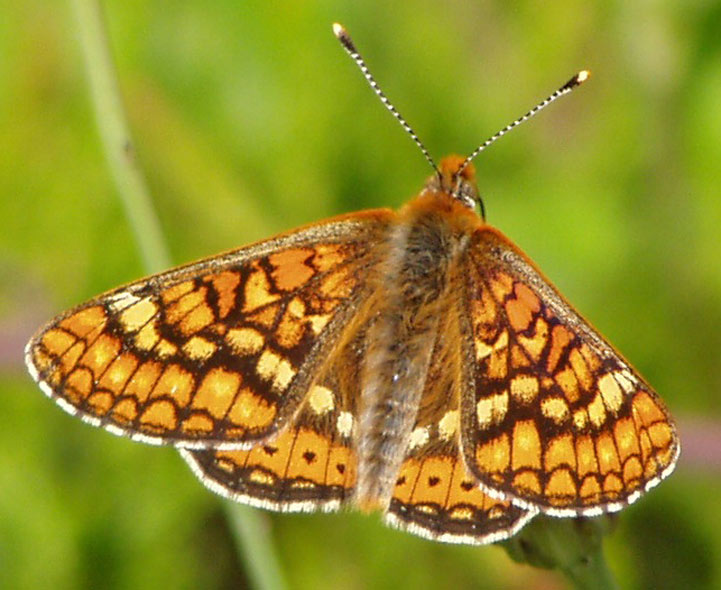
Photograph courtesy of www.tintazul.com.pt/julio.reis/
Dingy Skipper
Marsh Fritillary
Small White
Green Hairstreak
- Order: Lepidoptera
- Family: Nymphalidae
- Genus: Euphydryas
- Species: E. aurinia
- Found all over the UK, but scarce.
- Restricted to chalk and limestone grassland, damp fields and heaths.
- Main foodplant is Devil's-bit Scabious. Will eat Field and Small scabious too.
- The bright colours fade after a few days.
5 .
Can you identify this butterfly?
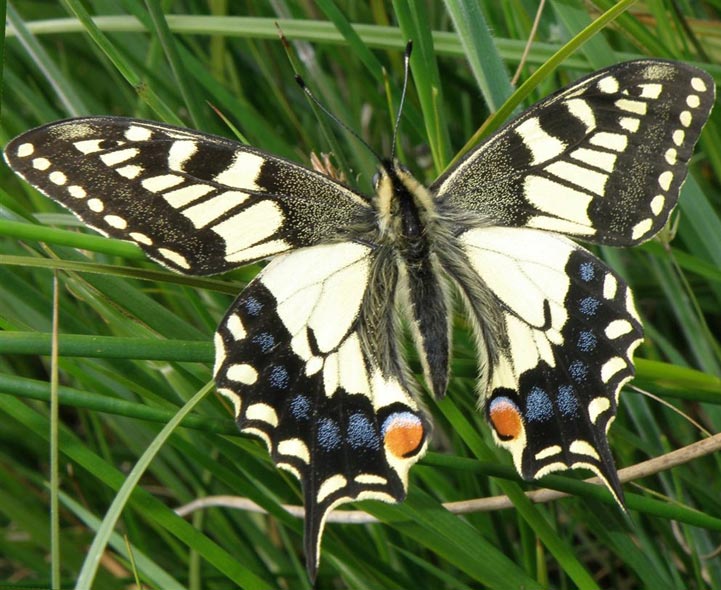
Photograph courtesy of LittleHow
Essex Skipper
Common Blue
Wood White
Swallowtail
- Order: Lepidoptera
- Family: Papilionidae
- Genus: Papilio
- Species: P. machaon
- The UK's largest native butterfly, and also one of our rarest.
- British subspecies confined to the fens of the Norfolk broads.
- This is due to milk parsley being the only food plant used by the caterpillars.
6 .
Can you identify this butterfly?
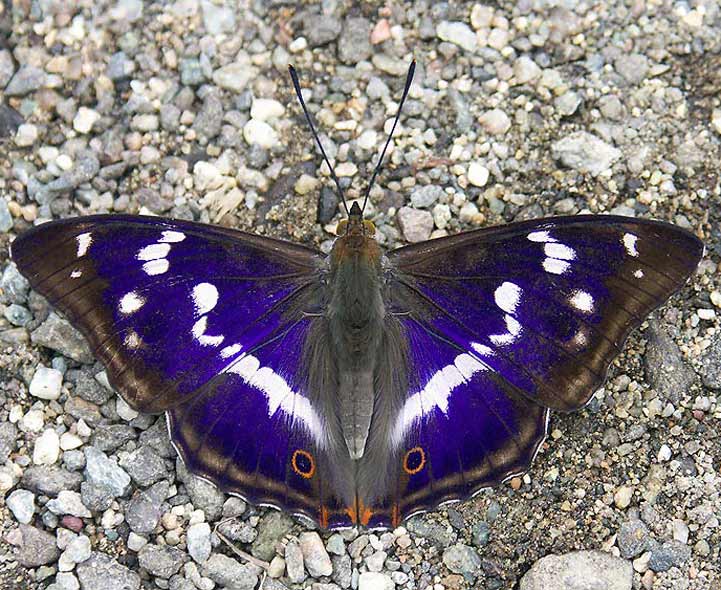
Photograph courtesy of Anaxibia
Purple Emperor
Ringlet
Duke of Burgundy
Essex Skipper
- Order: Lepidoptera
- Family: Nymphalidae
- Genus: Apatura
- Species: A. iris
- The male is affectionately known as 'His Majesty'.
- A magnificent and elusive butterfly.
- Can be seen in deciduous woodland, usually those containing oak trees.
- Unlike most butterflies, it does not feed from flowers.
7 .
Can you identify this butterfly?
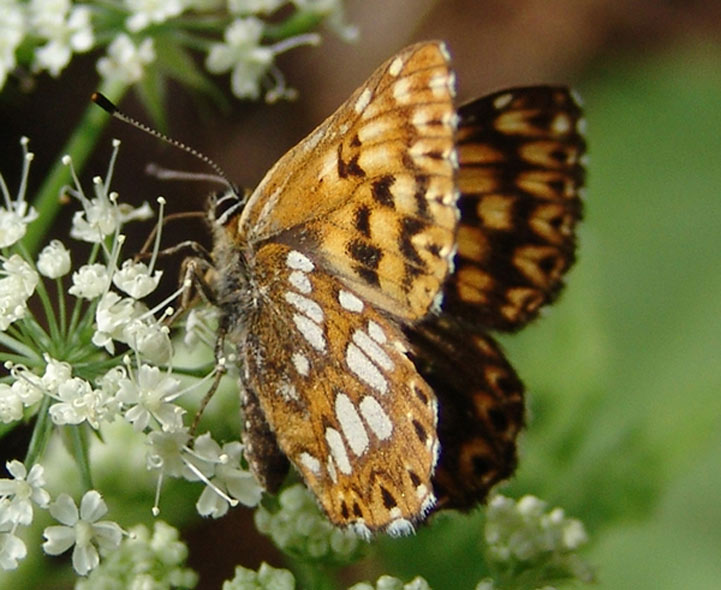
Photograph courtesy of http://www.thinkoholic.com/
Northern Brown Angus
Duke of Burgundy
Small Tortoiseshell
Purple Emperor
- Order: Lepidoptera
- Family: Riodinidae
- Genus: Hamearis
- Species: H. lucina
- Found in scattered colonies across southern England.
- Adults rarely visit flowers.
- Males perch on a prominent leaf at the edge of scrub.
- Females are elusive, often flying low to the ground.
8 .
Can you identify this butterfly?
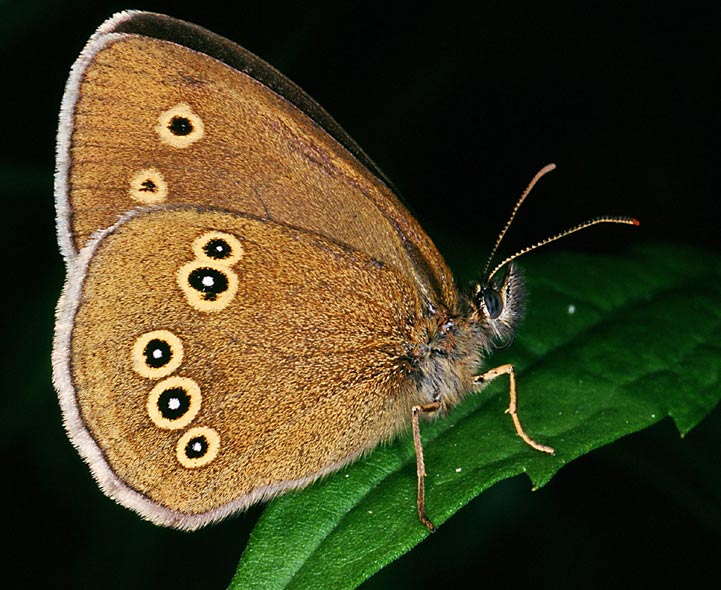
Photograph courtesy of Olaf Leillinger
Wood White
Speckled Wood
Dark Clouded Yellow
Ringlet
- Order: Lepidoptera
- Family: Nymphalidae
- Genus: Aphantopus
- Species: A. hyperantus
- Being a dark colour, this butterfly is able to warm up quickly.
- One of the few that flies on overcast days.
- Is not typically found in open areas, such as grassland or heathland.
- Male and female are almost identical.
9 .
Can you identify this butterfly?
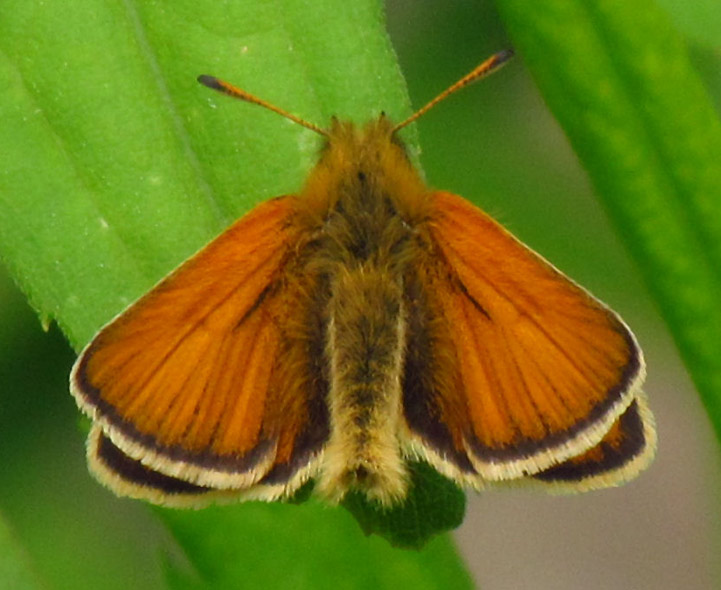
Photograph courtesy of D. Gordon E. Robertson
Pearl-bordered Fritillary
Red Admiral
Essex Skipper
Grayling
- Order: Lepidoptera
- Family: Hesperiidae
- Genus: Thymelicus
- Species: T. lineola
- Found over much of south England.
- First recorded in Wales in 2000.
- Can be spotted visiting flowers such as thistles and red clover.
- This species is expanding rapidly, particularly in northern areas.
10 .
Can you identify this butterfly?
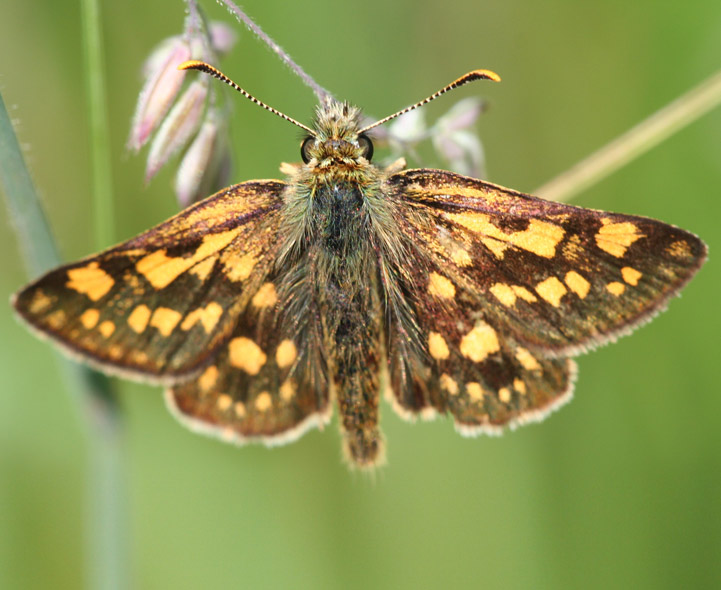
Photograph courtesy of Svdmolen
Large Heath
Chequered Skipper
Small Copper
Orange Tip
- Order: Lepidoptera
- Family: Hesperiidae
- Genus: Carterocephalus
- Species: C. palaemon
- Extinct in England, but stable in Scotland.
- Distribution centred on Fort William.
- Due to being very active, this butterfly needs a lot of nectar and sunshine.
- Prefers woodland and even blue woodland flowers!



**Unlimited Quizzes Await You! 🚀**
Hey there, quiz champ! 🌟 You've already tackled today's free questions.
Ready for more?
Ready for more?
🔓 Unlock UNLIMITED Quizzes and challenge yourself every day. But that's
not all...
not all...
🔥 As a Subscriber you can join our thrilling "Daily Streak" against other
quizzers. Try to win a coveted spot on our Hall of Fame Page.
quizzers. Try to win a coveted spot on our Hall of Fame Page.
Don't miss out! Join us now and keep the fun rolling. 🎉
**Unlimited Quizzes Await You! 🚀**
Hey there, quiz champ! 🌟 You've already tackled today's free questions. Ready for more?
🔓 Unlock UNLIMITED Quizzes and challenge yourself every day. But that's not all...
🔥 As a Subscriber you can join our thrilling "Daily Streak" against other quizzers. Try to win a coveted spot on our Hall of Fame Page.
Don't miss out! Join us now and keep the fun rolling. 🎉




© Copyright 2016-2026 - Education Quizzes
Work Innovate Ltd - Design | Development |
Marketing
