




Ask the AI Tutor
Need help with Insects and Spiders - Moths? Ask our AI Tutor!
AI Tutor - Lucy
Connecting with Tutor...
Please wait while we establish connection
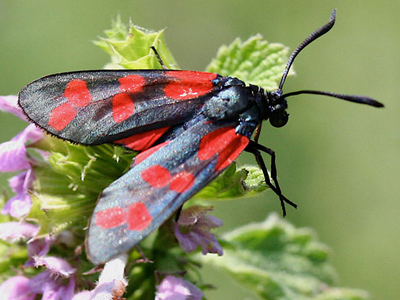
See if you can get full marks in this quiz.
Insects and Spiders - Moths
Moths are often seen at night, but many fly by day too. Explore how to spot a moth, where they rest, and the clues that help with identification.
To see a larger image, click on the picture.
1 .
What is the name of this moth?
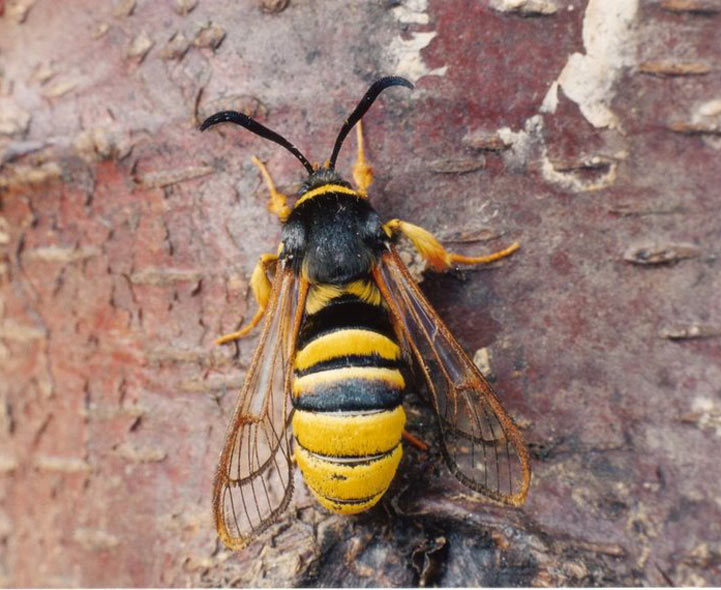
Photograph courtesy of http://ukmoths.org.uk/
Lunar Hornet Moth
Muslin Footman
Goat Moth
Gypsy moth
- Order: Lepidoptera
- Family: Sesiidae
- Genus: Sesia
- Species: S. bembeciformis
- This is a scarce species.
- The larvae tunnel in the trunks of willow trees.
- An incredible example of mimicry in that birds avoid these moths because they think they are wasps!
2 .
What is the name of this moth?
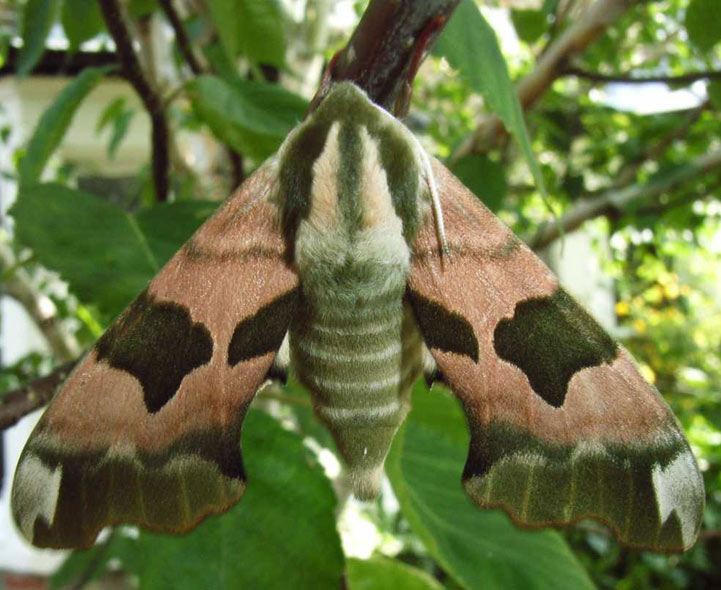
Photograph courtesy of Svdmolen
Lime Hawk-moth
Common Swift
Gypsy Moth
Peach Blossom
- Order: Lepidoptera
- Family: Sphingidae
- Genus: Mimas
- Species: M. tiliae
- The wingspan is between 70-80mm, with the female being larger.
- This moth can be seen flying at night during May and June.
- The species is spreading to the north.
- Adult moths do not feed.
3 .
What is the name of this moth?
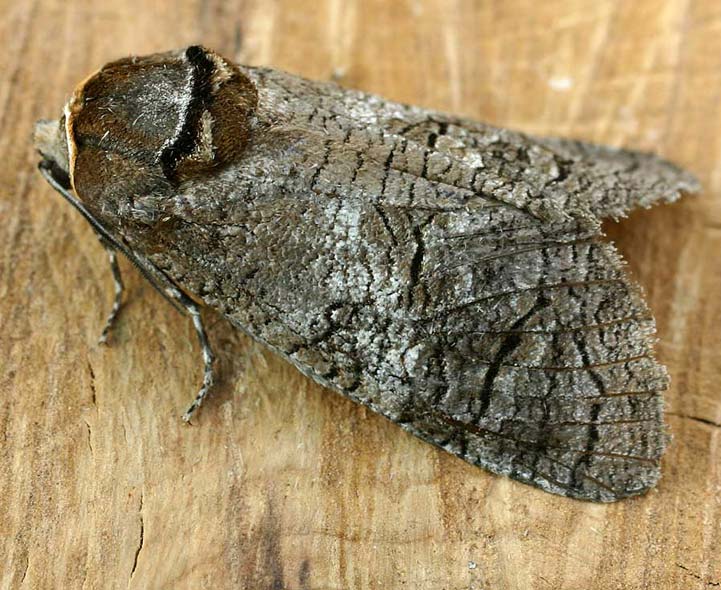
Photograph courtesy of http://www.entomart.be/
Large Emerald
Scalloped Hook-tip
Nine-spotted moth
Goat Moth
- Order: Lepidoptera
- Family: Cossidae
- Genus: Cossus
- Species: C. cossus
- The larvae live in the trunks of trees eating the wood.
- It can take up to five years to develop to the pupa stage.
- Adults have no working mouthparts therefore they cannot feed.
- Instead, they find a partner, mate and produce the next generation.
4 .
What is the name of this moth?
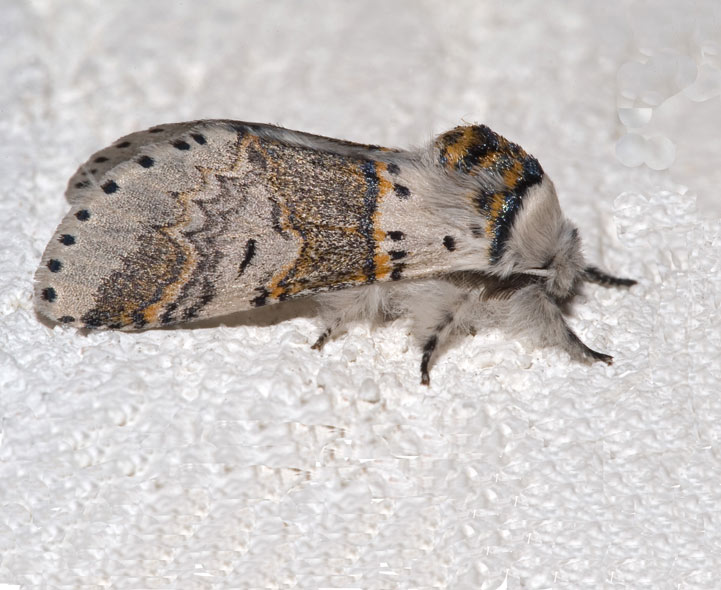
Photograph courtesy of Kurt Kulac
Sallow Kitten
Turnip Moth
Muslin Footman
Common Swift
- Order: Lepidoptera
- Family: Notodontidae
- Genus: Furcula
- Species: F. furcula
- The caterpillars of this species feed on poplar and willow.
- Widely distributed throughout a range of habitats, although it prefers damp woodland.
- Adults appear occasionally at light in very small numbers.
5 .
What is the name of this moth?
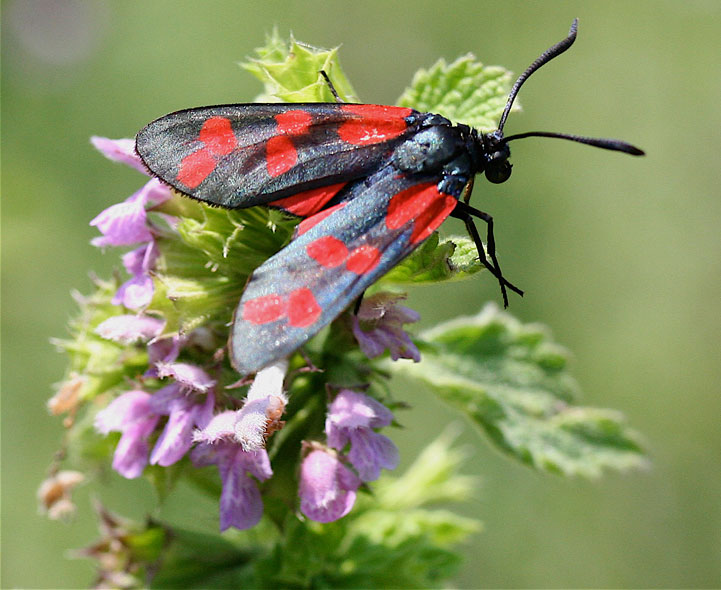
Photograph courtesy of IronChris
Emperor Moth
Six-spot Burnet
Oak Eggar
Festoon
- Order: Lepidoptera
- Family: Zygaenidae
- Genus: Zygaena
- Species: Z. filipendulae
- This moth is attracted to scabious, thistles and knapweeds.
- A day-flying moth and when the sun is shining, it has a slow buzzing flight.
- Widespread across Britain, predominantly coastal in Scotland.
6 .
What is the name of this moth?
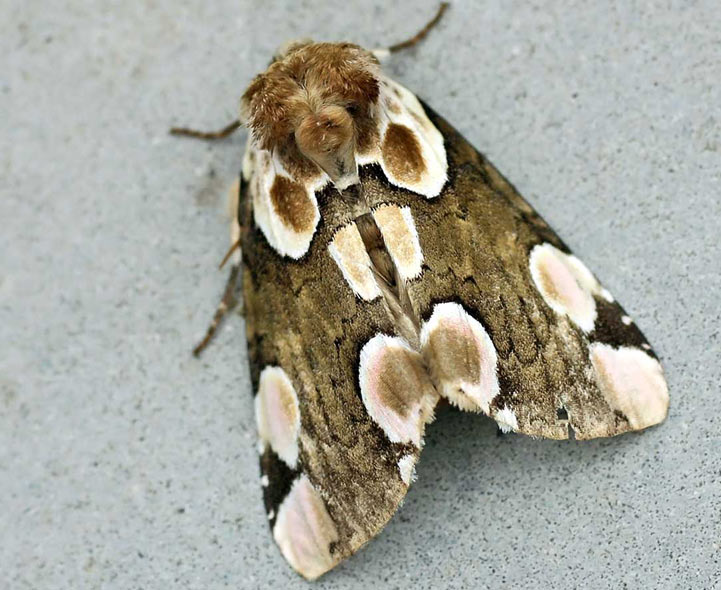
Photograph courtesy of http://www.entomart.be/
Emperor Moth
Scalloped Hook-tip
Six-spot Burnet
Peach Blossom
- Order: Lepidoptera
- Family: Drepanidae
- Genus: Thyatira
- Species: T. batis
- A particularly pretty moth.
- Flies at night during the months of June and July.
- Occasionally has a second brood in August or September.
- This moth is attracted not only to light, but also to sugar!
7 .
What is the name of this moth?
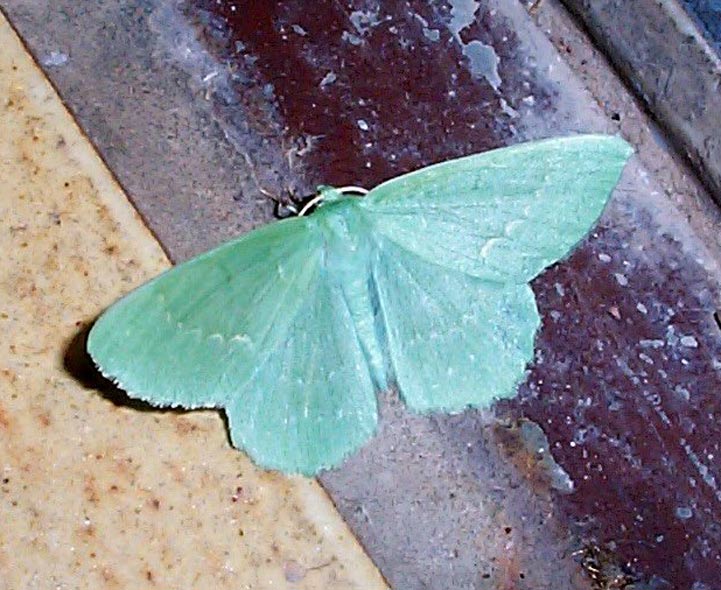
Photograph courtesy of Chrkl
Festoon
Lime Hawk-moth
Large Emerald
Oak Eggar
- Order: Lepidoptera
- Family: Geometridae
- Genus: Geometra
- Species: G. papilionaria
- A striking and large moth.
- This species usually sits with its wings open like a butterfly.
- A night-flyer between June and August and is attracted to light.
- The larvae feed mostly on birch.
8 .
What is the name of this moth?
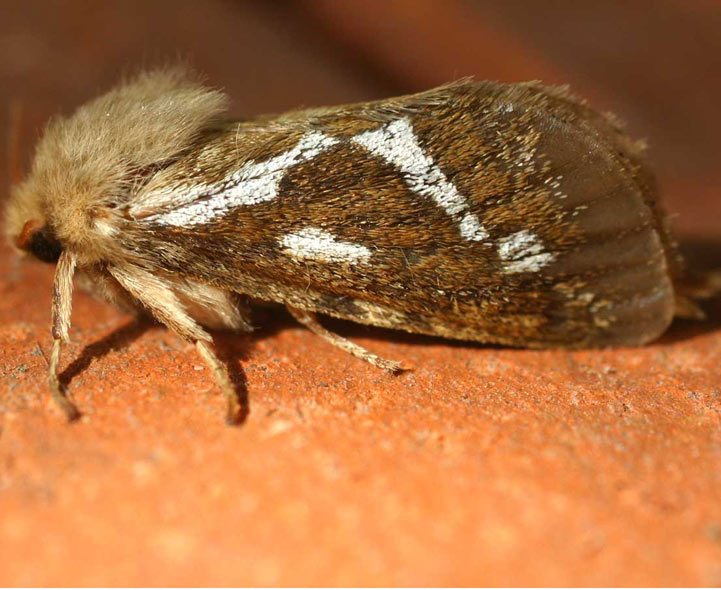
Photograph courtesy of http://www.entomart.be/
Lime Hawk-moth
Common Swift
Sallow Kitten
Turnip Moth
- Order: Lepidoptera
- Family: Hepialidae
- Genus: Korscheltellus
- Species: K. lupulina
- Larvae feed on roots of plants underground.
- Have been known to be an agricultural nuisance.
- Common and widely distributed throughout the UK.
- Female similar to male, but larger in size with paler markings.
9 .
What is the name of this moth?
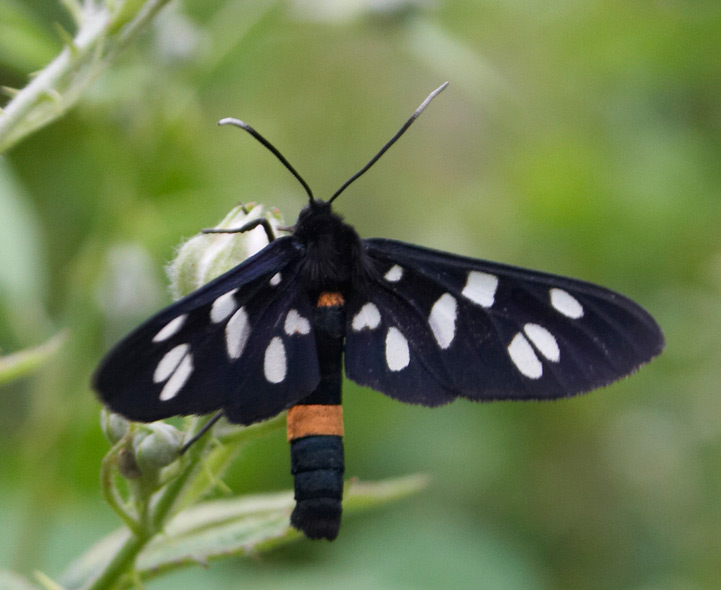
Photograph courtesy of http://www.hvozd.eu/
Six-spot Burnet
Nine-spotted moth
Festoon
Lunar Hornet Moth
- Order: Lepidoptera
- Family: Arctiidae
- Genus: Amata
- Species: A. phegea
- This species mimics a moth of similar appearance, Zygaena ephialtes.
- Zygaena ephialtes is poisonous to birds, therefore birds leave this moth well alone!
- Prefers a habitat of drier, open areas with trees and shrubs.
10 .
What is the name of this moth?
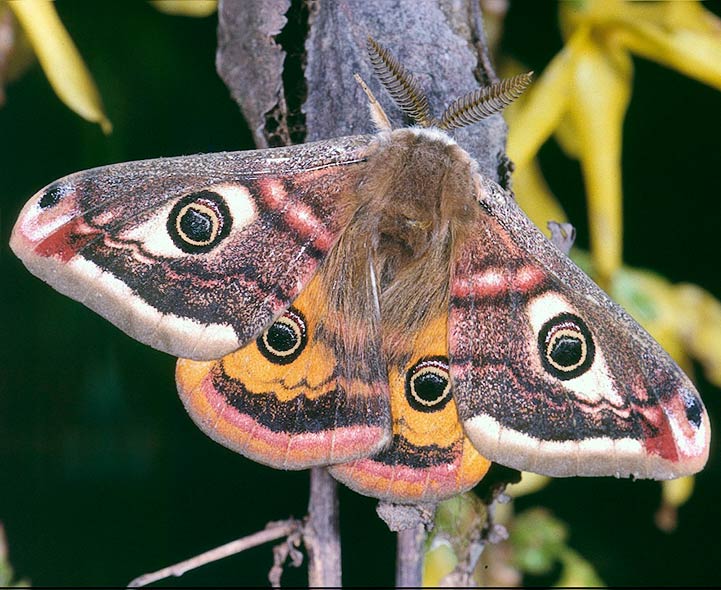
Photograph courtesy of jean-pierre Hamon
Festoon
Sallow Kitten
Emperor Moth
Lunar Hornet Moth
- Order: Lepidoptera
- Family: Saturniidae
- Genus: Pavonia
- Species: P. pavonia
- Widely distributed in the UK.
- The flight is swift meaning it can be mistaken for a butterfly.
- Female is larger and the antennae are not feathered.
- They feed on woody plants including heathers, bramble and hawthorn.



**Unlimited Quizzes Await You! 🚀**
Hey there, quiz champ! 🌟 You've already tackled today's free questions.
Ready for more?
Ready for more?
🔓 Unlock UNLIMITED Quizzes and challenge yourself every day. But that's
not all...
not all...
🔥 As a Subscriber you can join our thrilling "Daily Streak" against other
quizzers. Try to win a coveted spot on our Hall of Fame Page.
quizzers. Try to win a coveted spot on our Hall of Fame Page.
Don't miss out! Join us now and keep the fun rolling. 🎉
**Unlimited Quizzes Await You! 🚀**
Hey there, quiz champ! 🌟 You've already tackled today's free questions. Ready for more?
🔓 Unlock UNLIMITED Quizzes and challenge yourself every day. But that's not all...
🔥 As a Subscriber you can join our thrilling "Daily Streak" against other quizzers. Try to win a coveted spot on our Hall of Fame Page.
Don't miss out! Join us now and keep the fun rolling. 🎉




© Copyright 2016-2026 - Education Quizzes
Work Innovate Ltd - Design | Development |
Marketing
