




Ask the AI Tutor
Need help with The Sea - Invertebrates? Ask our AI Tutor!
AI Tutor - Lucy
Connecting with Tutor...
Please wait while we establish connection
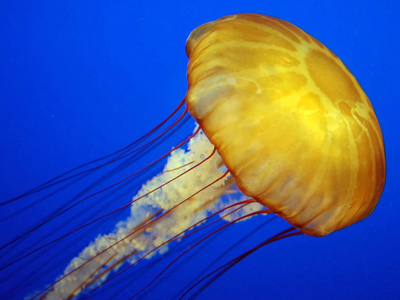
Jellyfish are composed of more than 90% water.
The Sea - Invertebrates
Sea invertebrates include crabs, starfish, and jellyfish. Discover how these spineless animals move, feed, and defend themselves in different marine habitats, then try the quiz.
To see a larger image, click on the picture.
1 .
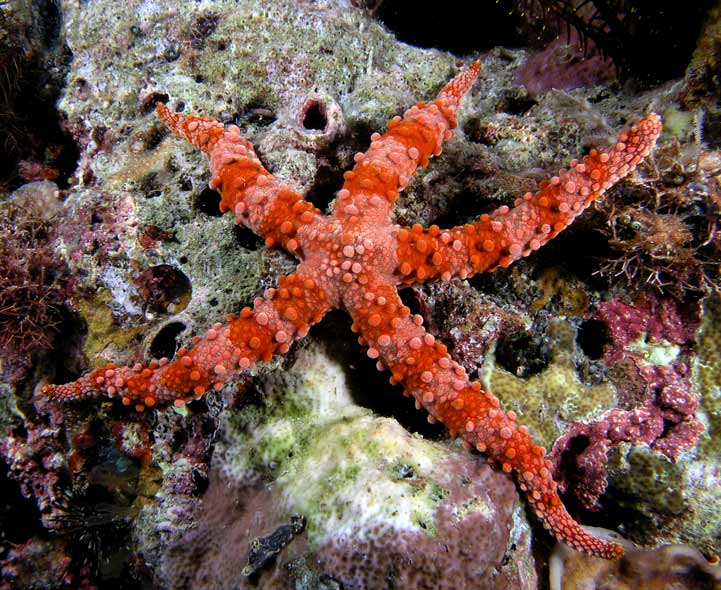
What does a starfish NOT have?
Photograph courtesy of Nick Hobgood
Blood
Eyes
Mouth
Stomach
- Most starfish typically have five rays or arms, which radiate from a central disc, however some species can have up to 50 arms.
- On the end of each arm or ray there is a microscopic eye.
- Some species reproduce asexually by fragmentation, often with part of an arm becoming detached and eventually developing into an independent individual starfish!
2 .
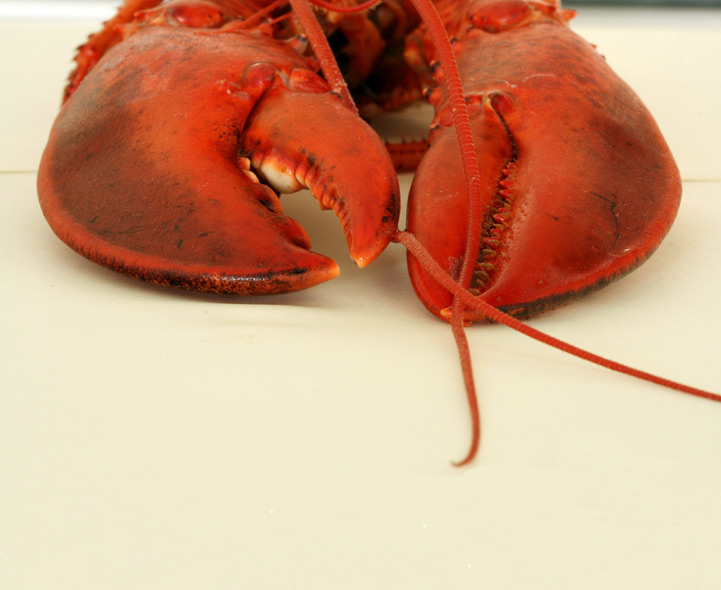
What colour is the blood of a lobster?
Photograph courtesy of www.flickr.com/photos/simon999/
Yellow
Green
Red
Blue
- Order: Decapoda
- Suborder: Pleocyemata
- Infraorder: Astacidea
- Family: Nephropidae
- Lobsters have 10 walking legs; the front three pairs bear claws, the first of which are larger than the others.
- They are found in all oceans.
- In the main, they live on their own in crevices or in burrows under rocks.
3 .
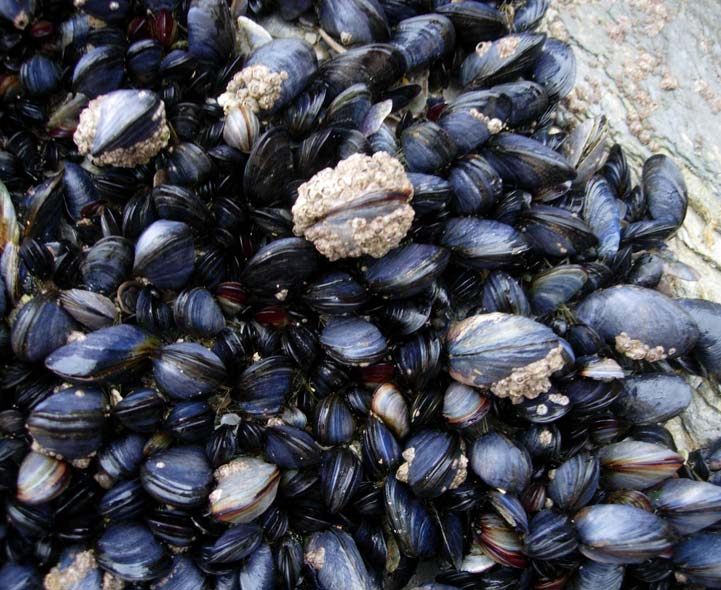
Mussels are an excellent source of which vitamin?
Photograph courtesy of Wilson44691
B3
B6
B9
B12
- The external shell is composed of two hinged halves or 'valves'. The valves are joined together on the outside by a ligament, and are closed when necessary by strong internal muscles.
- Mussels are filter feeders; they feed on plankton and other microscopic sea creatures which are free-floating in seawater.
- In Belgium, the Netherlands and France, mussels are consumed with french fries ('moules frites) or bread.
'Excellent source' means that mussels provide at least 20% of the recommended daily value
4 .
An octopus became internationally famous during the 2010 FIFA World Cup. What was his name?
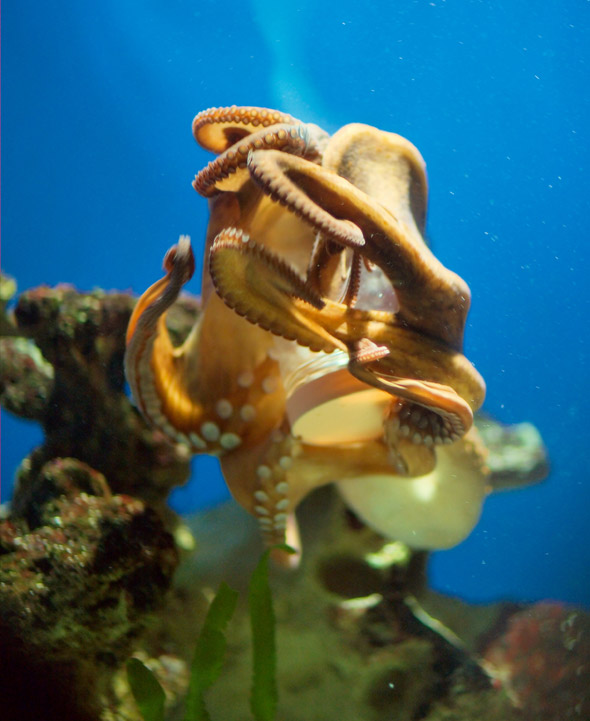
Photograph courtesy of MatthiasKabel
Ollie
Oscar
Paul
Peter
- Octopuses are among the most intelligent and behaviourally flexible of all invertebrates.
- The photo shows an octopus opening a container with a screw cap!
- They have numerous strategies for defending themselves against predators, including the expulsion of ink, the use of camouflage and deimatic displays, their ability to jet quickly through the water and their ability to hide.
- Though octopuses can be difficult to keep in captivity, some people keep them as pets. Octopuses often escape even from supposedly secure tanks, due to their problem-solving skills, mobility and lack of rigid structure.
His feeding behaviour was used to predict the winner of each of Germany's seven matches, as well as the outcome of the final. He was 100% correct!
5 .
Opening oysters requires skill. What is the alternative name for 'opening' them?
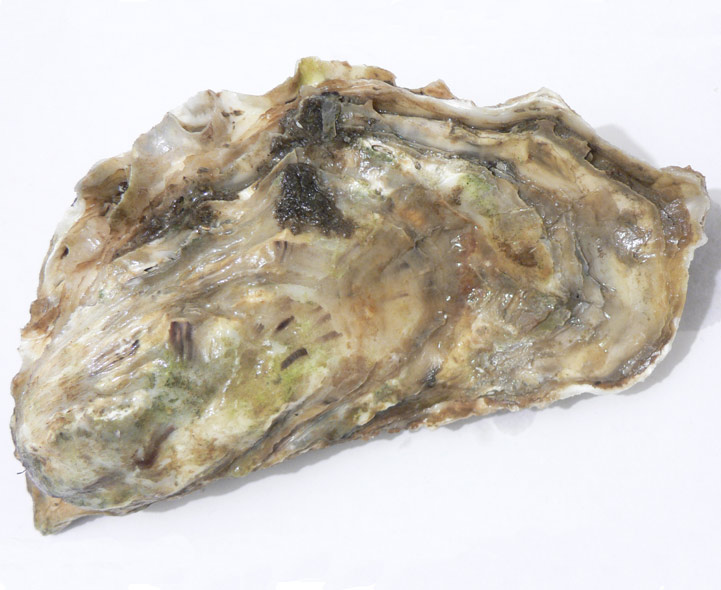
Photograph courtesy of David Monniaux
Clacking
Shucking
Teasing
Squeezing
- A group of oysters is commonly called a bed or oyster reef.
- Some tropical oysters grow on mangrove roots. Low tides expose them, making them easy to collect.
- In the West Indies, tourists are amazed when told that 'oysters grow on trees'.
- Whitstable is noted for oyster farming from beds on the Kentish Flats that have been used since Roman times.
Oyster shucking competitions are held all over the world
6 .
What is the collective name for a group of jellyfish?
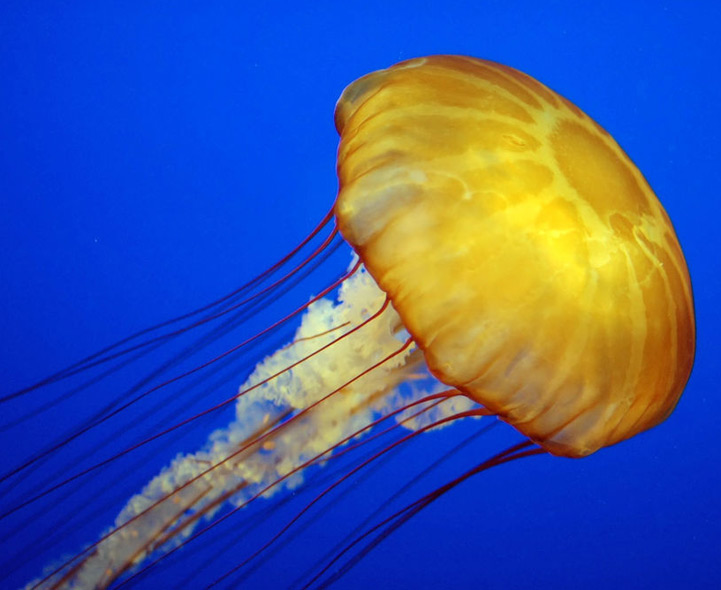
Photograph courtesy of www.flickr.com/photos/dan90266/
Smack
Sting
Slap
Smart
- Jellyfish are found in every ocean, from the surface to the deep sea.
- They are composed of more than 90% water.
- Most species don't have a brain or central nervous system.
- The box jellyfish has 24 eyes, two of which are capable of seeing colour, and four parallel brains which act in competition.
- It is thought to be one of the only creatures that has a 360 degree view of its environment.
7 .
Clam Chowder is a type of what?
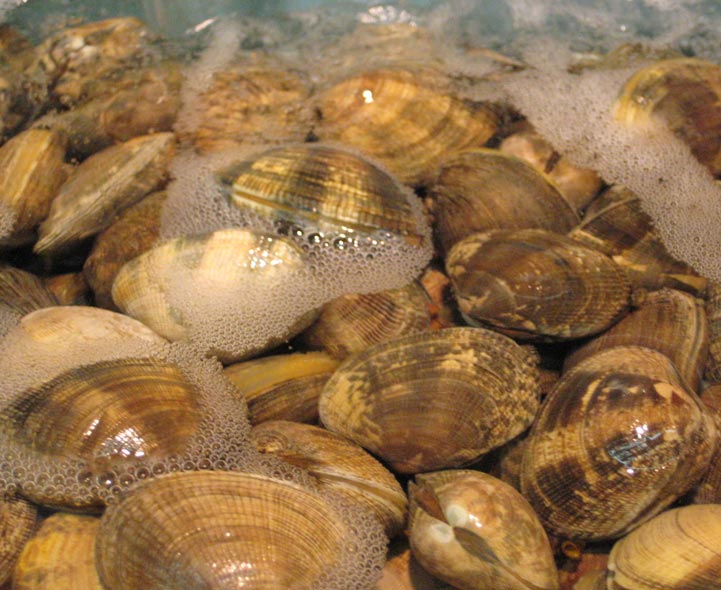
Photograph courtesy of Marlith
Bread
Soup
Cake
Cocktail
- In October 2007 a clam, caught off the coast of Iceland, was discovered to be at least 405 years old, and was declared the world's oldest living animal by researchers from Bangor University.
- The word 'clam' has given rise to the metaphor 'clam up', meaning to refuse to talk or answer, based on the clam behaviour of quickly closing its shell when threatened.
- Clams have also inspired the phrase 'happy as a clam', short for 'happy as a clam at high tide'.
8 .
Cuttlefish ink was formerly a much used dye called what?
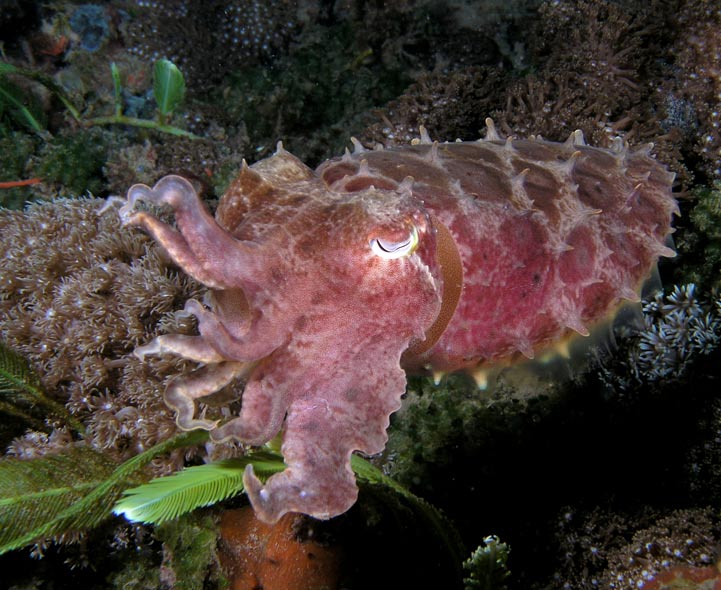
Photograph courtesy of Nick Hobgood
Indigo
Manganese
Sepia
Sienna
- They are sometimes referred to as the chameleon of the sea because of their remarkable ability to rapidly alter their skin colour at will.
- Cuttlefish eyes are among the most developed in the animal kingdom.
- The pupil is a smoothly-curving 'W' shape.
- Its blood is an unusual shade of green-blue.
- The blood is pumped by three separate hearts.
Artificial dyes have mostly replaced natural sepia these days
9 .
Which astrological sign is named after the crab?
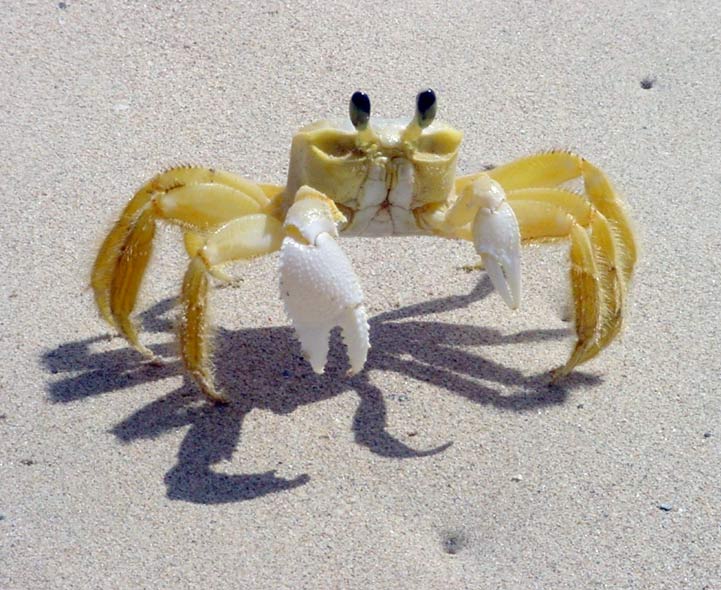
Photograph courtesy of Patrick Verdier
Capricorn
Cancer
Leo
Pisces
- Order: Decapoda
- Suborder: Pleocyemata
- Infraorder: Brachyura
- Crabs vary in size from the pea crab, a few millimetres wide, to the Japanese spider crab, with a leg span of up to 4 metres (13 ft)!
- Not all crabs walk sideways - some walk forwards and backwards.
- Some crabs are also capable of swimming.
10 .
Dried scallop is known in Cantonese Chinese cuisine as what?
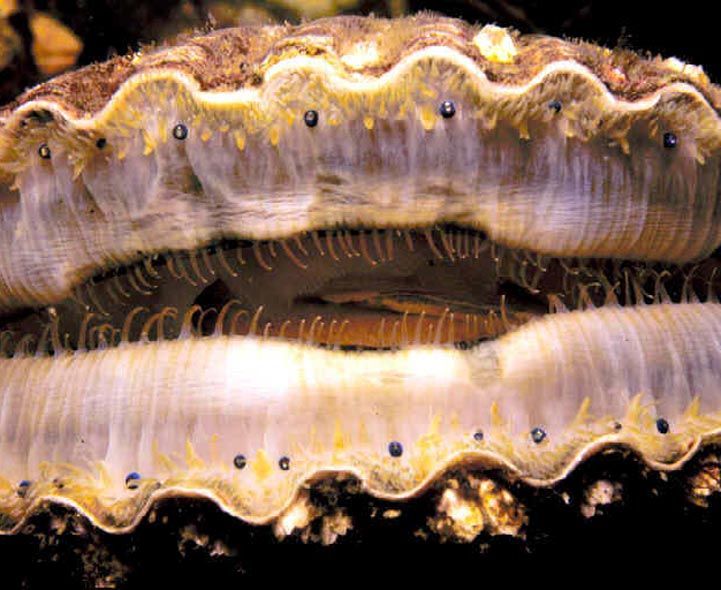
Photograph courtesy of Svdmolen
Congee
Pakchoi
Conpoy
Dimsum
- Order: Ostreoida
- Suborder: Pectinina
- Superfamily: Pectinoidea
- Family: Pectinidae
- Found in all of the world's oceans.
- Unusually, some scallops are male and female; some are both sexes in the same individual and yet others are males when young then change to females.



**Unlimited Quizzes Await You! 🚀**
Hey there, quiz champ! 🌟 You've already tackled today's free questions.
Ready for more?
Ready for more?
🔓 Unlock UNLIMITED Quizzes and challenge yourself every day. But that's
not all...
not all...
🔥 As a Subscriber you can join our thrilling "Daily Streak" against other
quizzers. Try to win a coveted spot on our Hall of Fame Page.
quizzers. Try to win a coveted spot on our Hall of Fame Page.
Don't miss out! Join us now and keep the fun rolling. 🎉
**Unlimited Quizzes Await You! 🚀**
Hey there, quiz champ! 🌟 You've already tackled today's free questions. Ready for more?
🔓 Unlock UNLIMITED Quizzes and challenge yourself every day. But that's not all...
🔥 As a Subscriber you can join our thrilling "Daily Streak" against other quizzers. Try to win a coveted spot on our Hall of Fame Page.
Don't miss out! Join us now and keep the fun rolling. 🎉




© Copyright 2016-2026 - Education Quizzes
Work Innovate Ltd - Design | Development |
Marketing
